
Tawny-barred angle
Macaria liturata
Description
How to identify
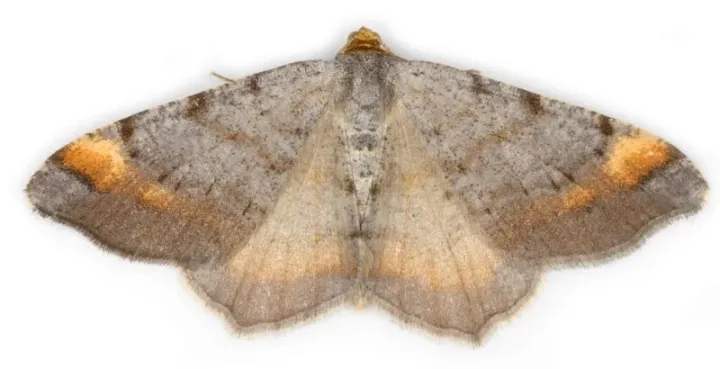
The Tawny-barred angle (Macaria liturata) is a moth belonging to the Geometridae family, known for its cryptic coloration that perfectly mimics its natural habitat.
Adult moths have a wingspan ranging from 25 to 32 millimeters, with wings featuring shades of greyish-brown or ochre and distinct darker cross-bands.
The larvae, or caterpillars, reach up to 25 millimeters in length, presenting a green body with conspicuous longitudinal white stripes along their sides.
The pupae are dark brown and typically reside within the forest leaf litter, providing a concealed environment for metamorphosis throughout the colder months.
These moths are nocturnal by nature, spending their daylight hours resting camouflaged on the bark or needles of coniferous trees, which makes them hard to detect.
What it damages
The primary hosts for the Tawny-barred angle larvae are trees from the genus Pinus, making them significant pests in pine plantations and forests.
Larvae consume needles of varying ages, including both fresh spring growth and older foliage, leading to visible thinning of the tree crowns.
While healthy adult trees can often withstand moderate levels of herbivory, young seedlings may suffer reduced growth rates and increased stress.
Heavy infestations can significantly weaken the trees, making them susceptible to secondary attacks by bark beetles and various fungal pathogens.
The cumulative effect of defoliation impacts the overall forest vitality and productivity, especially during outbreaks where populations spike significantly.
When it appears
The flight period of the adult moths typically occurs between late spring and early summer, when environmental conditions are optimal for egg-laying.
Females deposit eggs individually or in small clusters on pine needles, which hatch into larvae that immediately begin to feed on the host plant.
The larval stage extends through the summer months, during which caterpillars undergo several molts to accommodate their rapid physical growth.
Pupation takes place in late summer or early autumn, as the final-instar larvae descend into the ground debris to prepare for the dormant stage.
The species overwinters exclusively as a pupa, protected by the forest litter, ensuring survival throughout the winter season until the next spring cycle.
Signs of infestation
Characteristic signs include partially eaten pine needles, with caterpillars often leaving the needle bases intact while consuming the blade.
Frass (larval excrement) found as small dark pellets on the ground or stuck in spider webs beneath the canopy is a strong indicator of feeding activity.
Needle yellowing and premature needle fall during the growing season are common symptoms indicating significant foliage loss due to caterpillar feeding.
Observing the larvae themselves is another sign; they often use a "stick" camouflage pose, making them indistinguishable from small pine twigs.
Noticeable gaps and decreased density in the canopy are late-stage signs that indicate the presence of a persistent infestation within the stand.
Control measures
Biological control using microbial insecticides based on Bacillus thuringiensis is considered the most sustainable way to manage outbreaks.
Chemical control with forestry-approved insecticides may be necessary during severe mass outbreaks to prevent irreversible damage to younger plantations.
Promoting a healthy environment for natural predators, such as insectivorous birds and parasitic wasps, helps maintain the moth population in check.
Silvicultural practices, such as clearing debris or managing the forest floor, can help destroy overwintering pupae and limit the next generation.
Effective monitoring using light or pheromone traps is essential for early detection, allowing managers to intervene before the infestation reaches damaging levels.
Taxonomy
- Latin name
- Macaria liturata
- Order
- Lepidoptera (butterflies)
- Family
- Geometridae
- EPPO code
- SEMOLI
Discussion
No discussions yet — be the first.