
Common Cicada
Lyristes plebeia
Description
How to identify
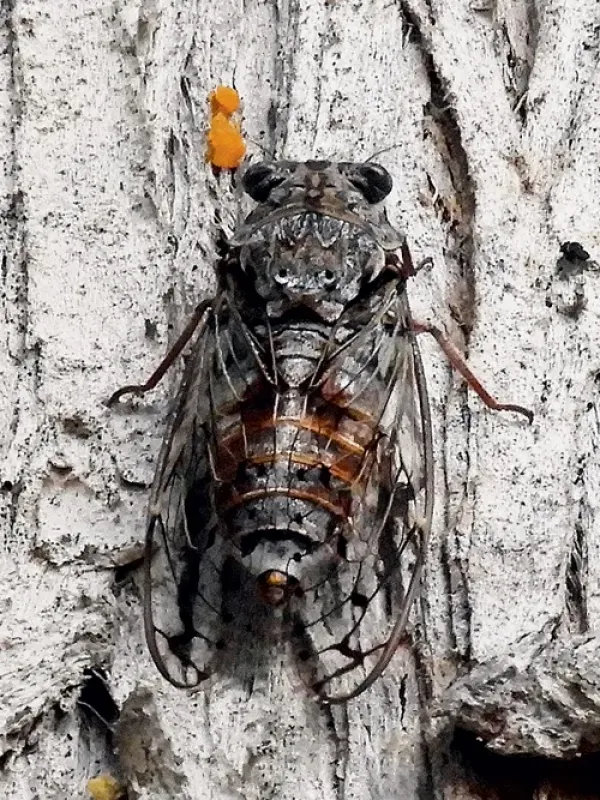
The Common Cicada (scientific name Lyristes plebeia) is a large insect belonging to the family Cicadidae and the order Hemiptera. Adult specimens typically reach lengths of 30 to 40 mm, featuring a robust body and transparent, heavily veined wings.
The most distinctive feature of the species is the piercingly loud song produced by males using specialized organs called tymbals located on the abdomen. Their coloration ranges from dark brown to olive-black, providing excellent camouflage against tree bark.
The nymphs lead a subterranean existence, dwelling in the soil near the root systems of host plants. They are equipped with strong, shovel-like forelegs for digging and a specialized piercing-sucking mouthpart to feed on plant xylem sap.
The life cycle of this species is remarkably long, with nymphs developing underground for periods ranging from 2 to 4 years before emerging for metamorphosis. This extended soil phase makes them difficult to monitor.
Pupation occurs within specialized earthen chambers in the soil, after which the nymph emerges onto a tree trunk, molts into its final adult form, and leaves behind an empty exoskeleton.
What it damages
This pest targets a wide variety of woody plants, including olive trees, grapevines, apple, pear, peach trees, and various citrus species. Damage is inflicted during both the nymphal and adult stages.
Nymphs cause damage by feeding on the sap of the root system, which drains the tree of vital nutrients, leading to stunted growth, reduced vigor, and increased susceptibility to secondary stressors.
Adult cicadas damage the aerial parts of trees by piercing the bark of young shoots with their proboscis to feed on sap, which disrupts nutrient flow and causes the drying of terminal branches.
The most significant damage occurs when females insert their eggs into woody stems. These deep incisions create structural wounds that serve as entry points for fungal and bacterial pathogens.
Heavy infestations can lead to severe weakening of the tree canopy, yield loss, and in cases of young orchards, the potential death of the trees due to chronic nutrient deficiency and secondary infections.
When it appears
The activity of adult cicadas typically occurs during the warm summer months, primarily from June through August. This is the period when they emerge, mate, and perform their characteristic vocalizations.
Egg-laying activity peaks in the second half of summer, as females selectively target young, woody shoots to deposit their egg clusters deep within the plant tissues.
Nymphal stages are active throughout the year within the soil, though their feeding intensity increases during the spring and summer months when host trees are most active in sap circulation.
The emergence of nymphs from the ground for their final transformation is triggered by the onset of sustained high temperatures, usually following a specific period of soil warming.
Climatic factors such as severe droughts can influence emergence patterns, but the species maintains a relatively consistent biological rhythm tied to regional environmental conditions.
Signs of infestation
The most obvious indicator of a cicada presence is the loud, rhythmic buzzing or singing of males, which is clearly audible in gardens and orchards during daylight hours.
Characteristic mechanical damage on stems, appearing as rows of slits or small scars, which are clear evidence of female egg-laying activities.
Wilt and chlorosis of leaves on young shoots, caused by the interruption of the vascular system due to the feeding punctures of adult cicadas.
Presence of circular emergence holes, approximately 1 cm in diameter, found at the base of tree trunks where nymphs have crawled out of the soil.
Overall decline in tree health, characterized by poor annual growth and premature leaf drop in late summer, which may point to root system damage by nymphs.
Control measures
Manual collection and destruction of adults during their emergence phase, although this is generally only practical in small-scale gardens or backyard settings.
Regular pruning and destruction of infested twigs containing egg clutches to prevent the next generation of nymphs from entering the soil upon hatching.
- Utilizing light traps in the evening to attract and capture adult cicadas.
- Conducting deep soil cultivation around the base of trees to disrupt nymphal tunnels and expose them to predators.
- Applying biological control agents, such as entomopathogenic fungi, to target nymphs within the soil environment.
Maintaining optimal tree vigor through proper irrigation and fertilization, which allows trees to better withstand and recover from the physiological stress caused by feeding.
In cases of extremely high population density, the use of systemic insecticides approved for horticultural use may be necessary during the peak adult emergence window.
Taxonomy
- Latin name
- Lyristes plebeia
- Order
- Hemiptera (bugs, aphids, leafhoppers)
- Family
- Cicadidae
- EPPO code
- TIBCPL
Discussion
No discussions yet — be the first.