
Grape spanworm
Lygris diversilineata
Description
How to identify
The Grape spanworm, scientifically known as Eulithis diversilineata (syn. Lygris diversilineata), belongs to the Geometridae family, commonly referred to as geometer moths or loopers.
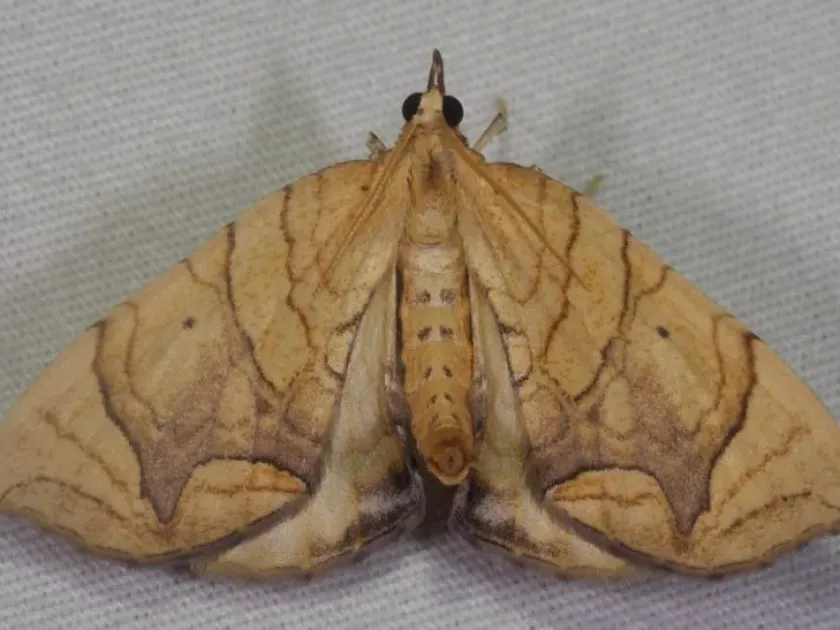
Adult moths have a wingspan of approximately 30–35 mm, featuring cryptic coloration that ranges from brownish-grey to ochre with intricate wavy lines across the wings, providing camouflage on tree bark.
The larvae, or caterpillars, are known for their distinct looping movement. They are slender and often match the color of their host plant, making them highly effective at hiding in plain sight.
The pupal stage occurs in the soil or within folded leaves held together by silk. This is a critical stage in their life cycle, as the pupae are well-adapted to overwintering in various climates.
The biology of this species is complex, with larval development phases that are highly responsive to environmental temperature and the physiological stage of the host grapevine.
What it damages
The larvae are primary consumers of grapevine foliage, feeding on the leaf tissue, which can lead to severe defoliation if populations are left unchecked.
Young larvae start by creating small holes in the leaves, while larger caterpillars can consume entire leaf blades, leaving only the primary veins behind.
This intense feeding behavior reduces the total surface area available for photosynthesis, which directly limits the vine's ability to produce energy for fruit development.
In addition to leaf damage, severe infestations may extend to buds and developing clusters, negatively impacting both the yield quantity and the quality of the grape harvest.
Weakened vines become more susceptible to secondary issues, including winter kill and fungal infections that infiltrate through the damaged plant tissues.
When it appears
The adult flight typically begins in late spring, marking the start of the breeding season as temperatures rise and provide favorable conditions for mating and egg-laying.
Eggs are generally deposited on the undersides of leaves, and the resulting larvae emerge during the period of active vine growth, which coincides with their high demand for food.
Depending on the climatic zone, the pest may complete one or two generations per season, with the late-summer generation often causing the most significant visual damage.
As the season progresses toward autumn, the larvae complete their development and transition into the pupal stage, seeking protection in the soil or under organic debris.
Understanding these phenological stages is crucial for timing interventions, as control measures are most effective when applied during the early larval development phase.
Signs of infestation
The earliest signs of an infestation include the appearance of irregular holes in the foliage, often concentrated on the top leaves of the new growth.
You may spot the larvae resting on the stems or the undersides of leaves; they often hold their bodies rigid to mimic a twig, a behavior characteristic of Geometrid caterpillars.
The accumulation of frass, which appears as small dark pellets on the leaves directly beneath feeding sites, is a reliable indicator of active caterpillar presence.
Larvae sometimes use silk to bind leaf edges together, creating a small shelter. Finding these tied-up leaves during a routine vineyard inspection is a strong signal of activity.
Severe infestations manifest as patches of skeletonized leaves and a visible reduction in the density of the vine's canopy compared to healthy sections of the vineyard.
Control measures
Integrated Pest Management (IPM) is the best approach, starting with regular monitoring of leaf health to identify the need for action before damage reaches critical levels.
Manual removal of caterpillars is highly effective in small garden settings, especially if the inspection is performed during the cooler morning or evening hours.
Biological control agents, such as Bacillus thuringiensis, offer a targeted solution that suppresses larval populations without disrupting beneficial insects in the vineyard.
If chemical intervention is necessary, select selective insecticides that are registered for use on grapes and apply them according to the manufacturer’s instructions.
- Maintain clean cultivation by removing weeds that may host the pest.
- Perform autumn soil tillage to disrupt the pupation environment.
- Encourage natural predators like birds and parasitic wasps to help manage populations.
Taxonomy
- Latin name
- Lygris diversilineata
- Order
- Lepidoptera (butterflies)
- Family
- Geometridae
- EPPO code
- LYGRDI
Discussion
No discussions yet — be the first.