
Lygaeus turcicus
Lygaeus turcicus
Description
How to identify
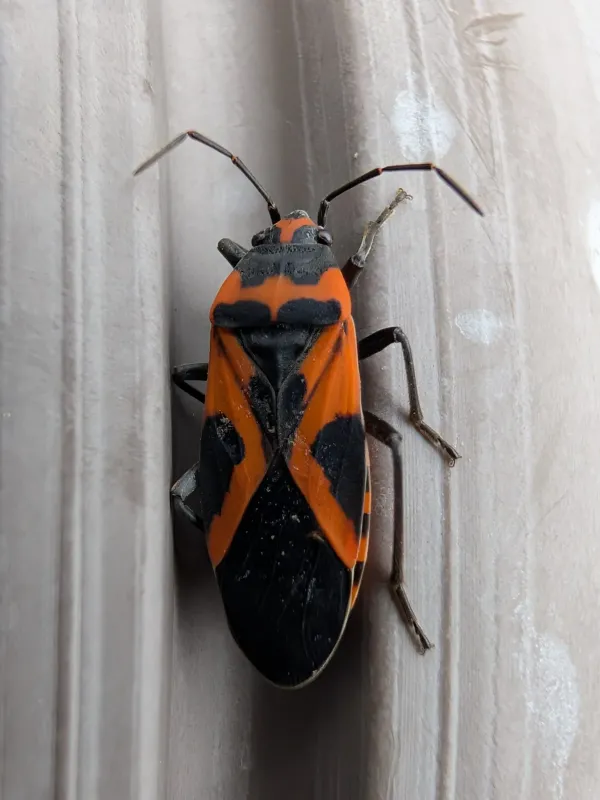
Lygaeus turcicus belongs to the order Hemiptera, family Lygaeidae. This insect is characterized by a high-contrast color pattern, typically displaying bold black and orange-red markings, which serves as a warning signal.
The adult insect has an elongated body shape. Its hemelytra (forewings) feature a specific pattern of red or orange patches on a black background, allowing for clear identification among other seed-feeding bugs.
The head is equipped with a piercing-sucking mouthpart, which is specifically adapted to feed on plant fluids. The antennae are four-segmented, a critical morphological feature used for taxonomic classification.
The nymphs go through several developmental stages, gradually acquiring an appearance similar to the adult. While early instars are smaller and wingless, they retain the characteristic body silhouette.
This species is thermophilic and is primarily found in warmer climatic zones, where the environment allows for robust reproduction and multiple generations during the growing season.
What it damages
This pest shows a strong trophic preference for plants of the Asteraceae family. It poses a significant economic threat to sunflower crops and various ornamental plants belonging to this family.
The bugs feed mainly on the generative organs of plants, extracting sap from developing seeds and flower heads. This activity results in lower yields and degraded product quality.
Feeding on seeds during the filling stage causes underdevelopment, reduced germination rates, and lower oil content, which is detrimental to agricultural productivity.
When infestation levels are high, the pests can also damage vegetative tissues, piercing leaves and stems, which often leads to stunted plant growth and premature wilting of tissues.
Furthermore, by puncturing plant tissues, the bugs create entry points for various secondary pathogens, including fungi and bacteria, which can exacerbate the overall plant damage.
When it appears
Activity begins in the spring when rising temperatures prompt overwintering adults to emerge from their shelters to seek suitable host plants for feeding.
Peak damage to crops occurs during the summer, coinciding with the budding and seed maturation phases of the host plants, which is when the population size is at its highest.
Reproduction continues throughout the summer months, and multiple generations may develop in a single season if the weather conditions remain favorable for nymphal growth.
As temperatures drop in the autumn, the adults seek protected areas for hibernation, such as leaf litter, plant debris, bark crevices, or hollow stems of dry weeds.
The pest's lifecycle is tightly synchronized with the phenology of Asteraceae plants, making regular monitoring during these critical growth stages essential for effective management.
Signs of infestation
The first indicator of infestation is the visual detection of adult bugs or clusters of nymphs directly on the flower heads or upper leaves of the plants.
Close inspection of affected tissues reveals tiny puncture marks, often surrounded by necrotic spots or yellowing, which are direct symptoms of the insects extracting cell sap.
Deformed flower heads and the presence of empty or shriveled seeds during harvesting are clear evidence of Lygaeus turcicus activity during the crop's developmental stage.
Wilting of specific parts of the flower head without signs of fungal disease can also suggest hidden feeding activity by the bugs within the plant tissues.
Small dark fecal spots left on leaf surfaces beneath feeding sites provide additional evidence of the pest's presence and activity within the field.
Control measures
A primary agronomic method is the thorough removal and destruction of crop residues, which act as primary overwintering sites for the adults.
Effective weed management, especially targeting Asteraceae weeds along field margins, is critical as these plants serve as reservoir hosts and starting points for pest colonization.
Chemical control involving systemic or contact insecticides is effective if applied during the peak density of young nymphs, while strictly adhering to pre-harvest safety intervals.
Biological control strategies focus on supporting natural predator populations, such as predatory bugs and spiders, which can help regulate pest densities naturally.
- Implement strict crop rotation to disrupt the pest's lifecycle.
- Use pheromone traps for early population monitoring.
- Apply seed treatments to provide early-stage protection for emerging seedlings.
Taxonomy
- Latin name
- Lygaeus turcicus
- Order
- Hemiptera (bugs, aphids, leafhoppers)
- Family
- Lygaeidae
- EPPO code
- LYGATU
Discussion
No discussions yet — be the first.