
Shore bug
Lygaeus rivularis
Description
How to identify
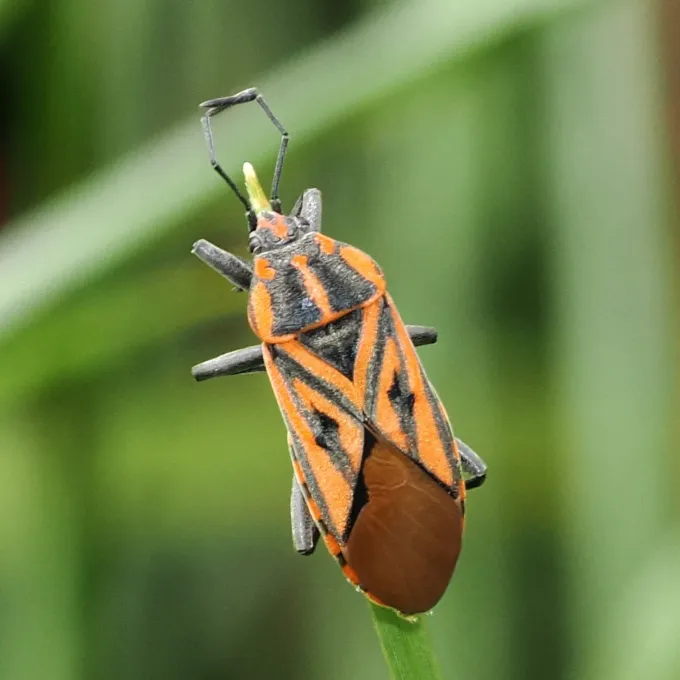
The shore bug, scientifically known as Lygaeus rivularis, belongs to the family Lygaeidae within the order Hemiptera. These insects are easily recognized by their elongated bodies and vibrant patterns, which often feature red or orange markings on a black background, serving as a warning to potential predators.
Adult specimens typically measure between 7 and 10 millimeters in length. They possess a triangular head with prominent compound eyes and four-segmented antennae, which are essential identification features for distinguishing this specific species from other members of the Lygaeidae family.
The dorsal side of the bug is often covered with fine, short hairs, giving the body a matte texture. They are equipped with fully functional wings, allowing for significant dispersal across habitats in search of suitable host plants and favorable overwintering sites.
Their life cycle consists of incomplete metamorphosis, progressing through egg, five larval instars, and adult stages. Nymphs closely resemble smaller, wingless versions of the adults, making them somewhat difficult to distinguish in the early stages of a crop infestation.
As their common name suggests, these insects are strongly associated with moist environments. They are most frequently found near water bodies, wetlands, and damp meadows, where they thrive in the microclimate provided by dense vegetation and humid soil.
What it damages
The primary damage caused by Lygaeus rivularis results from their feeding behavior. Using their piercing-sucking mouthparts, they extract plant sap, which leads to the weakening of the host plant and a reduction in its overall metabolic efficiency and growth rate.
The host range includes a variety of agricultural and wild plants. While they have specific preferences, they often shift to cultivated fields during dry periods or when natural host populations are disturbed, causing localized but significant stress to the crops.
When feeding occurs on reproductive parts such as buds, flowers, or developing seeds, the economic impact is most severe. Damage to these organs can lead to deformities, abortion of fruits, or a significant decrease in the weight and quality of the yield.
Beyond the direct sap depletion, these bugs can act as vectors for various plant pathogens. The puncture wounds created during feeding serve as entry points for bacteria and fungi, which can subsequently cause necrotic spots and rotting tissues on the leaves and stems.
Persistent infestations in fields with high moisture retention can lead to widespread crop decline. Agronomists must monitor these areas closely, especially during the vegetative stage, to prevent cumulative damage that could otherwise lead to harvest failure.
When it appears
The activity of Lygaeus rivularis is tightly coupled with seasonal temperature shifts. Overwintering adults emerge from dormancy as soon as spring temperatures rise, typically starting their feeding activity on early-season weeds surrounding the fields.
Mating and oviposition occur in late spring. Eggs are usually deposited in clusters within moist soil or on the lower sections of host plants, ensuring that the emerging nymphs have immediate access to food sources and protected habitats.
The development time for nymphs varies depending on thermal accumulation, generally spanning a few weeks. By mid-summer, population densities often reach their peak, coinciding with the rapid growth of primary crops where the bugs migrate to feed.
As autumn approaches and day length decreases, the adults begin to seek overwintering sites. They typically aggregate in sheltered areas such as leaf litter, hedgerows, or soil crevices that provide insulation against freezing winter temperatures.
Depending on the climatic zone, the shore bug may complete one or two generations per year. The speed of the generation turnover is a critical factor for field managers to track, as faster development cycles can lead to rapid population explosions.
Signs of infestation
The first noticeable signs of an infestation are chlorotic spots appearing on the leaves, which gradually turn yellow as the plant cells die due to constant sap extraction. These areas of discoloration are often the initial indicators of insect presence.
Deformed stems and stunted growth patterns are common indicators that the bug population has reached significant levels. If the infestation is concentrated on flower heads, the flowers may wilt or fail to develop into fruits, directly impacting productivity.
Close visual inspection often reveals the presence of the bugs, as they tend to congregate in concealed parts of the plant, such as leaf axils or on the underside of foliage, especially during the heat of the day when they seek shade.
Excrement in the form of tiny black dots on the leaf surface is a hallmark of sucking insect activity. In cases of high density, a distinct odor, characteristic of many terrestrial bugs, may be detected in the immediate vicinity of the infested crop rows.
Proactive monitoring of field margins is the best way to detect immigration from adjacent wild habitats. Identifying these hotspots early allows for localized management before the pests distribute themselves throughout the entire plantation.
Control measures
Cultural control is the cornerstone of shore bug management. Maintaining clean field borders and eliminating weed reservoirs near water sources significantly reduces the population pressure on commercial crops by depriving them of alternative food sources.
Implementing strategic crop rotation prevents the buildup of resident populations within a single field. Additionally, deep plowing after harvest can destroy the overwintering sites of adults and reduce the number of pests emerging in the following spring.
Biological control options include the use of natural enemies or biopesticides based on entomopathogenic fungi, which are effective in humid environments. These methods provide a more sustainable approach, minimizing the reliance on conventional chemical applications.
Chemical control should be reserved for situations where the pest population exceeds the economic injury level. Systemic insecticides are generally preferred as they provide more reliable protection against sucking pests by targeting them directly during feeding.
- Utilize pheromone traps to monitor population density fluctuations.
- Maintain adequate irrigation to ensure plants are less susceptible to sap loss.
- Conduct regular scouting in sensitive areas near canals and damp zones.
Taxonomy
- Latin name
- Lygaeus rivularis
- Order
- Hemiptera (bugs, aphids, leafhoppers)
- Family
- Lygaeidae
- EPPO code
- LYGARI
Discussion
No discussions yet — be the first.