
Lygaeus nassatus
Lygaeus nassatus
Description
How to identify
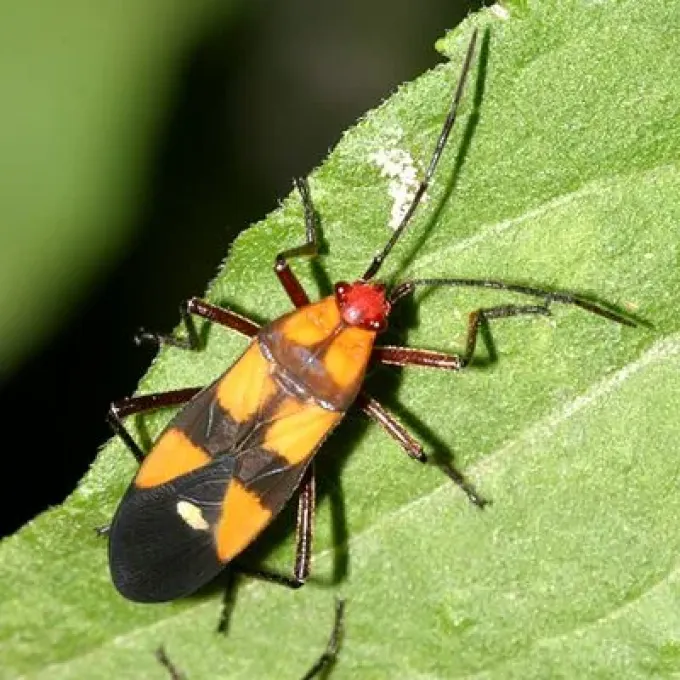
Lygaeus nassatus belongs to the Lygaeidae family within the Hemiptera order. This insect is characterized by its vivid red and black coloration, which serves as an aposematic signal to deter predators in its natural habitat.
Adult specimens typically feature an elongated body measuring approximately 6–8 millimeters in length. The pronotum and elytra are marked with a distinct geometric pattern. The scutellum is usually black, which aids in distinguishing this species from closely related ones.
The pest possesses a robust piercing-sucking mouthpart designed for penetrating plant tissues and extracting sap. Well-developed compound eyes provide the insect with excellent situational awareness while foraging for host plants.
Development follows a hemimetabolous cycle: nymphs look like smaller versions of adults but lack fully developed wings. Their coloration shifts through several instar stages, becoming more intense as they reach maturity.
Adults primarily overwinter in leaf litter, under tree bark, or within plant debris, allowing them to survive harsh winter conditions in temperate climates effectively.
What it damages
This pest causes damage to a wide range of agricultural crops, including vegetables, cereals, and ornamental plants. It exhibits polyphagous behavior, feeding on the sap of various plant species throughout different stages of their growth.
The greatest danger occurs during the development of plant reproductive organs. Adult bugs and nymphs actively suck nutrients from young shoots, flower stalks, and developing seeds.
Damage manifests as tissue discoloration, leaf deformation, and overall stunted growth of the plants. During outbreaks, the population density can significantly reduce the yield of seed crops.
Affected plant parts wilt rapidly, and puncture sites often become entry points for secondary fungal or bacterial infections. This leads to premature bud drop and diminished commercial product quality.
In hot, dry summers, the damage increases as insects move toward irrigated areas and succulent crops in search of moisture, concentrating on specific fields in large numbers.
When it appears
The active life cycle of Lygaeus nassatus begins in early spring when temperatures consistently rise above ten degrees Celsius. The first individuals emerge from overwintering sites to begin feeding.
Adult activity continues until late autumn. Depending on regional temperatures and food availability, the pest may produce one or two generations per season.
Peak feeding activity is observed in the first half of summer, coinciding with the development of primary reproductive organs in most crops. Careful field monitoring is crucial during this window.
By mid-July, the pest population can reach peak levels, corresponding to the grain filling or fruit ripening phase. During this time, the risk of substantial crop loss is at its highest.
As nighttime frosts approach, the bugs migrate to sheltered areas for diapause. Overwintering typically concludes by the end of October, as natural food sources become depleted.
Signs of infestation
Visual monitoring of fields allows for the detection of the pest in the early stages. The most obvious sign is the presence of the insects themselves, which are easily spotted on leaves and stems due to their bright coloration.
During plant inspections, characteristic chlorotic spots can often be seen at the sites where the proboscis has punctured the tissue. Leaves in the feeding area become deformed, lose turgor, and gradually dry out along the edges.
Special attention should be paid to inflorescences and young ovaries. If bud drop or arrested fruit development occurs following damage, it serves as an indirect indicator of high bug population density.
Where large populations are present, a distinctive pungent odor may be detected near the damaged areas, as the insects release secretions from scent glands to repel predators.
In cereal fields, signs of infestation include empty or underdeveloped ears, which stand out from healthy plants due to their unnatural pallor and thinness.
Control measures
Agrotechnical control methods include mandatory autumn plowing and deep burial of crop residues, where the majority of adults overwinter. This significantly reduces the spring population.
Timely weed control in surrounding areas is essential. Many weeds serve as reservoirs for the pest before it moves into cultivated crops.
Biological control involves attracting natural predators such as birds and beneficial entomophages. The use of biopesticides based on fungal pathogens that affect bugs during their active period is also an option.
Chemical control is justified when the economic threshold of damage is exceeded. During periods of mass infestation, insecticides from the pyrethroid, neonicotinoid, or organophosphate groups are used.
When applying chemical control agents, it is strictly necessary to observe safety intervals and application regulations to avoid pesticide residue buildup in products and minimize risks to beneficial pollinators.
Taxonomy
- Latin name
- Lygaeus nassatus
- Order
- Hemiptera (bugs, aphids, leafhoppers)
- Family
- Lygaeidae
- EPPO code
- LYGANA
Discussion
No discussions yet — be the first.