
Lygaeus militaris
Lygaeus militaris
Description
How to identify
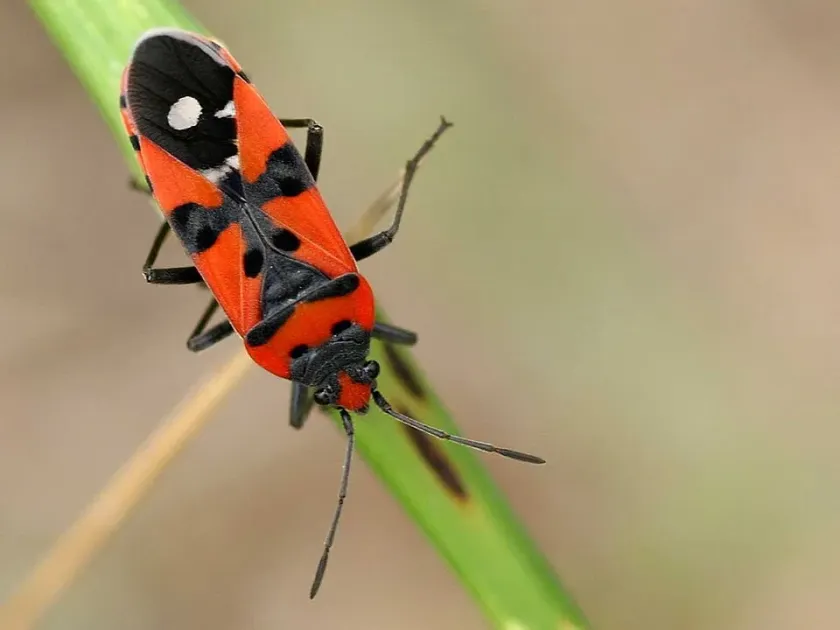
Lygaeus militaris is a striking insect belonging to the Lygaeidae family, commonly known as seed bugs. It is easily recognizable due to its vivid and high-contrast coloration.
The adult insect reaches approximately 10–12 mm in length. Its body exhibits a bold pattern of black and red, with a distinctive white patch on the scutellum and a prominent white head.
As a true bug (order Hemiptera), it possesses a piercing-sucking mouthpart. This specialized structure allows it to feed effectively on the sap and tissues of various host plants.
The lifecycle includes several developmental stages, starting from eggs to nymphs and finally reaching the adult stage. The nymphs are similar in appearance to adults but lack functional wings.
These bugs are primarily found in sunny, open areas where they can easily locate their preferred host plants, particularly those belonging to the Apocynaceae (formerly Asclepiadaceae) family.
What it damages
The primary hosts for Lygaeus militaris are plants within the Apocynaceae family. However, in garden settings, they can infest various ornamental and medicinal plants.
The damage is caused by the bug's habit of sucking cell sap. This feeding process results in the depletion of vital plant nutrients and causes significant stress to the host.
Infested plants often show signs of stunted growth, leaf yellowing, and deformation of young shoots. In severe cases, the vitality of the entire plant can be compromised.
Reproductive organs are particularly susceptible. Damage to flower buds and developing seeds leads to poor flowering, flower drop, and a decrease in the overall aesthetic value of the garden.
Feeding punctures serve as entry points for various pathogens, which can lead to secondary fungal or bacterial infections that further weaken the plant's structural integrity.
When it appears
The activity of these bugs typically begins in the spring, as temperatures rise above 15 degrees Celsius. Overwintered adults emerge from their shelters to seek food sources.
Summer marks the peak of their population density. During this time, they engage in mating and laying eggs, which results in a rapid increase in the number of nymphs feeding on plants.
Dry and hot weather conditions significantly accelerate their life cycle and increase their feeding activity, leading to faster colonization of available host plants.
As autumn approaches and temperatures drop, the bugs search for suitable hibernation sites. They typically overwinter in plant debris, bark crevices, or protected garden structures.
Monitoring for the arrival of the first generation is essential. Early intervention during the late spring can effectively limit the population growth and prevent summer outbreaks.
Signs of infestation
The most obvious sign of infestation is the physical presence of adult bugs on leaves and stems. They are often found in groups, making them easy to spot during daylight.
Leaves affected by the feeding of Lygaeus militaris exhibit tiny, light-colored stippling or spotting. These represent the localized areas of cell death caused by the feeding punctures.
Curling or twisting of the younger, more tender leaves is a classic indicator of severe infestation, as the bugs tend to congregate on the most succulent parts of the plant.
Premature wilting and the dropping of buds indicate damage to the floral structures. If a plant stops growing or shows unexplained signs of distress, these bugs are a likely culprit.
The presence of dark, pin-sized excrement spots on the foliage, combined with the visual identification of the bugs, confirms that the plant is currently under infestation.
Control measures
Good agricultural practices are the first line of defense. This includes removing host weeds, especially those related to the Apocynaceae family, to reduce potential food sources.
Proper sanitation is critical; clearing away leaf litter and plant debris in the autumn removes the overwintering habitats that allow the population to persist from year to year.
Encouraging natural predators, such as birds, predatory beetles, and spiders, provides biological control that helps keep bug populations below the threshold of serious economic damage.
If chemical intervention is necessary, use contact-action insecticides registered for ornamental plants. Always apply them according to the label instructions for safety and efficacy.
It is best to apply treatments in the evening to avoid harming beneficial pollinators and to ensure the spray reaches the areas where the bugs are most active.
Taxonomy
- Latin name
- Lygaeus militaris
- Order
- Hemiptera (bugs, aphids, leafhoppers)
- Family
- Lygaeidae
- EPPO code
- LYGAMI
Discussion
No discussions yet — be the first.