
Lygaeus hospes
Lygaeus hospes
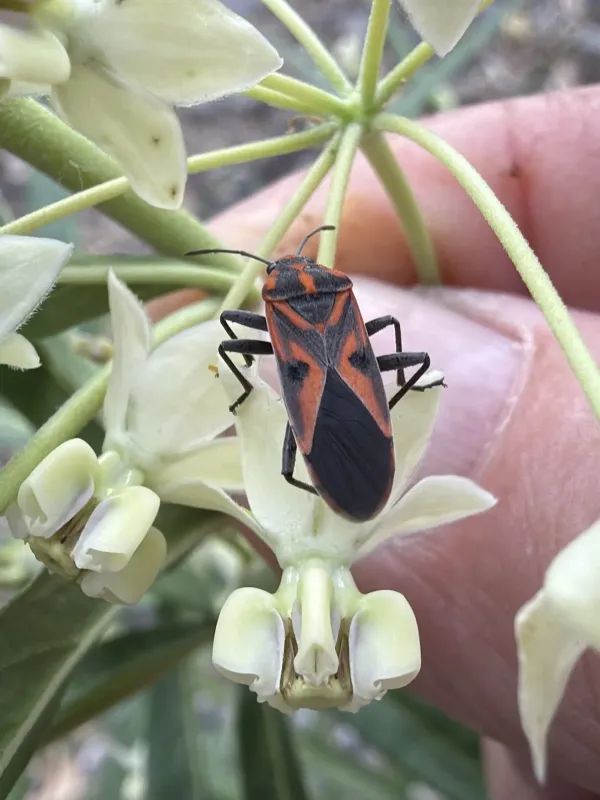
Description
How to identify
Lygaeus hospes is a species of seed bug belonging to the family Lygaeidae within the order Hemiptera. These insects are easily recognizable by their striking, high-contrast coloration, which features a deep black base with vibrant red or orange markings on the pronotum and hemelytra.
Adult insects typically measure between 10 and 12 millimeters in length. They possess a characteristic elongated, oval body shape and a well-developed proboscis designed for piercing plant tissues and extracting vital cellular sap.
The nymphal stages undergo several molts, gradually acquiring the distinct coloration of the adults. Early-stage nymphs are often smaller and lighter in color, making them somewhat difficult to spot against green foliage.
This species is thermophilic, preferring environments with warm and temperate climates. They are primarily diurnal, exhibiting maximum activity during sunny, hot periods when they need to replenish their moisture and nutrient reserves.
Their robust exoskeleton provides a degree of protection against environmental stressors and potential predators. This structural advantage allows them to thrive in various habitats, provided there is an adequate food source available.
What it damages
Lygaeus hospes is a polyphagous pest, meaning it feeds on a diverse range of herbaceous and woody plants. By piercing the plant surface with their proboscis, both adults and nymphs draw out nutrients that are essential for plant growth.
Feeding damage typically manifests as yellowing, wilting, and overall physiological stress in the host plant. Continuous feeding can cause significant stunted growth, preventing the plant from reaching its full potential.
The most severe damage occurs during the plant's reproductive phase, as these bugs often target flowers, buds, and developing seeds. This leads to deformed fruit, reduced seed viability, and the premature dropping of buds and flowers.
Feeding punctures serve as entry points for secondary infections. Once the skin of a plant is breached, bacteria and fungi easily colonize the tissue, leading to necrosis, rot, and structural decay of leaves and stems.
In cases of heavy infestation, the damage is cumulative and can prove fatal for young or vulnerable plants. The combined impact of nutrient loss and secondary infections often renders the entire plant unproductive.
When it appears
The life cycle of Lygaeus hospes is strictly dictated by seasonal temperature patterns. Adult bugs typically emerge from hibernation once spring temperatures remain consistently warm, signaling the start of the growing season.
Overwintering occurs primarily in the adult stage, with insects seeking shelter in debris, dry leaves, under loose bark, or in gaps within structures. As temperatures rise, they migrate to host plants to feed and mate.
Reproductive activity usually takes place in early summer. Females lay batches of eggs on the underside of leaves or in the soil near the host plant. The total development time varies based on humidity and heat levels, generally spanning several weeks.
Peak infestation levels are usually observed in mid-to-late summer. As plants begin to ripen, the bugs migrate in search of the most nutrient-dense targets, which leads to localized outbreaks on crops nearing harvest.
As autumn approaches and temperatures drop, adults stop feeding and look for safe hibernation spots. In warmer regions, this species is capable of completing two full generations within a single calendar year.
Signs of infestation
The most obvious sign of an infestation is the presence of the insects themselves. Their bright warning colors make them visible, especially when they aggregate in groups on leaves or stems during sunny mornings.
Feeding damage is characterized by tiny, pale, or yellowish spots that mark the locations where the proboscis was inserted. Over time, these spots may expand, turning into necrotic patches that weaken the leaf structure.
Fruit damage often appears as sunken or dimpled areas. In many cases, these spots become soft and discolored due to the introduction of salivary enzymes during feeding, which begins the process of tissue breakdown.
General plant decline is a common late-stage sign. If a plant appears suddenly stressed, with curling leaves, stunted growth, or shriveling buds despite adequate irrigation, it is likely under attack from a colony of these bugs.
A distinct, pungent scent is another identifier. Like many other bugs, Lygaeus hospes releases chemical compounds when disturbed. If a strong, unpleasant odor is detected when inspecting the plants, it is a clear indicator of their presence.
Control measures
Effective management begins with robust cultural practices. Removing debris and cleaning up crop residues after harvest significantly reduces the number of suitable hibernation sites, making the area less attractive for wintering adults.
Weed control is essential. Since many weeds serve as early-season host plants, removing them prevents the bug population from establishing itself before the main crops begin to grow.
For smaller gardens or high-value plants, manual collection is a simple yet effective control method. Removing insects by hand or shaking them into a container of soapy water can successfully limit the population growth.
Biological controls, including the use of entomopathogenic fungi or predatory insects, offer a safer, environmentally friendly approach. These methods are particularly useful for protecting vegetables and fruit during the period leading up to harvest.
If chemical intervention becomes necessary due to high pest density, insecticides should be applied strategically. Focus on products that target nymphs specifically, and ensure that treatments are timed before eggs hatch to maximize efficacy.
Taxonomy
- Latin name
- Lygaeus hospes
- Order
- Hemiptera (bugs, aphids, leafhoppers)
- Family
- Lygaeidae
- EPPO code
- LYGAHO
Discussion
No discussions yet — be the first.