
European firebug
Lygaeus equestris
Description
How to identify
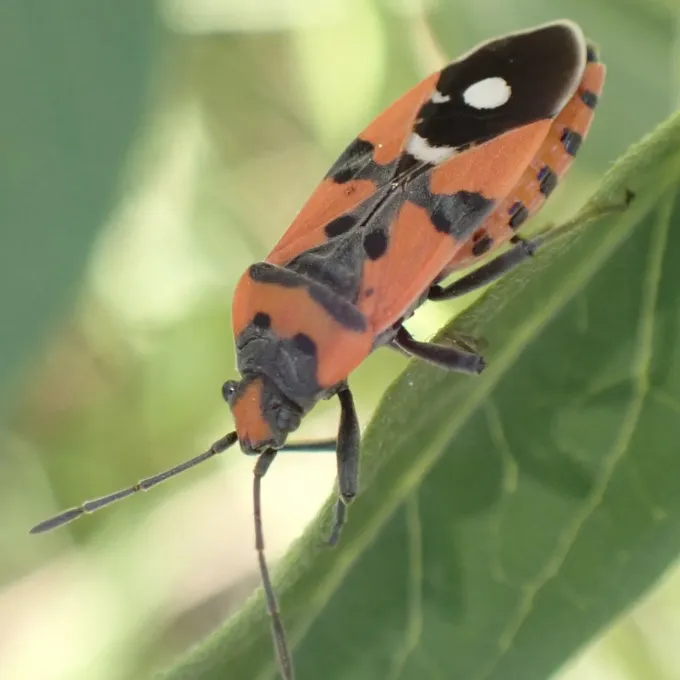
The European firebug, scientifically known as Lygaeus equestris, is a member of the Lygaeidae family, easily recognizable by its bold red and black color pattern.
Adults typically measure between 9 and 11 millimeters in length. The head, antennae, and legs are solid black, contrasting sharply with the bright red wings that feature a distinct geometric black marking.
While often associated with non-flying insects in common names, they are actually capable of flight and can travel to find suitable host plants or overwintering sites.
The life cycle involves incomplete metamorphosis, where nymphs resemble smaller, less patterned versions of the adults and grow through several stages to maturity.
They are gregarious insects, frequently congregating in large clusters on tree trunks, stones, or walls, especially during warm, sunny periods of the year.
What it damages
These insects primarily feed on the seeds of various plants, such as those in the Malvaceae family, utilizing their piercing-sucking mouthparts to extract nutrients.
When feeding, they inject saliva into the plant tissues, which contains enzymes that break down the cell contents, often leading to localized necrosis.
While they generally prefer seeds, in high-density populations, they may attack young plant shoots, buds, and fruit, causing stunted growth and deformity.
Ornamental plants and saplings in nurseries are particularly vulnerable to their feeding activity, which can impair both the aesthetic value and the health of the plants.
Although they are often considered minor pests, large infestations can cause noticeable damage, leading to withered leaves and premature fruit drop in sensitive vegetation.
When it appears
Adults overwinter in protected environments, including cracks in tree bark, deep inside leaf litter, or within hollow debris near the ground.
As spring temperatures begin to rise, usually in April or May, they emerge from hibernation to feed, mate, and begin their reproductive cycle.
Their activity levels are highest during warm, sunny days when they gather in groups to maximize heat absorption, which is critical for their early-season development.
Depending on regional climatic conditions, one or two generations may occur throughout the growing season before the adults seek shelter for the winter.
As the weather cools in autumn, the population activity gradually diminishes as the insects migrate toward their dormant phase in sheltered nooks.
Signs of infestation
The most prominent sign of a firebug infestation is the appearance of dense, reddish-black clusters of insects on sun-exposed surfaces, such as tree trunks or south-facing walls.
Plant damage is often characterized by chlorotic spotting on leaves or shriveled tips on new growth, resulting from the bugs' intensive sap-sucking behavior.
The presence of malformed or wilting flower buds and young fruit, accompanied by the insects themselves, is a strong indicator of their feeding pressure.
When disturbed, firebugs often release a scent from their defensive glands, which can be a subtle but distinct sign of their close proximity in the garden.
Finding groups of nymphs on the undersides of leaves or stems during the mid-season is a clear indication that a local population is actively breeding.
Control measures
Manual removal is the most practical approach for small-scale infestations; simply brushing them into a container of soapy water is highly effective during their grouping phase.
Maintaining a clean garden by removing excessive leaf litter, debris, and weeds prevents them from finding suitable sites for hibernation.
For more severe cases, targeted use of horticultural soaps or contact insecticides can be employed to reduce population numbers while protecting beneficial pollinators.
Preventative landscape management, such as avoiding the planting of favorite host plants near sensitive crops, can significantly lower the risk of infestation.
- Regular weeding and garden cleanup
- Use of row covers for young seedlings
- Manual collection during spring aggregations
- Monitoring plant health for early stress signs
Taxonomy
- Latin name
- Lygaeus equestris
- Order
- Hemiptera (bugs, aphids, leafhoppers)
- Family
- Lygaeidae
- EPPO code
- SPITEQ
Discussion
No discussions yet — be the first.