
Lygaeus civilis
Lygaeus civilis
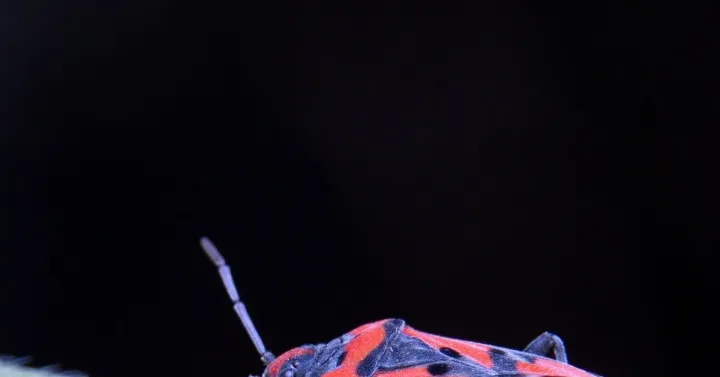
Description
How to identify
Lygaeus civilis, commonly referred to as a type of seed bug, belongs to the order Hemiptera and the family Lygaeidae. Adult insects are characterized by their vibrant coloration, featuring a distinct red pattern in the shape of a cross or spots on a black background of the pronotum and hemelytra.
The body is elongated, typically measuring about 8 to 10 millimeters in length. The head is equipped with a short rostrum designed for piercing plant tissues and sucking out sap. The antennae are long and clearly divided into four segments.
Nymphs resemble the adults but are smaller in size and possess undeveloped wings that grow as they progress through developmental stages. The coloration of nymphs ranges from reddish-orange to dark brown with black dots on the abdomen.
Adult bugs are highly mobile and capable of flying significant distances in search of suitable food sources. Their activity levels are directly dependent on air temperature and light conditions.
This species is a typical representative of the entomofauna that prefers sunny and dry areas. They are often found on weeds before moving to cultivated crops during the ripening phase of the fruits.
What it damages
Lygaeus civilis primarily causes damage to berry crops, especially garden strawberries. The pest attacks both the fruits and the flower stalks, interfering with the normal development of the crop.
In addition to strawberries, the insect can feed on various ornamental plants, vegetable crops, and wild grasses. High population densities can cause significant damage to the commercial appearance of the produce.
The feeding process involves injecting saliva containing enzymes into the plant tissue, which causes localized necrosis. This leads to fruit deformation and a reduction in their flavor and quality.
Damaged fruits often lose their ability to ripen properly, becoming soft and unsuitable for long-term storage or transportation. During massive outbreaks, crop losses can be substantial.
The pest is also a potential vector for pathogenic microorganisms that enter the plant tissue through punctures, triggering the development of secondary fungal and bacterial infections.
When it appears
Adults overwinter in the upper soil layer, under fallen leaves, in plant debris, or in tree bark crevices. In the spring, once soil temperatures reach 10–12 degrees Celsius, they emerge from diapause.
Initial feeding occurs on weeds, after which the bugs migrate to cultivated plants at the beginning of the berry flowering period. Peak activity usually occurs in late spring and early summer.
The life cycle includes the egg stage, five nymphal stages, and the adult stage. Depending on the climatic zone, one or two generations can develop throughout a single season.
The summer generation is most active during hot and dry weather, as the insects' need for plant sap increases to maintain their body's water balance.
In the autumn, with the onset of the first frosts, adult bugs enter a dormant state, moving to protected areas for overwintering, which makes autumn garden cleaning a key factor in population control.
Signs of infestation
A characteristic sign of the presence of Lygaeus civilis is the appearance of pits or "pinpricks" on the surface of the berries, often surrounded by discolored, light or brown tissue.
When inspecting plants in the early morning, you may find the insects themselves, which quickly hide when approached. They prefer the underside of leaves and concealed parts of the inflorescences.
One visual signal of infestation is the premature wilting of flowers or the yellowing of young leaves, which can also be attacked by the pest in search of nutrients.
The presence of excrement in the form of small dark spots on the surface of fruits and leaves is further evidence of a large colony's activity in a specific area.
If the fruits acquire a specific unpleasant "buggy" odor, it indicates that the pests have damaged them to a significant degree, making the produce unsuitable for consumption.
Control measures
The primary control measure is an agronomic approach: regular weeding to remove host plants where the bugs aggregate before moving to crops. It is crucial to timely remove plant debris after the harvest.
Manual collection of insects in the early morning hours, when their mobility is minimal due to cool temperatures, is an effective method for small home gardens.
In industrial settings, if the pest population reaches critical levels, contact-stomach insecticides authorized for use on berry crops before the ripening stage may be applied.
Biological control can include attracting natural enemies to the area, such as insectivorous birds, entomophagous insects, or the use of bio-preparations based on fungi that infect bugs.
- Practice crop rotation.
- Use mulching materials that restrict access to the soil.
- Provide timely fertilization to increase plant resilience and vigor.
Taxonomy
- Latin name
- Lygaeus civilis
- Order
- Hemiptera (bugs, aphids, leafhoppers)
- Family
- Lygaeidae
- EPPO code
- LYGACI
Discussion
No discussions yet — be the first.