
Lygaeus bug
Lygaeus
Description
How to identify
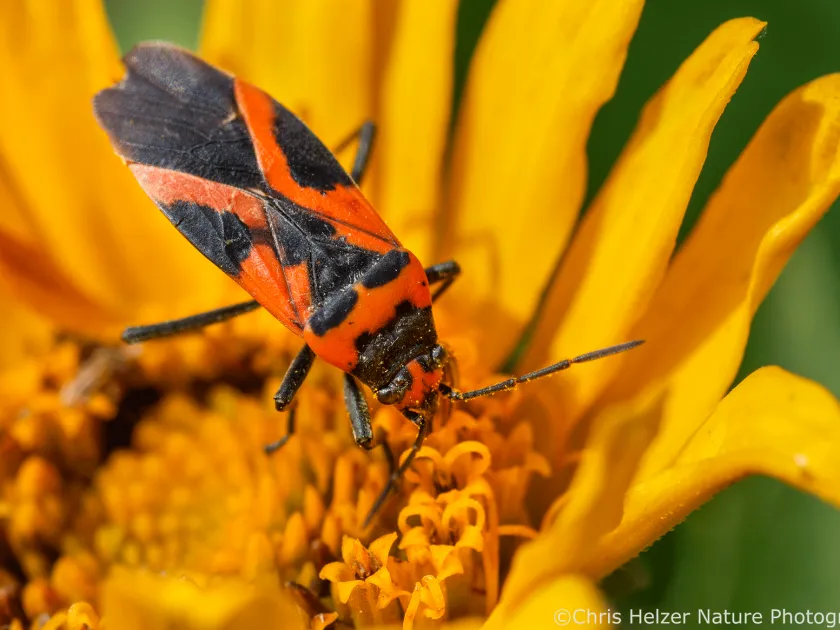
The Lygaeus bug belongs to the family Lygaeidae, commonly known as seed bugs or ground bugs. They are easily recognizable by their striking, high-contrast coloration, typically featuring bold red, orange, and black patterns on their backs.
These insects have a classic hemipteran structure, characterized by a shield-shaped back and a specialized piercing-sucking mouthpart designed for extracting plant fluids.
Their life cycle consists of incomplete metamorphosis, transitioning from eggs to five nymphal stages before reaching adulthood. The nymphs often look like miniature versions of the adults.
Adult bugs are capable of flight, allowing them to disperse quickly across agricultural fields. They are known to be highly resilient and can adapt to various environmental conditions.
Overwintering typically takes place in protected areas such as soil cracks, under leaf litter, or within the dry stems of weeds, which serves as a shield against freezing temperatures.
What it damages
These pests primarily damage crops by feeding on the sap of stems, leaves, and reproductive organs like seeds and blossoms, leading to a significant loss of vitality in the host plant.
By injecting enzymes during feeding, the bugs break down plant tissues into a liquid form, which results in localized cell death and the formation of characteristic necrotic spots.
Heavy infestations can lead to wilting, stunted growth, and a reduction in the overall photosynthetic capacity of the plants, ultimately causing lower yields and poor seed quality.
The damage is particularly severe during the plant's flowering and fruiting stages, where even minor feeding activity can cause the abortion of flowers or the development of deformed, empty seeds.
Repeated feeding cycles from different generations of bugs can create a persistent stress factor for crops, making them more susceptible to subsequent plant diseases and environmental fluctuations.
Signs of infestation
The most immediate sign of an infestation is the presence of yellow or brown spots on the foliage, which are remnants of the bugs' feeding punctures.
Scouting during early morning or late afternoon often reveals groups of adults congregating on the stems or under the flower heads of affected host plants.
Physical deformities, such as twisted stems or underdeveloped fruits, serve as clear indicators that the plant's internal fluid transport system has been compromised by the pests.
Early leaf drop and premature wilting in parts of the field without obvious drought symptoms are often linked to localized clusters of this insect pest.
- Bright red and black insects visible on the plant canopy.
- Necrotic spotting and chlorosis on leaves.
- Premature shedding of blooms and young fruit.
- Empty seeds and reduced yield at harvest time.
Control measures
Integrated Pest Management (IPM) is the most effective approach, focusing on crop rotation to disrupt the life cycle of the bug and limit its access to preferred host plants.
Sanitation practices, including the removal of weeds and crop residues from field borders, effectively eliminate the overwintering sites where populations gather.
Deep plowing during the post-harvest period is highly recommended as it disrupts the hibernation process and exposes the insects to predators and cold temperatures.
When monitoring confirms that pest numbers exceed the economic threshold, the application of targeted insecticides is necessary to prevent significant yield losses.
Encouraging the presence of natural predators, such as birds or predatory insects, can help maintain the population density below damaging levels in sustainable farming systems.
Taxonomy
- Latin name
- Lygaeus
- Order
- Hemiptera (bugs, aphids, leafhoppers)
- Family
- Lygaeidae
- EPPO code
- LYGASP
Discussion
No discussions yet — be the first.