
Apple spanworm
Lycia pomonaria
Description
How to identify
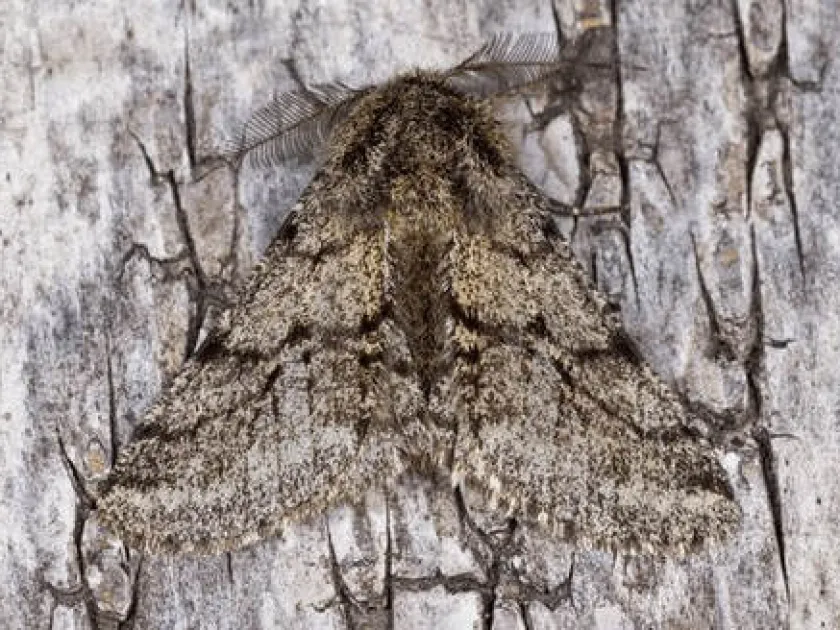
The Apple spanworm (Lycia pomonaria) is a moth belonging to the Geometridae family. This species exhibits distinct sexual dimorphism: males have fully developed wings with a span of 40–50 mm and are greyish-brown, while females are flightless, possessing vestigial wings and a stout, hair-covered body.
The larvae, known as spanworms, move in a characteristic looping motion due to the reduction of prolegs. Their body coloration varies throughout development, providing excellent camouflage against the bark and foliage of their host plants, which protects them from avian predators.
What it damages
This moth primarily targets pome and stone fruit trees, including apple, pear, cherry, and plum. It is considered a significant pest in orchards due to the larvae's habit of feeding on buds and emerging leaves during the early vegetative phase of the tree.
In outbreaks, the larvae can cause total defoliation of fruit trees, leading to severe stress for the plant and substantial yield losses. Beyond leaves, they may also consume flower buds, effectively preventing fruit formation and weakening the tree for future seasons.
When it appears
The adult emergence occurs very early in the spring, often coinciding with the first signs of bud break or even earlier. Males are active fliers on mild spring evenings, while females crawl onto trunks and branches to deposit their eggs in crevices.
Larval development takes place during the spring months. Once the caterpillars complete their feeding, they descend to the soil and pupate. The pupal stage typically remains in the ground throughout the summer, autumn, and winter months until the following spring cycle.
Signs of infestation
The first signs of infestation are ragged, skeletonized, or entirely missing leaves on the canopy tips in early spring. Closer inspection of the branches often reveals small, hairless larvae moving in their signature looping fashion.
During the early season, you may find the flightless females on the tree bark, which look like small, fuzzy, spider-like creatures. The presence of frass (larval droppings) on the leaves or beneath the tree crown is another clear indicator of active feeding activity.
Control measures
Mechanical control is highly effective; sticky bands or traps applied to tree trunks in early spring prevent flightless females from climbing up to lay eggs. Keeping the orchard free of debris and maintaining healthy bark can reduce nesting sites.
Chemical control should be implemented during the early bud burst stage, targeting young larvae before they cause significant canopy damage. Utilizing selective insecticides or biological agents helps minimize the impact on beneficial insect populations while controlling the spanworm.
Taxonomy
- Latin name
- Lycia pomonaria
- Order
- Lepidoptera (butterflies)
- Family
- Geometridae
- EPPO code
- BISTPO
Discussion
No discussions yet — be the first.