
Pale brindled beauty
Lycia hirtaria
Description
How to identify
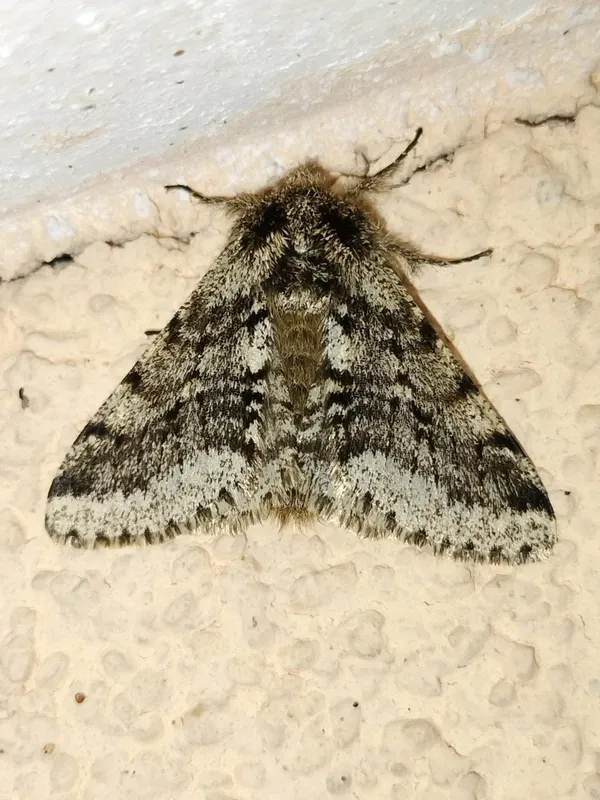
The Pale brindled beauty (Lycia hirtaria) is a moth belonging to the Geometridae family. The adult moth has a wingspan of approximately 45–50 mm and features a brownish-grey coloration with dark, irregular transverse lines.
The body of the moth is densely covered with hair-like scales, which gives the insect a fuzzy appearance. Females are generally larger and less active than males, often resting on tree trunks during the day.
The larvae, known as inchworms or loopers, reach lengths of up to 60 mm. They move by arching their bodies in a characteristic loop, which is a key diagnostic feature of the Geometridae family.
Larval coloration ranges from green to brown or grey, providing effective camouflage against the bark and leaves of host trees. The larvae possess distinct fleshy tubercles on their body segments.
The pupa is dark brown and spends the winter buried in the soil. It is protected by a tough cocoon, allowing it to survive harsh winter conditions until the following spring.
What it damages
The Pale brindled beauty is a polyphagous pest that feeds on a wide variety of deciduous trees and shrubs. It is particularly known for causing significant damage to orchard fruit trees.
Primary host plants include apple, pear, plum, cherry, and apricot trees. Beyond orchards, it is frequently found on forest species such as birch, linden, willow, and poplar.
Larvae feed openly in the tree canopy. In cases of high infestation, they can cause total defoliation, severely reducing the tree's photosynthetic capacity and weakening its overall health.
Feeding damage typically begins with the leaves, but larvae may also consume buds and young fruit, directly impacting the quality and quantity of the harvest.
Trees that suffer from heavy defoliation are prone to stress, making them more susceptible to subsequent attacks by secondary pests and various wood-decaying pathogens.
When it appears
Adult moths emerge in early spring, typically from April to May, coinciding with the phenological stage of bud burst and flowering in many fruit species.
Females lay eggs in clusters, placing them in crevices of the tree bark or near the base of buds. This placement ensures that larvae have immediate access to food upon hatching.
Larval activity peaks in May and June. During this phase, the caterpillars feed voraciously for approximately four to six weeks, growing rapidly before reaching maturity.
Once feeding is complete, the larvae descend from the canopy and burrow into the soil to pupate. They remain in the soil as pupae throughout the summer, autumn, and winter.
The species completes one generation per year. Understanding the timing of the spring flight of adults is crucial for determining the best window for monitoring and intervention.
Signs of infestation
The most noticeable sign of an infestation is the presence of "looper" caterpillars in the canopy. These larvae often drop from branches on silken threads when disturbed.
Damage to foliage is characterized by irregular, ragged edges on leaves, often progressing to total skeletonization, leaving only the primary veins intact.
The presence of frass (larval droppings) on the leaves or the ground beneath the tree serves as an indicator of an active population of caterpillars feeding overhead.
In cases of severe infestation, a distinctive rustling sound may be audible in the canopy on calm, windless days, caused by the collective feeding of numerous larvae.
- Ragged, eaten leaf margins.
- Visible caterpillars on branches mimicking twigs.
- Reduced growth rate of terminal shoots.
Control measures
Effective management of the Pale brindled beauty requires an integrated pest management approach that combines mechanical and chemical control strategies.
Mechanical control includes tilling the soil around the base of trees in autumn and early spring, which disrupts the overwintering pupae and reduces the next generation's population.
Biological control methods, such as applying Bacillus thuringiensis-based products, are highly recommended during the early larval stages, as they target the pests while sparing beneficial insects.
Chemical control with systemic or contact insecticides should be reserved for cases where economic thresholds are exceeded, ensuring that applications are timed to coincide with peak hatching.
Encouraging natural predators, such as insectivorous birds, is an excellent way to maintain pest populations at a manageable level without the need for intensive chemical interventions.
Taxonomy
- Latin name
- Lycia hirtaria
- Order
- Lepidoptera (butterflies)
- Family
- Geometridae
- EPPO code
- BISTHI
Discussion
No discussions yet — be the first.