
Copper butterfly
Lycaena
Description
How to identify
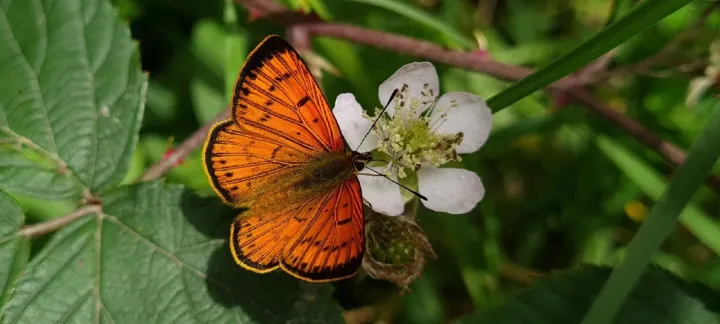
The genus Lycaena, commonly known as Copper butterflies, belongs to the family Lycaenidae within the order Lepidoptera. These butterflies are recognized by their vibrant orange or copper-red wing patterns.
The caterpillars are typically cylindrical and green, providing excellent camouflage against the foliage of their host plants, which makes them hard to spot.
Pupae of these species are usually attached to the underside of leaves or within plant debris and have a brown coloration that mimics dead plant matter.
Adults are diurnal and prefer sunny environments, including meadows, fields, and garden edges where their host plants, like sorrel or dock, are abundant.
The life cycle undergoes complete metamorphosis, including egg, larva, pupa, and adult stages, necessitating targeted monitoring throughout the growing season.
What it damages
Caterpillars of the Lycaena genus primarily feed on plants in the Polygonaceae family, with sorrel, rhubarb, and buckwheat being the most common hosts.
Larvae cause significant damage by consuming leaf tissue, creating irregular holes, or skeletonizing the leaves, which significantly impacts plant health.
Heavy infestations can lead to substantial loss of foliage, reducing the photosynthetic capacity of the plant and stunting its overall growth and development.
For crops grown for their leaves, such as sorrel, such damage renders the product unmarketable due to the aesthetic impact of the holes and chewed edges.
Moreover, damaged tissue is more susceptible to secondary fungal infections and bacterial rots, which can lead to further plant loss if not managed.
When it appears
The flight period for the first generation typically begins in late spring, around May, when temperatures become suitable for mating and egg-laying.
A second generation of adults usually appears in mid-to-late summer, presenting a recurring threat to mid-season and late-season vegetable plantings.
The larval stage, which is the most destructive, is most active during the peak vegetative growth of host plants throughout the warmer summer months.
Overwintering occurs primarily as pupae or advanced-stage larvae hidden within plant debris or near the soil surface in protected areas.
Agronomists recommend frequent field scouting from late spring onwards to detect the presence of early-stage larvae before significant damage occurs.
Signs of infestation
Initial signs of infestation include distinctive irregular feeding patterns or holes on the edges or the centers of the leaves on host plants.
The presence of frass, which appears as small dark granules on the leaves or at the base of the plant, indicates active feeding by the caterpillars.
Careful inspection of the undersides of leaves often reveals small, solitary, or clustered eggs laid by the female butterflies.
Leaf curling or localized yellowing of damaged tissue may also be observed, signaling the presence of larvae tucked away near the leaf veins.
Visual identification of adult butterflies flying over crops on sunny days serves as a primary warning to increase monitoring efforts immediately.
Control measures
Cultural control methods such as weeding and removing wild host plants like dock or sorrel from field margins help significantly reduce the pest population.
Thorough cleanup of all plant debris at the end of the season disrupts the life cycle by destroying potential overwintering sites for the pupae.
Hand-picking caterpillars during the early morning or evening hours is a highly effective, non-chemical method for small-scale gardens and allotments.
Biological control agents, such as formulations containing bacteria, are recommended for managing larger infestations without harming the ecosystem.
- Implement strict crop rotation patterns to limit pest buildup.
- Use fine netting on smaller crops to prevent egg-laying.
- Encourage natural predators by maintaining biodiversity in fields.
Taxonomy
- Latin name
- Lycaena
- Order
- Lepidoptera (butterflies)
- Family
- Lycaenidae
- EPPO code
- LYCZSP
Discussion
No discussions yet — be the first.