
Lycaeides butterfly
Lycaeides
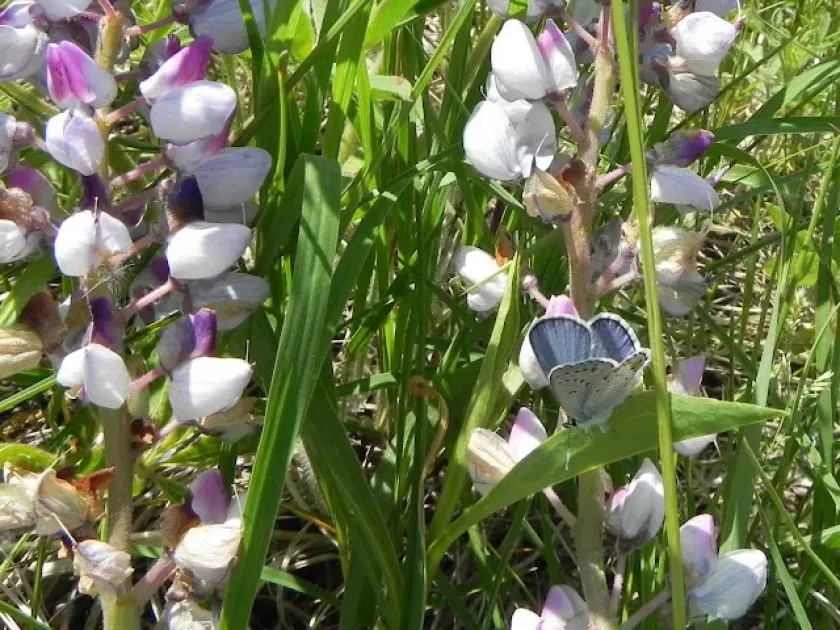
Description
How to identify
Lycaeides is a genus of butterflies within the Lycaenidae family. Adult specimens typically have a wingspan of 25 to 30 mm, with males displaying vibrant blue or violet upper sides with dark margins, and females often presenting brownish tones.
The larvae, or caterpillars, are notably flattened and exhibit a green coloration that provides excellent camouflage against the stems and leaves of their host plants.
Taxonomically, they belong to the order Lepidoptera. Field identification is often challenging due to the high variability in wing patterns and similarity to related butterfly genera.
Pupae are generally ocher or brown and are often attached to the base of plants or stem structures, remaining inconspicuous to the naked eye during their development phase.
A crucial aspect of their biology is the mutualistic relationship with ants; the larvae produce sweet secretions which attract ants, and in return, the ants provide protection against predators.
What it damages
The pest primarily targets plants within the Fabaceae (legume) family. While wild legumes are the preferred habitat, significant infestations can spread to cultivated fields of alfalfa, clover, and various pea species.
Larval stages are the primary cause of damage, as they consume leaf tissue and young flower buds, thereby weakening the plant and directly reducing potential seed yield.
Heavy infestations can lead to stunted growth and loss of vigor in crops, making them less productive and potentially reducing the nutritional quality of harvested forage.
Mechanical damage to leaves and stems creates entry points for secondary plant pathogens, increasing the risk of bacterial and fungal infections across the field.
While complete crop destruction is rare, the cumulative effect of constant feeding by larvae can significantly lower the overall agricultural productivity of a legume plantation.
When it appears
Adult butterfly activity typically begins in late spring, continuing throughout the summer months, with timing heavily dependent on local climatic conditions and regional temperatures.
In most habitats, one or two generations occur annually, with the second generation often coinciding with the peak vegetative growth phase of host legume crops.
Adults are most active during warm, sunny days, which facilitate mating and the strategic deposition of eggs on the undersides of host plant leaves.
The species usually overwinters in either the egg or early larval stage, tucked safely within plant debris or near the soil surface to survive cold temperatures.
Peak larval feeding activity is generally observed in mid-summer, when the succulent new growth of crops provides the most nutrients for developing caterpillars.
Signs of infestation
The first signs of an infestation include the appearance of irregular holes or notched edges on the leaves, indicative of early-stage caterpillar feeding.
Increased ant activity on stems and leaves is a strong indicator of the presence of Lycaeides larvae, as the ants are attracted by the honeydew-like secretions produced by the caterpillars.
The presence of frass (small dark droppings) on the leaves or around the base of the plant confirms that active feeding is occurring on the crop.
Closer visual inspection of leaf undersides and branch axils can reveal individual eggs or larvae, which are often well-hidden due to their protective coloration.
Damaged pods or stunted floral parts that turn yellow or dry prematurely are typical consequences of severe infestations that have impacted the reproductive organs of the plant.
Control measures
Integrated pest management strategies start with field sanitation, specifically the removal of wild legume hosts from field margins to prevent the initial spread of the butterfly.
Crop rotation is an effective preventive measure that disrupts the life cycle of the pest, making it more difficult for established populations to persist in agricultural areas.
Biological control, such as the use of selective microbial insecticides (e.g., Bacillus thuringiensis), can suppress larval numbers without harming beneficial pollinators or natural predators.
Chemical control should be reserved for cases of high infestation, using targeted products applied during the early larval development stages to maximize effectiveness and safety.
- Monitor fields regularly, focusing on crop margins where infestation starts.
- Maintain robust field edges to reduce the harbor for the butterfly life stages.
- Encourage local populations of parasitic wasps that predate on larvae.
Taxonomy
- Latin name
- Lycaeides
- Order
- Lepidoptera (butterflies)
- Family
- Lycaenidae
- EPPO code
- LYCASP
Discussion
No discussions yet — be the first.