
Flat moth
Luquetia lobella
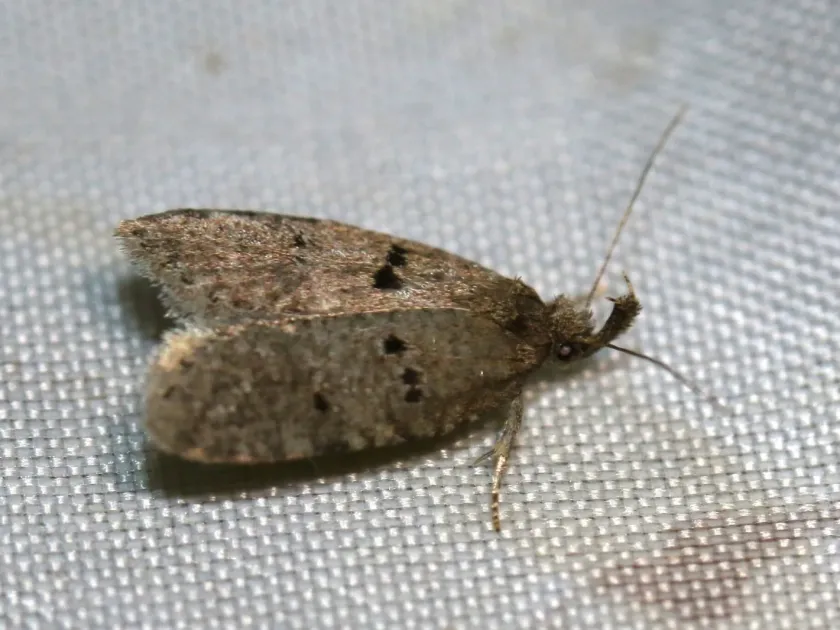
Description
How to identify
The flat moth Luquetia lobella is a member of the order Lepidoptera, specifically the family Depressariidae. It is a nocturnal insect, making it a challenging pest to spot during daytime field inspections.
Adult moths possess a cryptic coloration that allows them to camouflage perfectly against tree bark. Their body is covered in scales that mimic the texture and color of their typical host habitats.
Larvae undergo multiple instars, changing size and color as they develop. They are equipped with strong mandibles designed for efficient consumption of leaf tissues, leading to rapid defoliation if left unchecked.
Pupation occurs within dense cocoons hidden in bark crevices or folded leaves. These shelters serve as critical protection against adverse weather conditions and predatory threats throughout the developmental stage.
Taxonomic identification of this species often requires careful examination of genitalia structures, as external morphological traits can be similar to other members of the Depressariidae family.
What it damages
This pest primarily targets members of the Rosaceae family, causing significant damage to apple, pear, and various ornamental trees. The foliage is the primary site of infestation and damage.
Larvae feed on the parenchyma of leaves, often leaving the veins intact, which results in a skeletonized appearance. Heavy infestations lead to extensive damage that compromises the tree's health.
Damaged leaves curl, deform, and eventually wither, which significantly reduces the total photosynthetic surface of the canopy. This metabolic stress affects the tree's overall vigor and yield.
Severe attacks on young seedlings or saplings can result in stunted growth and premature leaf drop. This is particularly problematic in nursery environments where tree development is critical.
Furthermore, feeding damage provides entry points for secondary pathogens, including various fungal and bacterial diseases that can further weaken the tree's vascular system.
When it appears
Adult activity of Luquetia lobella typically begins in early spring, coinciding with the first stable warm temperatures that promote the emergence of overwintered individuals.
The period of peak larval feeding activity occurs from late May through mid-July. During this time, the larvae are most aggressive and consume foliage at an accelerated rate.
Depending on local environmental and climatic conditions, the pest may complete multiple generations per season, increasing the risk of sustained damage throughout the growing cycle.
As autumn approaches, the population begins to decline as individuals seek suitable protected sites for diapause, preparing for the upcoming winter survival phase.
Overwintering usually takes place in the pupal or adult stage, hidden deep within bark crevices or protected plant debris, allowing the species to withstand cold winter temperatures.
Signs of infestation
The earliest signs of infestation include the appearance of small "windows" on the leaves where the tissue has been eaten away, leaving behind only the vascular network.
The presence of silken webs, which larvae use to pull leaf edges together into protective shelters, is a clear indicator that the pest is actively colonizing the canopy.
Accumulation of larval frass on leaves or lower branches serves as a warning sign of active feeding taking place in the upper regions of the tree crown.
Curled and deformed leaves, particularly at the terminals of shoots, indicate where larvae are concentrated and actively feeding on young, nutrient-rich tissues.
- Visible leaf skeletonization.
- Silken webbing between leaves.
- Premature yellowing of canopy.
- Deformed shoot terminals.
Control measures
Effective control of Luquetia lobella often involves the application of systemic insecticides during the bud-burst phase to target emerging larvae before they cause widespread damage.
Biological control using Bacillus thuringiensis-based products is highly recommended, as it provides targeted suppression of caterpillars while preserving beneficial predatory insects.
Good orchard sanitation, including the removal of loose bark and the collection of fallen leaves in autumn, significantly reduces the number of overwintering sites available to the pest.
Installing trunk bands can help intercept migrating larvae, effectively limiting their movement across the tree and allowing for more localized intervention strategies.
Pheromone traps are essential for monitoring adult population density, allowing growers to time their control efforts precisely and minimize the use of broad-spectrum chemicals.
Taxonomy
- Latin name
- Luquetia lobella
- Order
- Lepidoptera (butterflies)
- Family
- Depressariidae
- EPPO code
- LUQULO
Discussion
No discussions yet — be the first.