
Red earthworm
Lumbricus rubellus
Description
How to identify
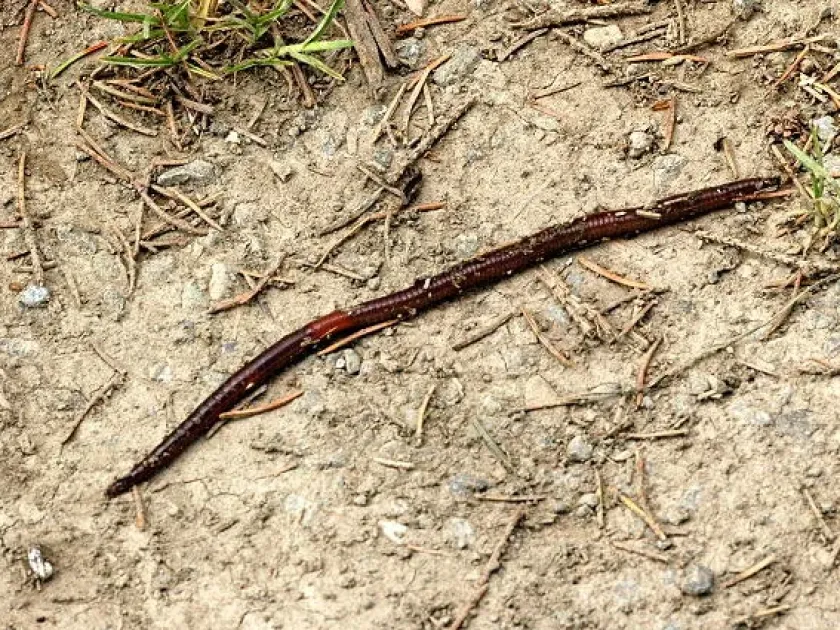
The red earthworm (Lumbricus rubellus) is a soil-dwelling annelid belonging to the family Lumbricidae. It is characterized by its reddish-brown to cherry-colored dorsal side.
Adult worms typically reach 5 to 15 centimeters in length. Their bodies are highly segmented and covered with tiny bristles (setae), which facilitate rapid movement through soil layers.
While often beneficial in agricultural fields, this species can become a nuisance in greenhouses and nurseries, particularly in potted plants where soil volume is restricted.
They are highly active and thrive in moist environments rich in organic matter. Their life cycle involves laying cocoons, allowing for rapid population growth in favorable conditions.
Unlike other species, they are quite energetic when disturbed, making them relatively easy to identify during soil inspections in greenhouse operations.
What it damages
In greenhouses and containerized plant production, red earthworms cause physical damage to delicate root systems, especially in young seedlings.
By tunneling through the potting medium, they disrupt the root architecture and tear apart fine root hairs essential for water and nutrient uptake.
Frequent tunneling often leads to the exposure of roots to air pockets, causing them to dry out rapidly, which manifests as wilting or stunted growth in the plant.
Open wounds left by the worms serve as entry points for soil-borne pathogens and fungi, significantly increasing the risk of root rot and other plant diseases.
Young plants are particularly vulnerable, as their root systems are not yet developed enough to withstand or recover from the mechanical trauma caused by the worms.
Signs of infestation
Surface activity is easily identified by the presence of small, burrow-like holes and accumulations of granular worm castings (coprolites) on top of the soil.
Plants often exhibit signs of physiological stress, such as yellowing leaves or wilting, despite consistent irrigation, as the worms disrupt the plant's connection to the soil.
The potting medium may appear loose or unstable, and the soil-to-root contact is often compromised, which is easily visible when inspecting the root ball.
In container systems, worms may be found congregating near the drainage holes or under the pots, indicating a high level of activity within the growing medium.
Loss of plant vigor and inconsistent growth patterns across a batch of seedlings are common indicators of a significant worm presence.
Control measures
The most effective strategy for managing red earthworms in nurseries is the thorough sterilization of potting media using steam or heat before use.
Preventing access is crucial; placing containers on raised benches or using fine-mesh liners at the bottom of pots can effectively exclude worms from growing media.
Careful irrigation management is recommended, as maintaining appropriate moisture levels helps prevent the overly wet conditions that these worms prefer.
If population density is high, the use of targeted soil treatments or biological control methods may be employed, following specific agronomical guidelines.
- Heat sterilization of soil (70-80°C).
- Use of raised greenhouse benches.
- Implementation of fine-mesh drainage barriers.
- Regular monitoring of seedling development.
Taxonomy
- Latin name
- Lumbricus rubellus
- Family
- Lumbricidae
- EPPO code
- LUMBRU
Discussion
No discussions yet — be the first.