
Eisenia andrei
Eisenia andrei
Description
How to identify
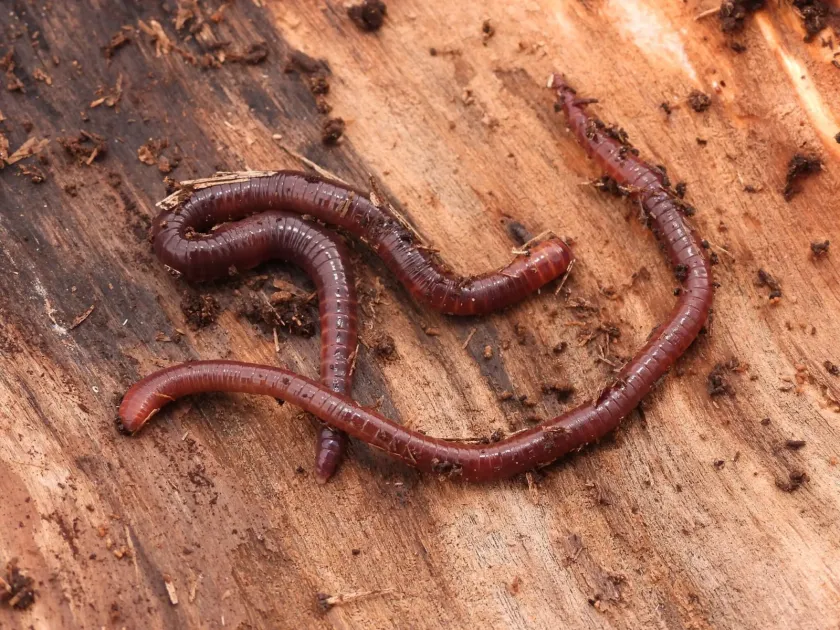
Eisenia andrei is a member of the Lumbricidae family. It is a surface-dwelling earthworm known for its reddish-brown color and active role in decomposing organic matter.
These earthworms are morphologically similar to Eisenia fetida, and they are often referred to as manure worms. Adults typically reach lengths between 6 and 13 centimeters.
They thrive in environments rich in decaying organic material, such as compost piles, leaf litter, and nutrient-dense soil. Their segmented body allows for efficient movement through soil substrates.
The species reproduces rapidly under favorable conditions, laying cocoons that hatch into juvenile worms. Their life cycle is optimized for high-organic habitats, making them excellent decomposers.
In managed agricultural systems, they are often introduced for vermicomposting, but their high population density can sometimes lead to unexpected interactions with plant roots.
What it damages
In professional nursery settings, Eisenia andrei may become a nuisance. While they do not intentionally kill plants, their foraging behavior can be destructive to young seedlings.
In small containers, there is limited space and food. When organic matter is scarce, earthworms may feed on delicate root hairs of young plants, causing growth stress.
The constant burrowing activity disturbs the root-to-soil contact, leading to poor nutrient uptake. This can cause seedlings to exhibit symptoms of malnutrition and stunted growth.
Furthermore, their activity can cause moisture to drain too quickly from containers, resulting in the rapid drying of the substrate and wilting of the young plants.
In cases of extremely high population densities in greenhouses, earthworms can disturb the germination of seeds by physically moving them or damaging the emerging radicle.
Signs of infestation
Signs of earthworm presence in containers include the appearance of casts (excrement) on the substrate surface. These are small, granular, and dark-colored piles of soil.
If the soil in a pot feels loose and fluffy rather than compact, and dries out significantly faster than expected, it is a primary indicator of earthworm activity.
Plant distress is another sign. Seedlings that look pale or stop growing despite adequate water and fertilizer may have a damaged root system due to earthworm movement.
You may also notice small holes or burrows on the surface of the soil near the stem of the plant, indicating that the worms are active in the upper root zone.
A simple inspection of the root ball during repotting will reveal the presence of earthworms or their cocoons, confirming them as the cause of the soil disruption.
Control measures
The most effective control strategy is the use of sterilized, peat-based, or soilless mixes for seed starting. This eliminates the risk of introducing cocoons into your pots.
Physical barriers like fine-mesh screens at the bottom of containers can prevent worms from entering pots from the ground or outdoor nursery benches.
Avoid using raw, uncomposted manure in container mixes. Always ensure that any organic amendments are fully broken down before applying them to your nursery stock.
Monitoring soil moisture is critical; avoiding oversaturation reduces the suitability of the substrate for earthworm colonisation.
- Use pasteurized soil or soilless substrates.
- Install fine-mesh netting under nursery containers.
- Avoid raw organic matter in potting mixes.
- Use physical traps (moist cardboard) to remove worms if necessary.
Taxonomy
- Latin name
- Eisenia andrei
- Family
- Lumbricidae
- EPPO code
- EISEAN
Discussion
No discussions yet — be the first.