
Parrot Crossbill
Loxia pytyopsittacus
Description
How to identify
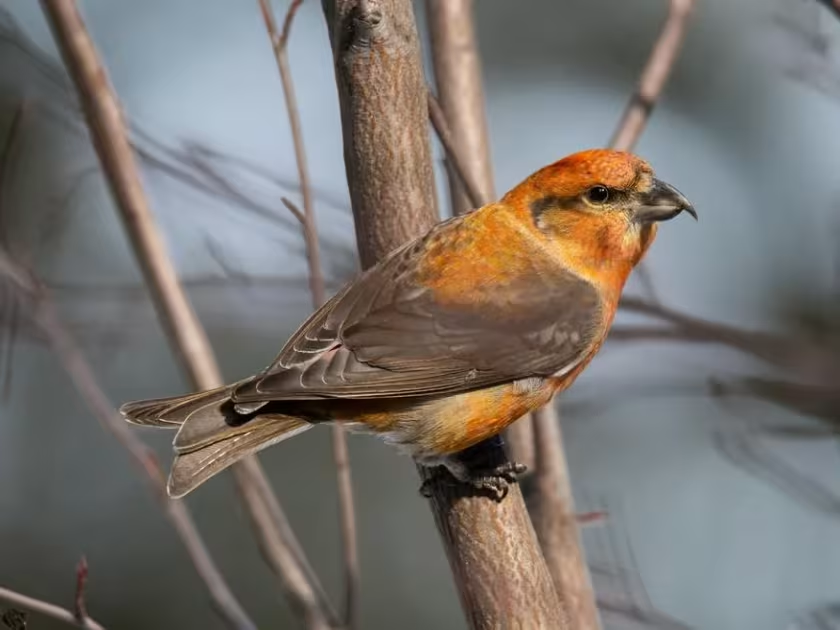
The Parrot Crossbill (Loxia pytyopsittacus) is a member of the Fringillidae family, characterized by a massive bill with crossed tips specifically evolved to pry open tough pine cones.
It is larger than the common crossbill, with a noticeably thicker beak and a broader head. Males typically exhibit reddish or brownish plumage, while females display more muted greenish-grey tones.
These birds are largely resident, inhabiting mature pine forests where they find a consistent food source throughout the seasonal cycle.
Their breeding cycle is unique, often initiating in late winter to coincide with the peak availability of conifer seeds, which are essential for rearing their young in harsh environments.
As specialized seed predators, they play a significant ecological role in regulating the natural seed bank of coniferous forests and influencing regeneration patterns.
What it damages
The primary target of the Parrot Crossbill is the reproductive organs of the Scots pine (Pinus sylvestris). They cause economic losses in commercial seed orchards and forest nurseries.
The bird feeds on the seeds located within the scales of the cones, rendering the cones empty and useless for forestry collection purposes.
During years of poor cone harvests, these birds are known to target buds and young shoots of conifer trees, leading to growth deformities and reduced vigor in young stands.
Significant infestations can result in the loss of a large percentage of the annual seed crop, impacting the financial sustainability of local reforestation programs.
By consuming seeds, the Parrot Crossbill directly reduces the quantity of high-quality material available for seedling production, necessitating proactive management in sensitive areas.
When it appears
Activity is present year-round; however, the most intense feeding on seeds occurs during the autumn, winter, and early spring seasons when seed maturity is at its peak.
Winter is the most critical period, as food scarcity forces the birds to feed heavily on pine cones, leading to the rapid depletion of available seed resources.
In spring, the demands of the nesting cycle keep the birds active, as they require high-calorie food sources to support the survival and growth of their offspring.
Summer activity may shift toward insects and other plant materials, though the birds will continue to exploit cones if they remain available on the trees.
The population density and intensity of damage are strongly correlated with the cyclic seed yield of pine stands, with mass occurrences appearing during heavy seed years.
Signs of infestation
A reliable sign of their presence is the discovery of large quantities of shredded or opened cones on the forest floor, indicating a recent feeding session by a flock.
The cones exhibit distinctive marks: the scales are pried apart and partially damaged, but not consumed entirely as is often the case with squirrel feeding activity.
Evidence on the trees includes damaged cones that remain attached to branches, showing specific signs of bill impact where the bird anchored the cone for extraction.
In seed orchards, a sharp decline in the volume of viable seeds per kilogram of harvested cones is a standard indicator of crossbill damage.
The presence of so-called "anvils" or "smithies" — small gaps in branches where the birds wedge cones for processing — serves as a clear visual marker of their habituation to a location.
Control measures
For high-value seed orchards, mechanical exclusion using protective netting is the most effective method to prevent bird access to the cone crop.
Bio-acoustic deterrents that broadcast distress calls or raptor sounds are highly effective in scaring away foraging flocks from vulnerable plantation sites.
Visual deterrents, such as reflective tapes or models of birds of prey, can provide temporary relief, provided they are rotated regularly to prevent habituation.
Strategic forest management, including site selection for plantations away from known high-density bird breeding areas, helps to reduce long-term damage risk.
Chemical control is not recommended or practiced, as the Parrot Crossbill is an essential component of the forest ecosystem and should be managed with non-lethal, deterrent-based approaches.
Taxonomy
- Latin name
- Loxia pytyopsittacus
- Family
- Fringillidae
- EPPO code
- LOXIPI
Discussion
No discussions yet — be the first.