
Crossbill
Loxia
Description
How to identify
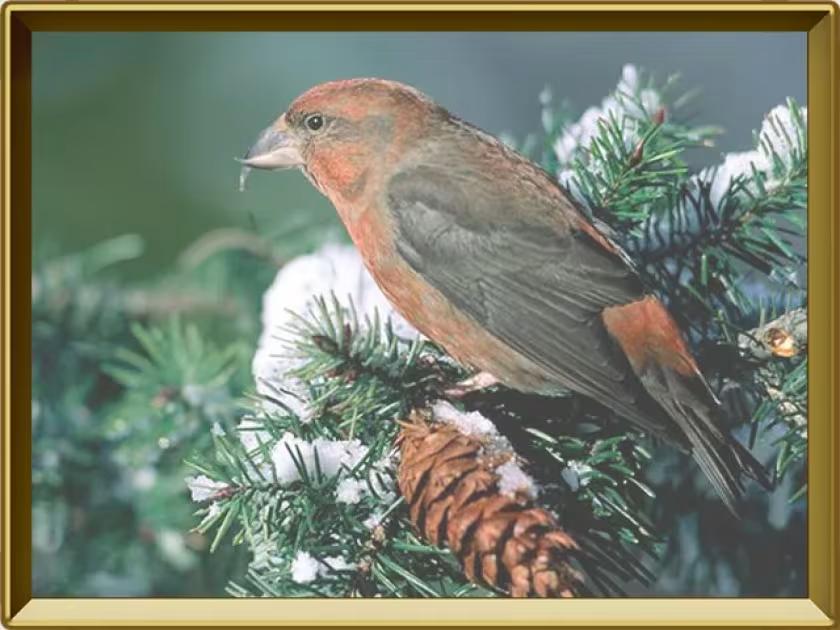
The crossbill (genus Loxia) is a bird of the finch family (Fringillidae), known for its unique beak structure where the mandibles cross. This anatomical adaptation serves as a specialized tool for accessing seeds inside coniferous cones.
These birds possess a robust build and strong, dexterous claws that allow them to hang in various positions while extracting seeds. This behavior is crucial for their survival in dense forest environments where food is concentrated on branch tips.
Males are typically distinguished by their striking red or raspberry-colored plumage, while females and juveniles display duller greenish-grey feathers, providing effective camouflage against the forest canopy.
Crossbills are nomadic, continuously traveling vast distances in response to seasonal fluctuations in cone crops. Their reproductive cycle is uniquely flexible and can occur during winter if food resources are sufficiently abundant.
This high mobility makes crossbills a unpredictable challenge for forest managers, as their arrival on a plantation often correlates with high-yield cycles of spruce, pine, or larch seeds.
What it damages
The primary agricultural impact of crossbills is observed in forest nurseries and high-value seed orchards. By consuming seeds, they significantly reduce the yield of high-quality planting material needed for reforestation.
They feed on spruce, pine, and larch cones. The birds do not simply eat the seeds but often tear the cone scales, leading to premature falling of cones and a decrease in the overall quality of the remaining harvest.
In years with poor cone yields, crossbills may switch their diet to tree buds, damaging the growth points of young seedlings. This can lead to stunted growth or stem deformations in nursery-grown saplings.
In selective breeding orchards, a single flock can destroy a large percentage of the reproductive material within weeks, causing substantial economic losses for forestry operations.
Additionally, the physical damage inflicted on cones by crossbills creates entry points for fungal pathogens and opportunistic pests, which can lead to further decay of the tree's reproductive organs.
Signs of infestation
The most reliable sign of crossbill presence is the accumulation of torn, opened, or discarded cones beneath the canopy. Unlike squirrels, which often gnaw the entire cone, crossbills meticulously pry the scales apart.
You may find distinct piles of cone debris under affected trees. These piles serve as clear evidence of the birds' intensive feeding activity during their time in the area.
The presence of loud, vocal flocks in the treetops, particularly in late winter or early spring, is a common early-warning indicator that should be noted by forest managers.
Visual identification involves observing the birds performing acrobatic maneuvers, often hanging upside down while probing cones with their crossed beaks to reach the hidden seeds.
If you observe cones that appear intact from the outside but are devoid of seeds, it is a hallmark sign that crossbills have already visited the site and extracted the kernels.
Control measures
Acoustic deterrents that broadcast the distress calls of predatory birds, such as hawks or owls, are highly effective in scaring away flocks from sensitive seed orchards.
Installing protective netting over valuable seed-producing trees or seedlings is the most reliable, albeit labor-intensive, method for completely preventing access to the cones.
Visual deterrents, such as raptor silhouettes or reflective tape, may provide short-term relief, but they require regular repositioning to ensure the birds do not become habituated to the stationary items.
Effective forest management includes the early harvesting of cones before the peak of the crossbill migration period, ensuring that the seeds are collected while they are still protected or before they become prime targets.
Promoting the presence of natural predators near plantations is a recommended biological control strategy, helping to keep crossbill populations in check through ecological balance.
Taxonomy
- Latin name
- Loxia
- Family
- Fringillidae
- EPPO code
- LOXISP
Discussion
No discussions yet — be the first.