
Clouded Border
Lomaspilis marginata
Description
How to identify
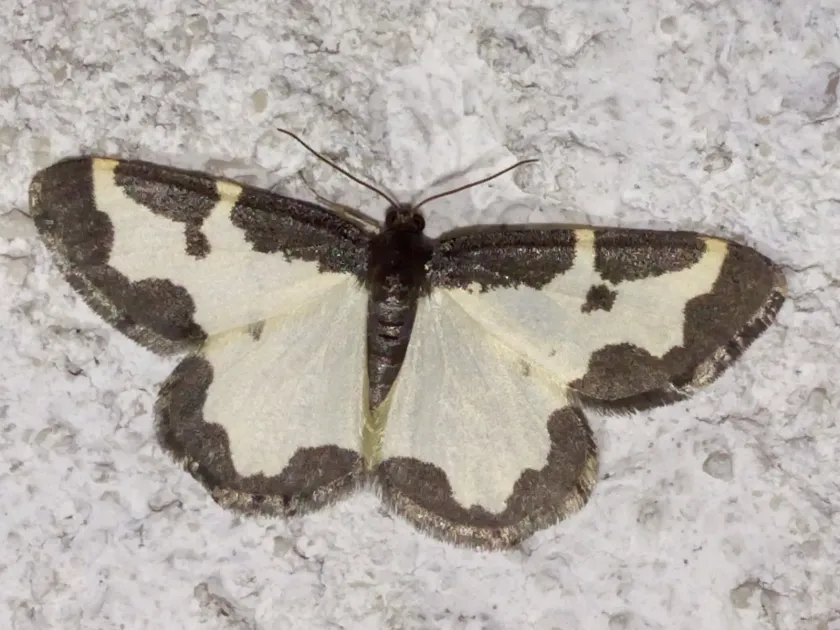
The Clouded Border (Lomaspilis marginata) is a moth belonging to the Geometridae family. Adult moths are easily recognizable by their distinctive creamy-white wings adorned with irregular, dark brown or black blotches along the margins.
The larvae are typical of the Geometer moth family, exhibiting a slender, light green body. They often remain motionless on leaves during the day, mimicking the appearance of twigs or leaf veins to avoid detection by predators.
What it damages
This species primarily feeds on the foliage of trees and shrubs, showing a preference for Salicaceae and Betulaceae families. It can occasionally be found on fruit-bearing trees including apple and currants.
The larvae cause damage by consuming leaf tissue, which results in irregular holes or ragged edges on the foliage. While usually not causing tree mortality, heavy infestations can significantly stunt the growth of young plants.
When it appears
The moth is typically bivoltine, with the first generation emerging in late spring and the second following in mid-summer. Larval activity peaks during the height of the vegetative season, from May through August.
The species overwinters as a pupa, usually embedded in the soil or protected under the leaf litter near the base of the host tree, allowing it to survive the dormancy period of the host plant.
Signs of infestation
Identification often starts with observing eaten leaf margins or missing sections of leaf laminae. The larvae are most active during the night, but they can be spotted during the day on the underside of leaves.
Secondary signs of infection include the accumulation of frass on lower leaves and the presence of slight silken webbing if the larva has been resting or preparing for the pupation phase.
Control measures
Integrated Pest Management (IPM) for the Clouded Border involves monitoring population levels before applying chemical interventions. Promoting biodiversity in the garden helps maintain a natural balance.
- Manual removal of caterpillars from small bushes.
- Use of biological controls such as Neem oil or Bt-based sprays.
- Maintenance of healthy soil to support beneficial predatory insects.
- Cleaning up debris to disrupt the pupation cycle of the moth.
Taxonomy
- Latin name
- Lomaspilis marginata
- Order
- Lepidoptera (butterflies)
- Family
- Geometridae
- EPPO code
- LOMAMA
Discussion
No discussions yet — be the first.