
Clouded Border
Lomaspilis
Description
How to identify
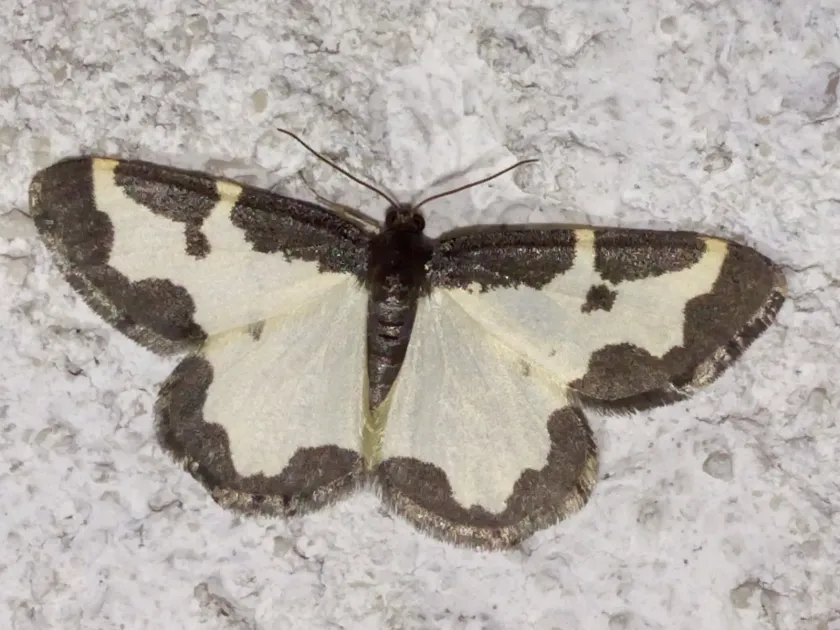
The Clouded Border (Lomaspilis marginata) is a small moth species belonging to the Geometridae family. Adults are easily recognized by their white wings with prominent dark brown or black patterns along the margins.
With a wingspan of approximately 25–30 millimeters, the moth has a delicate appearance, which is quite characteristic of this family of insects.
The larvae, or caterpillars, are typically green, providing excellent camouflage while they feed on the underside or edges of host plant leaves.
Pupation occurs in the soil or within leaf litter, where the dark-colored pupa remains protected from environmental extremes throughout the winter.
This species is native to deciduous woodlands and shrubby areas across temperate regions of Eurasia.
What it damages
The caterpillars of Lomaspilis marginata feed primarily on the foliage of various deciduous trees and shrubs, including aspen, willow, birch, and hazel.
While often found in natural habitats, they may occasionally infest ornamental trees and fruit bushes if these are located near woodland borders.
Feeding damage consists of irregular holes and leaf margin consumption, which significantly reduces the tree's photosynthetic efficiency.
Heavy infestations can lead to partial defoliation, particularly on younger trees that are less resilient to sudden loss of leaf mass.
While usually not a major economic threat, severe damage can weaken plant health and make the trees susceptible to other pathogens.
When it appears
The lifecycle of the Clouded Border typically involves one or two generations per year, depending on local climate conditions and temperature.
Active larval feeding usually peaks in early summer, specifically during June and July, when foliage growth is most vigorous.
The insects transition into the pupal stage towards the end of summer, remaining dormant in the soil until the next spring.
The emergence of adult moths is closely linked to spring temperatures, marking the beginning of a new reproductive cycle.
Field monitoring should be prioritized during the late spring to ensure that early caterpillar stages are detected before significant damage occurs.
Signs of infestation
Early signs of infestation include small, irregular holes in the leaves caused by young caterpillars starting their feeding cycle.
As they grow, the caterpillars consume larger sections of the leaf, often leaving only the main veins intact, resulting in a skeletonized appearance.
The presence of frass (caterpillar droppings) on the leaves or branches below the feeding area is a common indicator of their presence.
Some caterpillars may web leaves together or use silk to hang from branches, making them easier to spot during a visual inspection.
Inspecting the underside of the leaves during the evening hours often reveals the presence of larvae as they begin their active feeding period.
Control measures
Cultural control measures, such as clearing leaf litter and tilling the soil under affected trees in the autumn, can disrupt the pupation cycle.
For smaller infestations, manual removal of caterpillars or shaking them onto a collection sheet is an effective and environmentally friendly control method.
Biological insecticides, particularly those containing Bacillus thuringiensis, are highly effective against larval populations with minimal environmental impact.
Chemical intervention should be reserved for cases of severe outbreaks where there is a high risk of long-term damage to host trees.
- Regular pruning of dead or diseased branches.
- Promoting local bird populations to naturally regulate insect numbers.
- Using sticky traps or pheromone monitoring to track adult flight patterns.
Taxonomy
- Latin name
- Lomaspilis
- Order
- Lepidoptera (butterflies)
- Family
- Geometridae
- EPPO code
- LOMASP
Discussion
No discussions yet — be the first.