

Pest · Coleoptera (beetles) · affects Common hop, Fodder beet, Potato
Especially harmful
Alfalfa weevil
Hypera postica
Description
How to identify
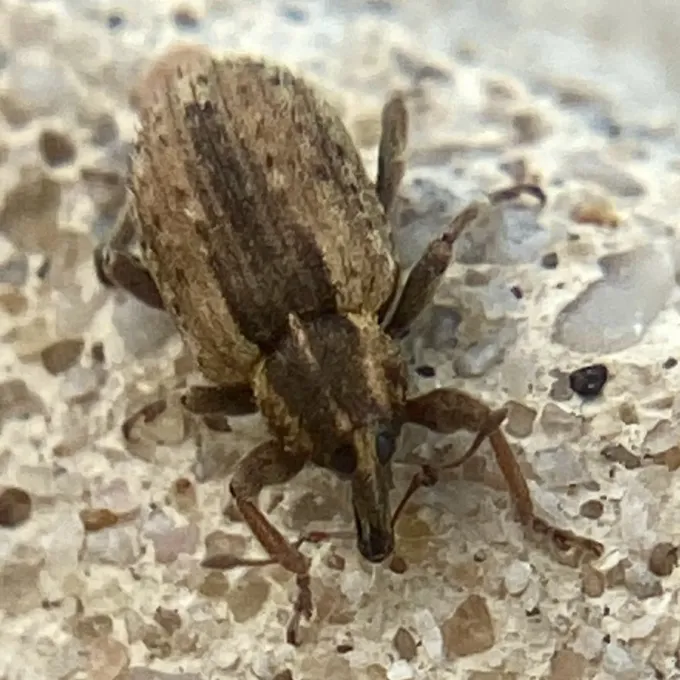
The alfalfa weevil (Hypera postica) is a destructive member of the Curculionidae family. The adult beetle is typically 4–5.5 mm long, characterized by a brownish-grey body with a distinct darker stripe down the center of its back.
Larvae are legless, growing up to 7–8 mm in length. They are yellowish-green with a prominent white stripe running along the back and have a distinctive shiny black head, making them easy to spot during crop inspections.
The life cycle involves a single generation per year. The insect pupates inside a delicate, net-like silk cocoon, which is often attached to the leaves of the host plant or hidden within soil debris near the base of the plant.
Both adults and eggs serve as overwintering stages. Adult weevils typically overwinter in plant litter, while eggs are laid in clusters inside punctures made by the female in the stems of host plants.
As spring temperatures rise above +10°C, adults become active. They begin feeding on young leaves, which prepares them for the egg-laying phase as the primary crop starts its rapid growth cycle in the spring.
What it damages
While alfalfa is the primary host, this pest is a polyphage. It can cause significant damage to fodder beet, winter rapeseed, cabbage, winter barley, hops, and occasionally fruit trees such as apple trees.
Larval feeding is the most destructive phase. Larvae feed on leaf tissue, leaving behind only the veins, a process known as skeletonizing. This drastically reduces the photosynthetic surface area of the crop.
In cases of heavy infestation, entire fields can appear frost-damaged or scorched. This leads to a severe loss of both dry matter yield and nutritional quality in harvested forage, significantly impacting livestock feed supplies.
When attacking rapeseed or cabbage in early spring, the weevil can cause significant thinning of stands. Damaged plants are often stunted and become highly susceptible to opportunistic pathogens and diseases.
On grain crops like winter barley, damage is less common but can occur during periods of high pest density. The insects feed on the tender foliage of seedlings, which can lead to gaps in crop density and require replanting.
Signs of infestation
The first sign of an infestation is the presence of small, pin-prick holes in the foliage. As larvae grow, these holes expand into large, shredded leaf areas, often accompanied by the characteristic skeletonized appearance.
Evidence of larval presence includes their dark, granular excrement on the leaf surface. During the heat of the day, larvae are often found tucked inside leaf whorls or at the base of the stems to avoid desiccation.
Field-level symptoms include a yellowish or greyish cast to the crop. Growth retardation is often clearly visible when comparing infested patches to healthy, non-infested sections of the same field.
Stem damage is identified by small, slightly depressed brown spots, which mark the sites where female weevils have deposited their egg clusters. These sites can become entry points for secondary bacterial infections.
The appearance of silk cocoons on the leaves or in the soil surface marks the end of the larval stage. This indicates that the next generation of adult beetles is imminent, signaling a need for immediate intervention.
Control measures
Cultural control is a cornerstone of managing Hypera postica. Early harvesting of the first alfalfa cutting can remove a significant portion of the larvae before they reach maturity, effectively disrupting the life cycle.
Biological control plays a vital role. Natural enemies, such as the parasitic wasp Bathyplectes curculionis, can significantly reduce larval populations. Maintaining field borders and reducing broad-spectrum insecticide use helps these wasps thrive.
Chemical control should be implemented only when economic thresholds are met. Growers should utilize insecticides from different chemical classes, rotating modes of action to prevent the development of resistant populations.
When applying insecticides, it is crucial to follow regulations regarding pollinator protection, especially when treating during the flowering stage. Late afternoon or evening applications are generally recommended.
Integrating field scouting with effective crop rotation helps minimize pest pressure. By ensuring that host crops are not planted in consecutive years in the same field, growers can significantly lower the survival rate of the overwintering population.
In brief
15
Damages crops
Content graph
Damages crops · 15
Content graph
Connections · Alfalfa weevil
Most often together:
Marketplace
Products · 5


Biology
Taxonomy
- Latin name
- Hypera postica
- Order
- Coleoptera (beetles)
- Family
- Curculionidae
- EPPO code
- HYPRPO
Community
Discussion
No discussions yet — be the first.