
Lissachatina immaculata
Lissachatina immaculata
Description
How to identify
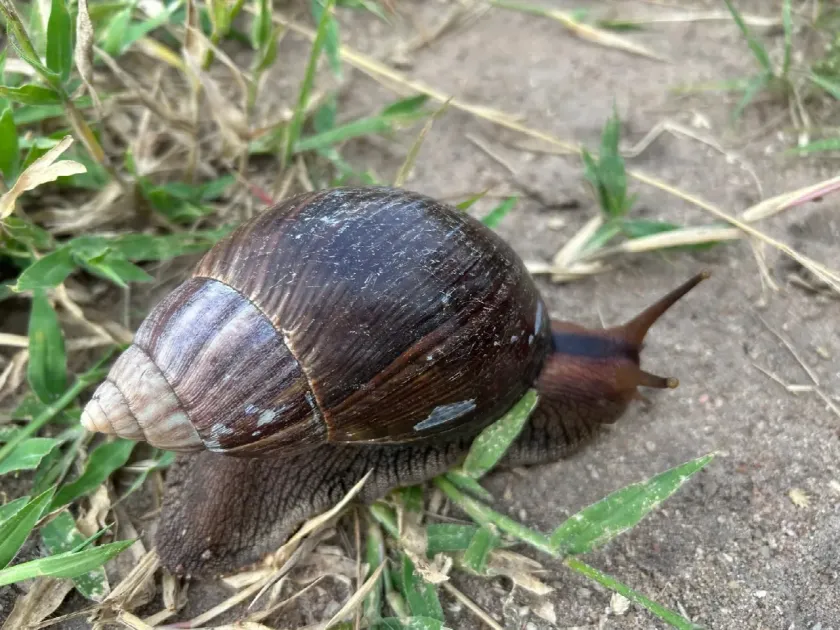
Lissachatina immaculata is a large terrestrial gastropod mollusk belonging to the Achatinidae family, order Stylommatophora. It is characterized by a robust conical shell that can grow up to 15 centimeters long, often displaying distinct dark streaks.
These mollusks are nocturnal and highly sensitive to desiccation, preferring humid environments such as dense vegetation, leaf litter, or loose, moist soil where they seek refuge during the daylight hours.
As hermaphrodites, they possess high reproductive potential, allowing them to colonize new agricultural areas rapidly if sufficient moisture and food sources are present.
Eggs are deposited in small clutches within the soil, where they are protected from environmental fluctuations until the young emerge to begin their feeding cycle.
This species is widely recognized as a significant invasive pest capable of causing extensive agricultural damage in subtropical and tropical climates.
What it damages
This species is a highly opportunistic polyphage, feeding on a wide variety of plant materials including agricultural crops, nursery seedlings, and decorative landscaping plants.
Young vegetable crops, particularly tomatoes, peppers, cabbages, and lettuce, are at the highest risk as the snails can consume entire seedlings overnight, leading to total crop failure.
Beyond vegetable crops, they also damage fruit trees, ornamental bushes, and field crops like corn, attacking both the foliage and the roots of young plants.
They utilize their specialized radula to scrape away plant tissue, resulting in large, irregular holes in leaves, often leading to the complete skeletonization of the plant.
Damage to the marketable quality of harvested produce is also significant, as the snails leave unsightly mucus trails and fecal matter on fruits and vegetables.
Signs of infestation
The most prominent sign of infestation is the presence of dried, silvery mucus trails found on leaves, plant stems, and soil surfaces, indicating active movement during the night.
Nocturnal visual observation often reveals the snails themselves crawling on plants, particularly during periods of high humidity or immediately after irrigation or rainfall.
Leaf damage appears as large, jagged-edged holes, and in severe cases, only the main veins remain, which significantly impairs the photosynthetic ability of the plant.
Dark, cylindrical fecal pellets found near the base of the plants are strong indicators of the pest's presence and its feeding activity level in the area.
Roots and low-hanging fruits may exhibit deep, scooped-out lesions, which are often quickly colonized by opportunistic bacteria and fungi, leading to rapid rotting.
Control measures
Effective management begins with strict sanitation: clearing away weeds, decaying organic matter, and piles of debris that provide ideal daytime shelters for the snails.
Barriers made of abrasive or desiccating materials such as wood ash, lime, or coarse sand can be placed around vulnerable crop beds to inhibit the movement of the mollusks.
The application of molluscicides, specifically those based on iron phosphate or metaldehyde, is a standard chemical control measure, applied as bait pellets around crops.
Biological control efforts focus on encouraging natural predators such as birds, toads, hedgehogs, and predatory beetles that predate on younger snails and eggs.
Hand-picking, especially after sunset, remains a practical and highly effective method for small-scale gardening to manually reduce the population size of the pest.
Taxonomy
- Latin name
- Lissachatina immaculata
- Order
- Molluscs
- Family
- Achatinidae
- EPPO code
- LISCIM
Discussion
No discussions yet — be the first.