
Archachatina purpurea
Archachatina purpurea
Description
How to identify
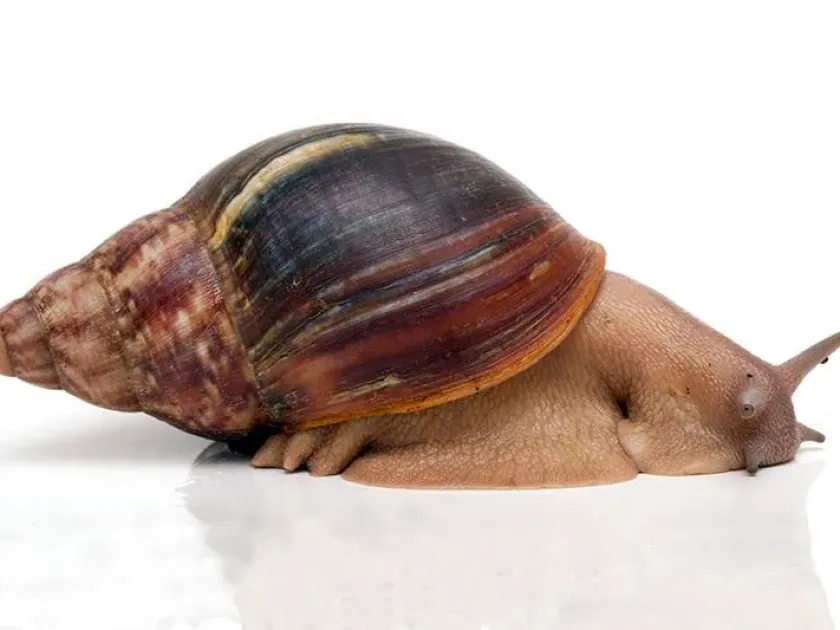
Archachatina purpurea is a large land snail species belonging to the family Achatinidae. It is recognized by its robust, conical shell, which features a distinct purple or reddish-brown coloration on the columella and aperture area.
Adult specimens typically reach a shell length of 10–12 centimeters. Their skin is characterized by a bumpy, granular texture, which serves as a physiological adaptation for moisture retention in their native environment.
These mollusks are primarily nocturnal, favoring high humidity levels and cooler nighttime temperatures for foraging. During the day, they retreat into dark, moist places to prevent dehydration.
Reproduction involves laying large, calcified eggs in damp soil or organic debris. They are highly prolific, meaning a small initial group can quickly grow into a significant pest population if left unchecked.
While often kept as exotic pets, they pose a significant threat when they escape or are released into agricultural environments, where they find abundant food sources and favorable conditions.
What it damages
Archachatina purpurea is a generalist herbivore (polyphagous), capable of consuming a wide variety of plant species. They are particularly attracted to succulent and fleshy plant parts.
Seedlings and young greenhouse plants are at the highest risk, as the snails can devour entire small plants in a single night. They use a radula to rasp away leaf tissues, leaving behind ragged, skeletonized remnants.
In vegetable gardens, they inflict heavy damage on leafy crops like lettuce, cabbage, and spinach, as well as developing fruits that touch the soil. Decorative flowers are also frequently targeted.
The damage caused by the snails often goes beyond simple tissue loss. The feeding wounds create entry points for various bacterial and fungal pathogens, which can then lead to secondary diseases in the host plant.
Infestations are usually most severe in environments with poor sanitation, where dense vegetation provides both food and protection from predators and drying heat.
Signs of infestation
The most reliable sign of an infestation is the presence of irregular, notched feeding holes in leaves, often concentrated along the edges. Young plants may be completely stripped of foliage.
A trail of dried, shiny mucus is a classic diagnostic feature of snail activity. These trails often glisten in the light and lead investigators directly to the snails' daytime hiding spots.
Visual confirmation can be achieved by inspecting the site at night using a flashlight. During the day, checking under mulch, pots, stones, or wooden debris will usually reveal the hiding mollusks.
The presence of clutches of oval, white, calcified eggs buried slightly in the soil or under garden debris is a major indicator that a population is actively reproducing in the area.
Wilting of seedlings without apparent root rot is another symptom, often caused by snails feeding on the succulent stem at the soil level, which severs the plant's nutrient transport system.
Control measures
The first line of defense is habitat modification. Clearing away weeds, fallen leaves, and unnecessary debris removes the shelter snails need to survive the heat of the day.
Physical barriers such as copper tape, crushed eggshells, or coarse sand can be used to surround high-value garden beds. These materials create a difficult or unpleasant surface for snails to traverse.
Chemical control options include the use of baits containing iron phosphate, which is relatively safe for wildlife and pets compared to older metaldehyde-based formulations.
Trapping is highly effective for localized management. Containers filled with beer or fermented sugary liquids buried at soil level serve as excellent traps, attracting and drowning the snails.
Manual collection remains a practical method for smaller areas. By regularly removing snails found during evening inspections, gardeners can significantly reduce the pressure on their crops over time.
Taxonomy
- Latin name
- Archachatina purpurea
- Order
- Molluscs
- Family
- Achatinidae
- EPPO code
- ACHHPU
Discussion
No discussions yet — be the first.