
Archachatina ventricosa
Archachatina ventricosa
Description
How to identify
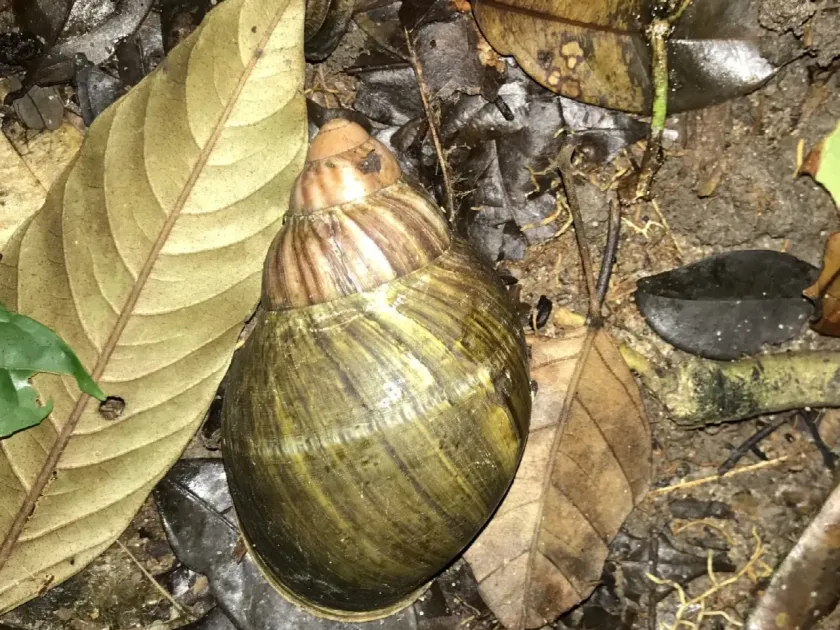
Archachatina ventricosa is a large terrestrial gastropod mollusc in the family Achatinidae, known for its significant size and robust shell structure.
The shell of this species is typically ovate with thick walls, providing essential protection against physical damage and dehydration in diverse environments.
Adult individuals possess a muscular foot that enables movement across various terrains, allowing them to travel long distances in search of food sources.
As a nocturnal creature, its identification during the day usually involves finding it in moist, shaded environments such as dense vegetation or leaf litter.
Taxonomically, it belongs to the order Stylommatophora, and its physical appearance is a key diagnostic feature for farmers managing infested plots.
What it damages
This pest causes extensive damage to agricultural crops, targeting both leafy greens and fruit-bearing plants in tropical regions.
By using its radula, the snail scrapes away plant tissues, leading to large, ragged holes that significantly reduce the plant's photosynthetic capacity.
Young seedlings are particularly vulnerable, often being entirely consumed within hours if an infestation is not managed promptly by agricultural staff.
The snail also attacks mature fruits, creating deep cavities that render the harvest unmarketable and susceptible to rot and secondary fungal infections.
Persistent feeding on stems and bark can weaken young trees, causing stunted growth and increasing the risk of mortality in young plantations.
When it appears
Activity levels of Archachatina ventricosa are highly synchronized with rainfall patterns, peaking during humid weather and wet seasons.
The life cycle is characterized by high reproductive rates; eggs are laid in soil crevices, where they develop rapidly under warm and moist conditions.
During prolonged dry periods, these molluscs undergo aestivation, burying themselves deep underground to minimize water loss until conditions improve.
Strategic management of this pest requires careful timing, focusing on the early stages of the rainy season when population density begins to spike.
Understanding these biological cycles is crucial for any integrated pest management strategy aimed at preventing large-scale crop losses.
Signs of infestation
The primary visual indicator of an infestation is the presence of dried, silvery mucus trails found on surfaces like leaves, stems, and soil paths.
Ragged leaf margins and circular or irregular holes in the middle of plant tissue are telltale signs of feeding activity by these gastropods.
Clusters of faecal pellets near the base of the plant often indicate that the snail has been feeding in the immediate vicinity during the night.
Dead or damaged plants often show signs of mechanical impact on the epidermis, which can lead to subsequent wilting due to vascular disruption.
- Shiny, dried slime trails on surfaces.
- Deep holes and tissue loss on foliage.
- Cavities in fruits or fleshy vegetables.
- Presence of empty or crushed shells.
Control measures
Chemical control involving molluscicides, such as metaldehyde-based baits, remains a standard and effective method for reducing large populations.
Sanitation practices, including the removal of debris and overgrowth, are essential to destroy the snail’s hiding spots and reduce their reproductive success.
Physical barriers such as copper tape, gravel, or crushed shell mulch can act as effective deterrents around sensitive garden beds and vegetable patches.
Biological control through the encouragement of natural predators like ground beetles and certain bird species can help maintain population levels.
Regular monitoring during twilight hours allows for the physical collection and disposal of individuals, which is highly effective in small-scale farming operations.
Taxonomy
- Latin name
- Archachatina ventricosa
- Order
- Molluscs
- Family
- Achatinidae
- EPPO code
- ACHHVE
Discussion
No discussions yet — be the first.