
Giant African snail
Achatina achatina
Description
How to identify
The giant African snail (Achatina achatina) belongs to the order Stylommatophora and the family Achatinidae. It is recognized as one of the largest land snails on the planet, with shells often reaching up to 20 cm in length.
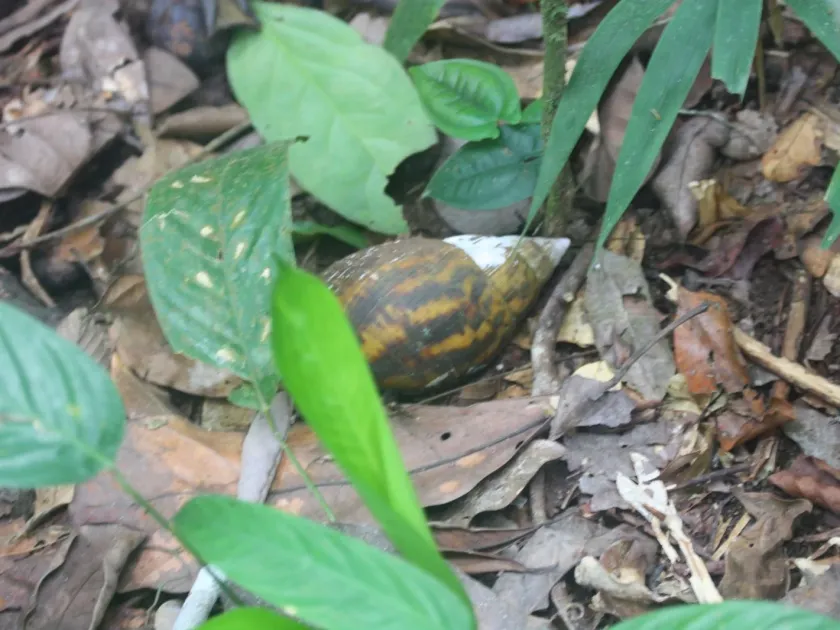
The shell features a distinctive tiger-like pattern with dark, brownish-black stripes over a yellowish-tan background. The soft body is typically grey or light brown, covered in a slimy mucus coating.
This species is a highly invasive agricultural pest. Due to its rapid growth rate and high adaptability, it thrives in tropical and subtropical climates, spreading quickly into new environments.
Biological resilience is a key trait of this snail; it can survive unfavorable weather by aestivating, entering a state of dormancy where the shell is sealed with a calcified epiphragm.
As a hermaphrodite, every adult snail is capable of reproducing and laying massive clutches of eggs in the soil, which allows a single individual to quickly establish a new invasive population.
What it damages
The giant African snail is a voracious herbivore that feeds on a wide range of agricultural and ornamental plants. Its appetite makes it a significant threat to global food security.
It prefers crops like bananas, citrus fruits, cocoa, and various vegetables including lettuce, beans, and cucumbers. In severe infestations, it can strip a plant bare of its leaves.
Using a radula, a structure armed with thousands of tiny teeth, the snail rasps away plant tissues. This causes severe physiological damage and often results in the death of young seedlings.
Beyond physical destruction, these snails are known vectors for various plant pathogens and parasites. The lesions created during feeding provide entry points for bacteria and fungi.
In regions where the species has been introduced, it frequently destroys entire nurseries and farm yields, leading to substantial economic losses for local farmers.
Signs of infestation
The most obvious signs of infestation include large, irregular holes in the leaves of plants and stems that appear to have been gnawed or completely consumed.
Shiny, silvery trails of dried mucus are often left behind on plant stalks, garden pathways, and the undersides of containers, indicating recent snail movement.
Clutches of small, spherical, pale-yellow eggs can often be discovered in the soil or under leaf litter, confirming that the snails are actively breeding in the area.
Since the snails are nocturnal, gardeners may notice their plants healthy in the evening but significantly damaged by the next morning, as feeding occurs primarily at night.
Presence of secondary rot on the stems or fruit is a common symptom following an attack, as the open wounds left by the snails invite opportunistic infections.
Control measures
Manual removal remains the most effective immediate control method. Collectors should search for the snails at night or on wet, cloudy days when they are most active.
Trapping techniques, such as placing beer-soaked rags or specialized bait stations, effectively lure the snails to a central point where they can be destroyed.
Chemical control using molluscicides (containing metaldehyde or iron phosphate) is an option for commercial agriculture, but application must be managed to protect non-target species.
Maintaining a clean garden by removing debris, wood piles, and tall weeds denies the snails the damp, shady environments they require for daytime shelter and egg-laying.
Integrated pest management strategies should be adopted, focusing on preventing the introduction of snails into new areas through strict quarantine and surveillance of agricultural goods.
Taxonomy
- Latin name
- Achatina achatina
- Order
- Molluscs
- Family
- Achatinidae
- EPPO code
- ACHAAC
Discussion
No discussions yet — be the first.