
Achatina
Achatina
Description
How to identify
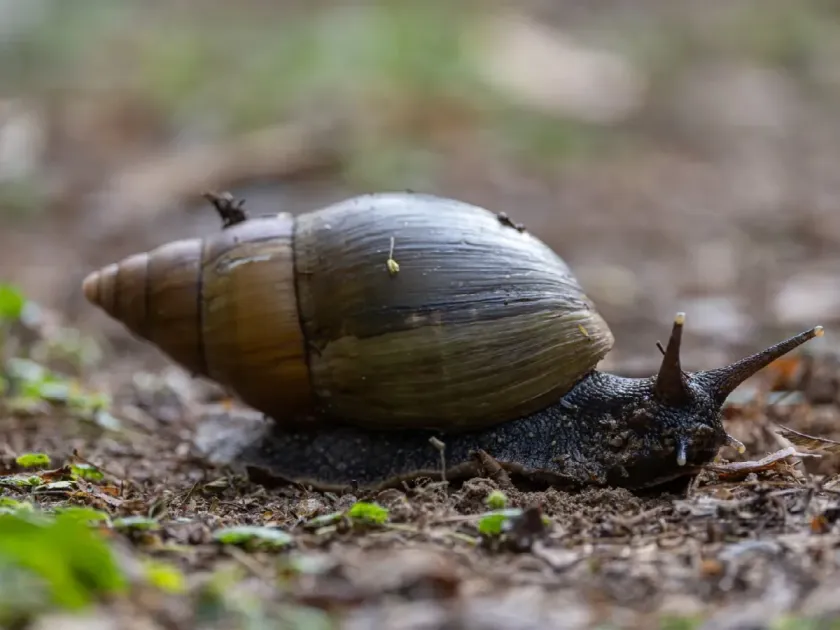
Achatina (Achatina) belongs to the order of pulmonate snails and the family Achatinidae. It is a large terrestrial mollusk with a shell length reaching 20–25 cm.
The snail is characterized by a conical shell with 7 to 9 whorls. The coloration varies from light brown to almost black, often featuring distinct longitudinal stripes.
The soft body is covered in mucus, which aids in movement and protects the organism from desiccation. In their natural habitat, they are strictly nocturnal animals.
Biologically, they are hermaphroditic, allowing for extremely rapid reproduction under favorable environmental conditions, with a single individual laying hundreds of eggs per clutch.
The species demonstrates high adaptability to temperature and humidity shifts, making it a dangerous invasive pest in many agricultural regions worldwide.
What it damages
Achatina is an omnivorous pest that damages over 500 species of plants, posing a significant threat to both large-scale agriculture and private gardens.
The most severe damage occurs on young seedlings and transplants of vegetable crops, such as tomatoes, cucumbers, cabbage, and peppers, where they devour tender leaves and stems.
In orchards, they target fruit trees and shrubs by stripping bark and consuming buds, weakening the plant and facilitating the entry of fungal infections.
Crops grown in greenhouse environments are particularly vulnerable due to the ideal microclimate and high humidity favored by these gastropods.
Beyond direct feeding, the pest causes indirect damage by acting as a vector for various plant diseases and hosting harmful parasites on its body.
When it appears
Achatina activity is directly linked to soil and air humidity. The most aggressive foraging period corresponds with rainy seasons and frequent irrigation cycles.
In open fields, peak activity occurs at night and during the early morning hours, while they hide in the soil or under dense vegetation during the day.
During unfavorable conditions, such as drought or extreme cold, Achatina can enter a deep state of aestivation or hibernation, burying itself deep in the soil or sealing the shell with a calcareous epiphragm.
Reproduction is continuous as long as the ambient temperature remains between 15–20 degrees Celsius and humidity levels stay high.
In greenhouses, the pest can remain active year-round, as the artificially maintained microclimate prevents them from entering a dormant life cycle.
Signs of infestation
The primary sign of infestation is characterized by ragged leaf edges and irregular holes, caused by the snails scraping the plant tissue with their radula.
Silvery, dried mucus trails left on soil surfaces, stems, and leaves are distinct indicators of the presence and movement of these snails.
During field inspections, egg clutches can be found in the soil or under mulch; they typically appear as clusters of small, round, semi-translucent or whitish spheres.
Damaged plant tissues frequently begin to decay, as the wounds serve as entry points for bacterial and fungal infections promoted by the moist environment.
At high population densities, adult snails can be observed congregating in groups near the base of the plant or underneath the lower foliage.
Control measures
Manual collection of individuals during the night is an effective control method for small plots, provided it is performed consistently.
The use of traps, such as containers filled with beer or fermented sugary liquids, can significantly reduce population levels by attracting and trapping the mollusks.
The application of granular molluscicides containing metaldehyde or iron phosphate around the perimeter of beds effectively disrupts their movement and feeding.
Creating physical barriers with abrasive materials, such as wood ash, lime, sawdust, or crushed eggshells, prevents snails from reaching susceptible plants.
Essential agrotechnical practices include the regular removal of weeds, crop residues, and mulch, which provide shelter and ideal breeding conditions for the snails.
Taxonomy
- Latin name
- Achatina
- Order
- Molluscs
- Family
- Achatinidae
- EPPO code
- ACHASP
Discussion
No discussions yet — be the first.