
Limicolaria aurora
Limicolaria aurora
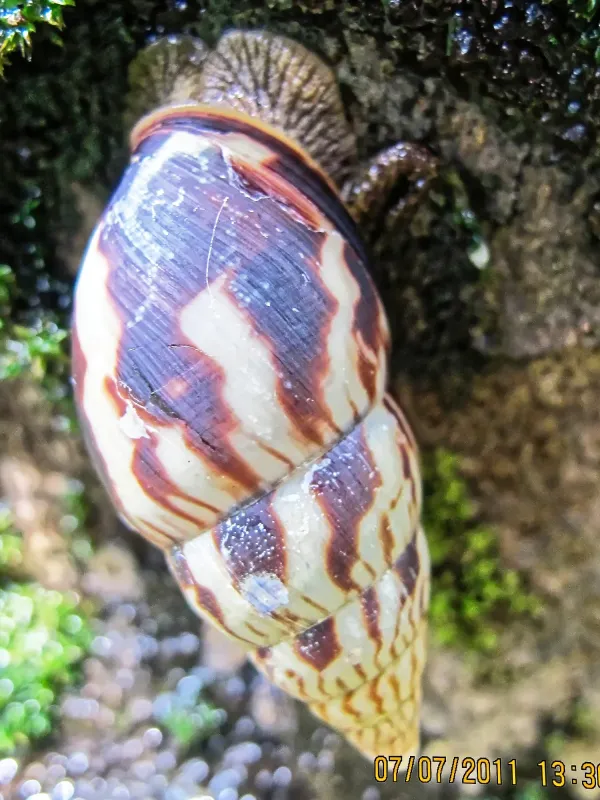
Description
How to identify
Limicolaria aurora is a species of air-breathing land snail belonging to the Achatinidae family. The shell of an adult is characteristically conical with longitudinal stripes or patterns, which can vary significantly depending on environmental conditions and habitat.
This species demonstrates remarkable adaptability, allowing it to colonize new agricultural areas efficiently. As a member of the Achatinidae family, it shares typical biological traits such as a strong muscular foot and high moisture dependency, which is crucial for its survival and activity.
The life cycle of this mollusk is strictly regulated by humidity levels. During periods of drought, the snails enter an aestivation state, burrowing into the soil or hiding under debris to preserve moisture until conditions improve, making them difficult to detect during dry spells.
Reproduction involves the laying of eggs in moist soil. The high fecundity of this species allows it to establish large populations rapidly, often resulting in significant pressure on garden plants and greenhouse crops once the colony is well-established.
They are primarily nocturnal or crepuscular, preferring to stay hidden in dark, damp microhabitats during the daylight hours. Their ability to remain concealed under mulch, rocks, or leaves makes visual monitoring a challenging task for growers.
What it damages
Limicolaria aurora is a polyphagous pest, meaning it feeds on a wide range of vegetable crops, ornamental plants, and young tree seedlings. It poses a severe threat to new sprouts and tender foliage, often consuming young tissues overnight.
Feeding marks consist of ragged, large holes in leaves and stems. Unlike insects that may skeletonize a leaf, these mollusks often consume significant sections of the leaf blade, quickly leading to the deterioration of plant health and growth retardation.
Economic losses are particularly high in greenhouse environments. In these controlled settings, stable high humidity and the absence of natural predators provide an optimal environment for the mollusk to feed and breed throughout the entire growing season.
Besides direct feeding, these snails act as vectors for various plant pathogens. The slime trails left behind serve as a medium for bacterial and fungal growth, often introducing or accelerating the spread of diseases within the plant canopy.
In cases of heavy infestation, plants lose their marketability and may fail to survive the damage. The presence of these snails requires immediate management to prevent a total loss of sensitive crops, especially during the early stages of plant development.
Signs of infestation
The most prominent sign of a Limicolaria aurora infestation is the presence of silvery, dried mucus trails on the soil, leaves, and stems of host plants. These shiny paths are excellent indicators of nocturnal activity and presence.
Observing large, irregular holes in the middle or edges of leaves is a clear symptom of molluscan feeding. Because they possess a rasping mouthpart (radula), they scrape away plant tissue, leaving behind characteristic damage patterns compared to chewing insects.
To confirm an infestation, inspect dark and moist areas of the field during the evening. Checking beneath mulch, boards, pots, or dense foliage often reveals hidden individuals or clusters, especially after rainfall or irrigation.
Locating egg clutches in the upper soil layers is a critical sign of a burgeoning colony. These clutches typically appear as groups of small, whitish, and slightly translucent spheres tucked into small pockets in the earth or organic matter.
- Silvery mucus trails on leaves and soil.
- Irregular holes and missing plant tissue.
- Adult snails found in damp, sheltered areas.
- Damage to the base of young stems.
- Discovery of egg clutches in topsoil.
Control measures
Integrated Pest Management (IPM) is the most effective approach for controlling Limicolaria aurora. This strategy combines sanitation, mechanical barriers, and targeted chemical treatments to manage population density while minimizing environmental impact.
Mechanical control includes manual removal during the evening and the use of traps. Simple devices, such as boards placed on the ground, create favorable hiding spots for snails during the day, making it easy for growers to collect and destroy them.
Agricultural barriers are an effective preventive measure. Creating "dry zones" using coarse materials like sand, crushed gravel, or lime around sensitive crop beds creates a difficult surface for the soft bodies of the snails to traverse, reducing their access.
When infestation levels are high, chemical molluscicides are used. Products containing iron phosphate are preferred as they are generally safer for soil microfauna and beneficial organisms, provided that application instructions are strictly followed to ensure safety.
Biological control leverages the presence of natural predators. Maintaining a healthy ecosystem that supports hedgehogs, amphibians, ground beetles, and certain birds helps keep snail populations in check, significantly reducing the need for intensive chemical intervention.
Taxonomy
- Latin name
- Limicolaria aurora
- Order
- Molluscs
- Family
- Achatinidae
- EPPO code
- LIMIAU
Discussion
No discussions yet — be the first.