
Deer ked
Lipoptena depressa
Description
How to identify
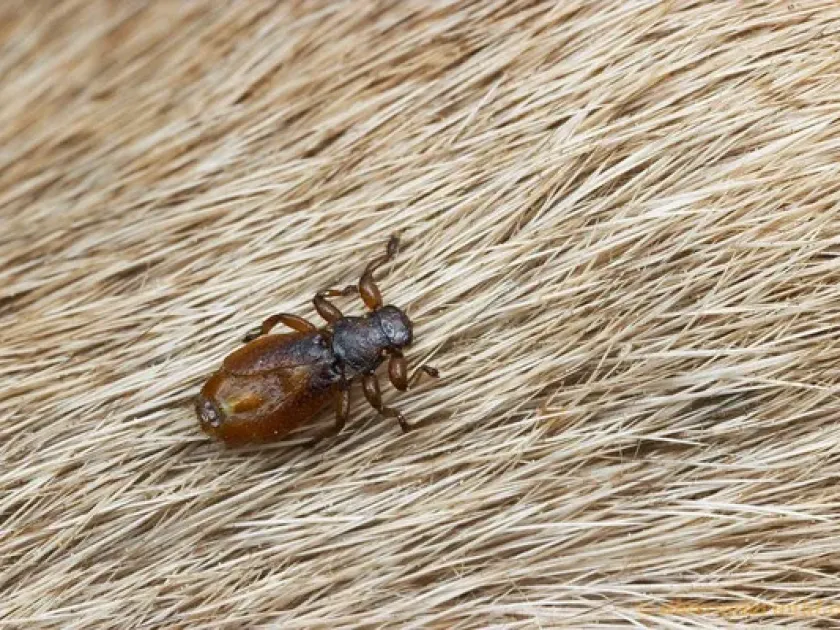
The deer ked (Lipoptena cervi) is a specialized ectoparasite belonging to the family Hippoboscidae, order Diptera. Adult specimens are flattened, brownish in color, and measure between 3 and 5 mm in length, featuring a tough cuticle that protects them from being crushed.
A key biological trait is that young keds possess wings, which they use to seek out a host; once a suitable mammal is found, the parasite sheds its wings and becomes a permanent, non-flying resident within the animal's fur.
The mouthparts are highly specialized for piercing the skin and feeding on blood. Their legs are equipped with strong, hooked claws that allow them to hold firmly onto the host's hair, resisting attempts to brush them off.
Reproduction is characterized by pupiparity: the female does not lay eggs but instead produces a single larva at a time, which drops to the ground and pupates immediately within the forest leaf litter.
The pupal stage is crucial for overwintering, as the insect remains in the soil during the colder months, awaiting the appropriate temperature to emerge as a new winged adult.
What it damages
While not a pest of botanical crops, the deer ked is a significant economic pest for forestry and livestock management due to its parasitic impact on ungulates, including deer, elk, and domestic cattle.
The primary harm lies in the health deterioration of infested animals due to chronic blood loss, which can lead to reduced weight, weakness, and vulnerability to secondary diseases, especially in winter.
For humans, the deer ked is a significant nuisance. Its bites are painful and often cause prolonged allergic reactions, dermatitis, and severe itching, making outdoor work in infested forests difficult.
In hunting and wildlife management, the presence of these parasites can decrease the quality of hides and overall herd health, thereby negatively impacting the economic value of forest animal populations.
Although they do not feed on plant material, their presence disrupts the natural biodiversity and sanitary conditions of forests, placing additional stress on the animal communities that inhabit them.
When it appears
The mass flight of newly emerged winged adults typically occurs from late August through early autumn, continuing until cold weather becomes consistent, usually by late November.
Peak activity is observed during warm, calm, sunny days when the keds are most active in searching for a host, responding to movement and body heat of passing animals or humans.
As winter temperatures set in, the activity of adults ceases, as their life cycle relies entirely on finding a host before the environmental conditions become too harsh for movement.
Spring is marked by the absence of flying adults, as the species is entirely in the pupal stage within the forest floor, protected from the elements until the next seasonal cycle begins.
The timing of these seasonal events can vary depending on local climate and geographical factors, which directly dictate the emergence patterns of each generation of the parasite.
Control measures
Effective human protection in infested forests requires wearing tight-fitting, light-colored clothing combined with the use of chemical repellents designed to deter blood-sucking flies.
Livestock protection is managed through the application of topical insecticides, systemic treatments, or the use of insecticide-impregnated ear tags to ensure long-term immunity against infestations.
Sanitation of animal housing areas and managing animal migration paths are essential practices to minimize the accumulation of pupae in the environment where cattle are kept.
If a deer ked is found on the skin or clothing, it should be removed promptly, though its hooked claws make it difficult to dislodge without thorough checking of the hair or fabric.
Integration of personal protective measures and systematic monitoring of high-risk areas during peak autumn months remains the most effective strategy for mitigating the impact of this parasite.
Taxonomy
- Latin name
- Lipoptena depressa
- Order
- Diptera (flies)
- Family
- Hippoboscidae
- EPPO code
- LIPPDE
Discussion
No discussions yet — be the first.