
Deer ked
Lipoptena cervi
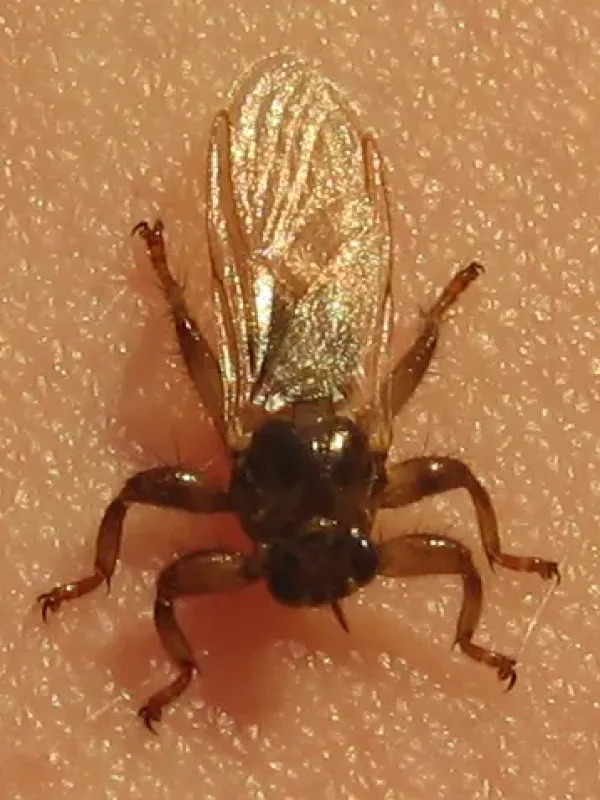
Description
How to identify
The deer ked (Lipoptena cervi), also known as the louse fly, belongs to the Hippoboscidae family of the order Diptera. It is a highly specialized ectoparasite that has evolved to live on the bodies of wild ungulates.
The adult insect has a flattened, leathery, brown body, approximately 3-5 mm in length. Its body is covered by a hard exoskeleton, making it extremely resistant to mechanical pressure, meaning it is very difficult to crush.
A key biological trait is its wing-shedding behavior. Once the deer ked finds a suitable host, it sheds its wings and remains permanently attached to the animal, moving through the fur with hooked claws.
The reproduction cycle is unique as the insect is viviparous. The female does not lay eggs but instead produces a single larva that pupates almost immediately after falling onto the ground in the forest litter.
Deer keds are host-specific, primarily targeting cervids like deer, elk, and moose. They rely on the movement of these animals to distribute their population across forest landscapes.
What it damages
The deer ked is not an agricultural pest in the sense of damaging crops or plants. It is a blood-feeding parasite that primarily affects wild animals, and in their absence, it may opportunistically bite humans.
For agricultural workers, foresters, or farmers working near woodlands, the primary concern is the discomfort and health risks posed by the insects' bites during their peak activity season.
Bites on humans often result in a persistent, itchy allergic dermatitis. Some individuals may experience papules that last for weeks, requiring medical attention to manage inflammation.
Massive infestations in livestock, particularly in animals grazing near forests, can cause significant irritation, anxiety, and potential secondary bacterial skin infections due to continuous scratching.
While the insect does not threaten crop yields, its presence can significantly hinder human productivity and comfort in rural and forest-adjacent work environments during the autumn months.
When it appears
The deer ked has a strictly seasonal activity pattern. Adult insects emerge from pupae and seek hosts primarily from August through October or November, depending on the local climate.
Warm and dry autumn weather conditions often trigger peak activity levels. During this time, the flying adults are highly mobile and easily land on humans or animals in search of a blood meal.
Winter survival is limited for adults that do not find a suitable host quickly. Those that successfully attach to an animal may persist throughout the winter months, but their reproductive cycle is tied to the summer and autumn development period.
The pupal stage occurs in the soil and leaf litter throughout the winter and spring. Consequently, during the warmer spring and summer months, the risk of adult deer ked attacks is essentially nonexistent.
Environmental monitoring of the timing of the first frost is often used to predict the decline of the adult population in the field.
Signs of infestation
The primary sign of deer ked activity in an area is the sensation of insects crawling on the skin, particularly the head, neck, and back. They move extremely fast and are difficult to remove from clothing.
- Multiple painful bite points, often followed by delayed itching.
- Small red papules or bumps on exposed or clothing-covered skin.
- Discovery of flat, wingless insects on one's clothing.
- Persistent itching sensation that may last several days or weeks.
Individuals working in or near forests should be vigilant for these insects. If insects are found that cannot be easily crushed between fingers, it is a definitive sign of Lipoptena cervi.
Skin reactions are often delayed, appearing several hours or even days after the bite, which can make it difficult for people to identify the cause of their symptoms.
Control measures
Personal protection is the most effective way to manage deer ked contact. Wearing tightly woven, light-colored clothing that is tucked into boots or pants helps prevent the insects from gaining access to the skin.
Insect repellents containing DEET or permethrin-treated clothing can reduce the frequency of attacks, although they are not always 100% effective when infestation pressure is high.
Frequent physical inspections during work hours are crucial. Checking clothes every hour and removing any insects found before they lose their wings and bury themselves in clothing folds is highly recommended.
For farm management, maintaining cleared areas around grazing fields can help minimize the interface between deer populations and domestic livestock, thereby reducing the risk of parasite transmission.
In case of severe bites, applying anti-itch creams, antihistamines, and maintaining hygiene at the site of the bite is essential to prevent secondary infections and allergic complications.
Taxonomy
- Latin name
- Lipoptena cervi
- Order
- Diptera (flies)
- Family
- Hippoboscidae
- EPPO code
- LIPPCE
Discussion
No discussions yet — be the first.