
Moth butterfly
Liphyra brassolis
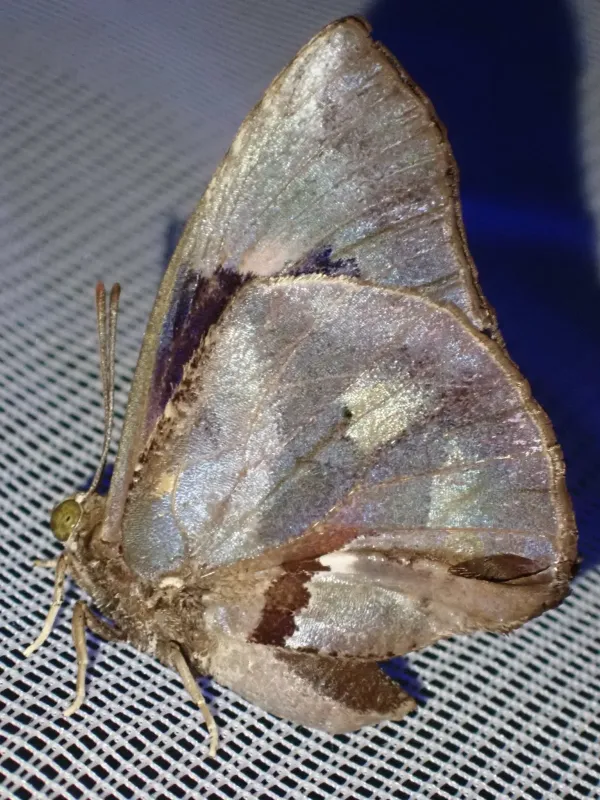
Description
How to identify
Liphyra brassolis, commonly known as the moth butterfly, is a unique member of the Lycaenidae family. It is recognized as one of the largest butterflies in its group, with a wingspan reaching up to 90 mm.
The larval stage is highly specialized, featuring a flattened, armored body that resembles a woodlouse. This structure provides essential protection against the aggressive weaver ants (Oecophylla) in whose nests it resides.
The butterfly demonstrates a complex life cycle characterized by obligate myrmecophily, where the larvae live exclusively within the nests of weaver ants, feeding on the ant brood.
Pupation occurs inside the hardened last-instar larval skin. This biological casing serves as an impenetrable shield against ant attacks during the delicate transformation phase.
Upon emergence, the adult butterfly is covered in specialized scales that detach easily, adhering to the ants and preventing them from attacking the insect as it makes its way out of the colony.
What it damages
The agricultural impact of Liphyra brassolis is primarily indirect. It does not damage crops directly through defoliation or fruit consumption.
The damage occurs because the larvae prey upon weaver ant colonies. These ants are beneficial predators that protect coffee, cacao, and citrus trees from various major pests.
By decimating the ant population, the moth butterfly disrupts the biological control system, leaving the crops vulnerable to other harmful insects like scale insects and aphids.
This ecological interference makes the butterfly a significant concern in agroecosystems that rely on weaver ants for pest management.
High infestation levels within an orchard indicate a failing biological control structure, which can lead to rapid outbreaks of secondary pests.
Control measures
Managing Liphyra brassolis requires a nuanced approach that prioritizes the health of the weaver ant colonies, as they are essential biocontrol agents.
The primary control measure involves regular field scouting to identify and manually remove ant nests that show signs of parasitic infestation.
Chemical intervention should be strictly avoided, as indiscriminate insecticide use will harm the weaver ants, potentially worsening the pest problem in the long run.
Promoting a robust and healthy ant population is the most effective long-term strategy, as strong colonies can naturally exclude or suppress the larvae of the moth butterfly.
- Regular inspection of weaver ant colonies.
- Mechanical removal of infected nests.
- Monitoring for increased pest activity.
Taxonomy
- Latin name
- Liphyra brassolis
- Order
- Lepidoptera (butterflies)
- Family
- Lycaenidae
- EPPO code
- LIPHBR
Discussion
No discussions yet — be the first.