
Liphyra
Liphyra
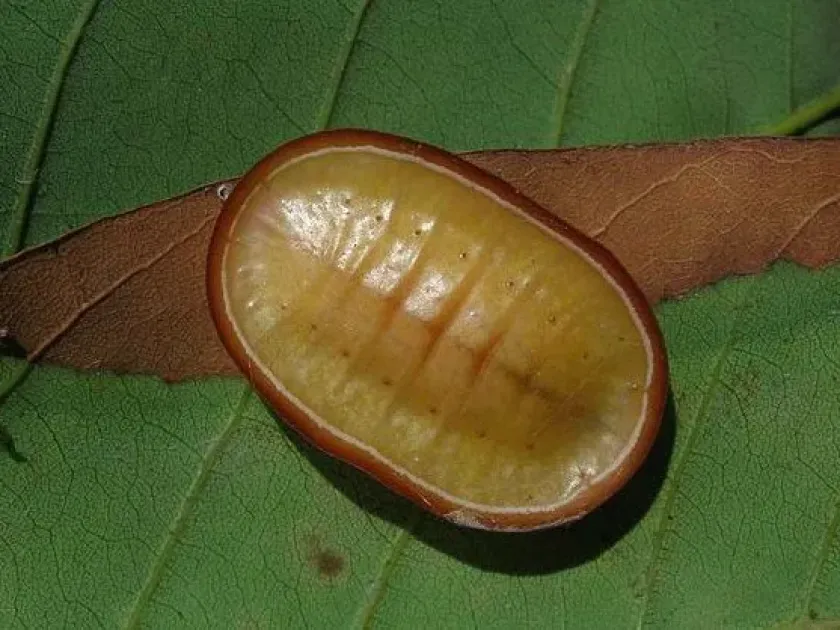
Description
How to identify
Liphyra is a genus of butterflies within the Lycaenidae family, known for their distinct and highly specialized biological life cycles. These moths are recognized for their interaction with weaver ants (Oecophylla species).
The larvae of the Liphyra have an unusual, flattened shape resembling a shield or a woodlouse, which provides excellent protection against the ants that inhabit the same space.
Adult butterflies exhibit a wingspan of up to 80 mm and possess scales that shed easily, protecting them from being bitten by ants during their emergence from the pupal stage within the nest.
The taxonomic classification places them in the Lycaenidae family, specifically known for their mirmecomorphic and myrmecophilous behaviors, which are unique in the Lepidoptera order.
Due to their highly specialized habitat requirements, these insects are rarely found in vast numbers, but their presence indicates a specific ecological state of the host plants.
What it damages
The damage caused by Liphyra is indirect rather than direct herbivory. It functions as a predator of ant larvae within the colony rather than feeding on the plant tissue itself.
By consuming the weaver ant brood, Liphyra diminishes the population of ants that typically protect the host tree from herbivores like leaf-eaters or sap-sucking insects.
When the protective ant population is decimated, the host plant becomes susceptible to secondary infestations of scale insects, mealybugs, and aphids that the ants usually manage.
In agricultural settings, this disruption of the symbiotic relationship between plants and ants can lead to an increase in secondary pest populations that directly damage the foliage.
While the moth itself does not destroy leaves or fruit, its biological impact on the plant's ecosystem can result in measurable losses if left unchecked.
Control measures
Control of Liphyra requires a careful approach that prioritizes the health of the ant colony, which is essential for natural pest control in many tropical environments.
Chemical control measures are generally discouraged because broad-spectrum insecticides would eliminate the beneficial ants along with the Liphyra larvae, causing a total breakdown of natural defenses.
The most effective strategy involves regular inspection of host trees for larvae clusters and the implementation of manual removal methods when the population density becomes excessive.
Maintaining a diverse garden ecosystem that supports both ant and plant health is the primary long-term prevention method against problematic outbreaks.
- Regular tree inspections.
- Manual removal of detected larvae.
- Avoidance of toxic broad-spectrum pesticides.
- Support for local beneficial predator populations.
Taxonomy
- Latin name
- Liphyra
- Order
- Lepidoptera (butterflies)
- Family
- Lycaenidae
- EPPO code
- LIPHSP
Discussion
No discussions yet — be the first.