
Clouded Border
Ligdia adustata
Description
How to identify
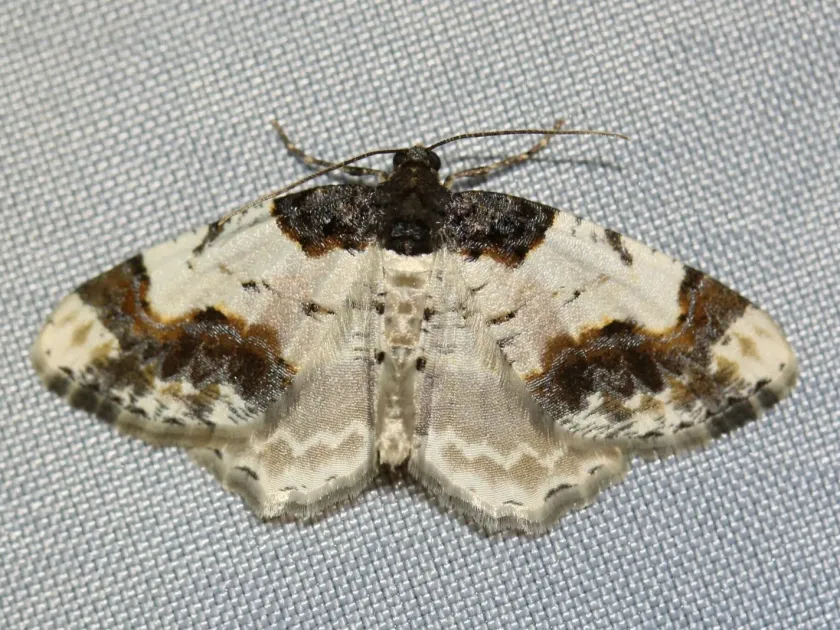
The Clouded Border (lat. Ligdia adustata) is a moth belonging to the order Lepidoptera and the family Geometridae. Adult moths have a wingspan of approximately 25–30 mm and are distinguished by their delicate appearance.
The wings exhibit a cream-white base color adorned with dark, grayish-brown patches and bands. This camouflage pattern allows the moth to blend seamlessly with bark or foliage, making it difficult to detect in a natural environment.
The larvae, or caterpillars, are slender and typically display shades of green or brown, often with subtle longitudinal stripes. They move in the characteristic "looping" fashion typical of the Geometridae family, drawing the back end of their body toward their thoracic legs.
Pupae often hibernate in the soil or within leaf litter, which makes them susceptible to cultural management practices. The insect undergoes complete metamorphosis, including egg, larval, pupal, and adult stages.
Depending on local climatic conditions, the Clouded Border may produce one or two generations per year. Monitoring for these moths is essential during the late spring to ensure effective early-stage management.
What it damages
The primary host plant for this species is the spindle tree (Euonymus), which is highly susceptible to feeding damage. In cases of severe infestations, the larvae can cause significant harm to the plant's structural health.
The larvae feed voraciously on the foliage. High populations of the pest can defoliate entire bushes, leaving only skeletal remains or bare branches, which severely compromises the aesthetic value of ornamental plantings.
Defoliation disrupts the plant's ability to photosynthesize, leading to weakened growth and increased susceptibility to secondary diseases and environmental stress. Stunted growth is a common outcome for heavily infested shrubs.
Premature leaf drop occurring in mid-summer is a typical sign of severe damage. This prevents the plant from storing enough energy for the winter season, potentially resulting in winter kill for younger or weaker specimens.
In addition to physical feeding damage, the presence of frass on the leaves can create a microclimate conducive to fungal infections. Recovering from such an infestation requires significant time and proper horticultural care.
When it appears
Adult moths typically emerge in late spring or early summer, usually between May and June. During this time, they mate and lay eggs on the young shoots of host plants.
The larvae are most active during the summer months, specifically from June through August. This is the period when they achieve their maximum growth and cause the most extensive damage to the host plant's canopy.
If a second generation occurs, it usually emerges in late summer, with the subsequent pupae preparing to hibernate during the autumn. Understanding these cycles is critical for timing control measures effectively.
Larval development is closely synchronized with the growth phenology of the spindle tree. Maximum feeding occurs during the rapid growth phase of the plant when the young foliage is most abundant.
Gardeners should monitor for the presence of adults using light traps or visual inspections starting in mid-May, focusing on the undersides of leaves where egg clusters are often deposited.
Signs of infestation
The first indication of an infestation is the appearance of small holes in the leaves, which gradually increase in size as the larvae grow. Feeding often begins at the leaf margins and progresses inward.
Directly observing larvae on the underside of leaves is the most reliable method of identification. Because of their excellent camouflage, they can easily be mistaken for small, dry twigs or bark fragments.
The presence of fine webbing between leaves or leaves being tied together indicates larval activity. Caterpillars often create these shelters to protect themselves from predators or environmental elements.
Mass shedding of damaged or partially eaten leaves in the middle of summer is a strong indicator of a high pest population. Soil beneath the host plant should be checked for pupae during these times.
The sighting of moths with a distinct clouded pattern on their wings, particularly near the spindle bushes at dusk, serves as a warning that reproductive activity is occurring in the area.
Control measures
Effective management requires a combination of cultural and chemical strategies. Regular pruning of damaged branches and the removal of infested plant material are essential first steps to limit population numbers.
- Cleaning up and disposing of fallen leaf litter in the autumn to eliminate overwintering pupae.
- Tilling the soil around the base of bushes to expose or destroy pupae hibernating in the ground.
- Using biological insecticides, such as Bacillus thuringiensis, which are effective against young larvae and safe for beneficial insects.
- Applying systemic insecticides as a last resort during severe infestations, strictly following label directions.
Chemical applications should be managed carefully to avoid harming pollinators, particularly by avoiding spraying during the plant's peak flowering period. Rotating chemical products is recommended to prevent the development of pesticide resistance.
Installation of sticky traps or physical barriers on the stems can aid in monitoring adult activity and mechanical trapping of migrating caterpillars, providing an integrated approach to garden protection.
Taxonomy
- Latin name
- Ligdia adustata
- Order
- Lepidoptera (butterflies)
- Family
- Geometridae
- EPPO code
- ABRXAD
Discussion
No discussions yet — be the first.