
Gooseberry looper
Ligdia
Description
How to identify
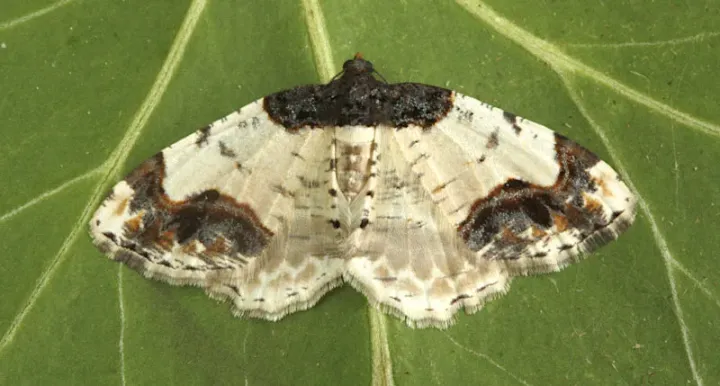
The gooseberry looper (Ligdia adustata) is a moth belonging to the family Geometridae. Adult moths have a wingspan of approximately 25–30 mm. Their wings are predominantly white with dark brownish-black markings, providing excellent camouflage as they resemble bird droppings.
The larvae, known as loopers or inchworms, are characterized by their unique method of locomotion, where they move by arching their bodies. Their coloration is typically green to brownish, allowing them to blend seamlessly with the twigs and foliage of their host plants.
The insect overwinters in the pupal stage. Pupae are commonly found in the top layer of soil or among leaf litter beneath the host shrubs. They are encased in a loose, silken cocoon, which provides protection during the winter months.
Adult moths are nocturnal and are primarily active at dusk and night. During the day, they remain motionless on the underside of leaves, which makes them difficult to spot during routine garden inspections.
The life cycle involves complete metamorphosis. Depending on regional climatic conditions, the gooseberry looper can produce one or two generations per year, making it a pest that requires attention throughout the growing season.
What it damages
The primary hosts for Ligdia adustata larvae are plants within the Grossulariaceae family, specifically gooseberries and various species of currants. The larvae feed exclusively on the foliage of these shrubs.
The caterpillars consume leaf tissue, often starting by eating the parenchyma and leaving the veins intact. In cases of high infestation, they can completely defoliate a bush, leaving only the structural skeletons of the leaves.
Extensive damage to the leaf canopy severely reduces the plant's photosynthetic capacity. This leads to weakened shrubs, which have a reduced ability to produce quality fruit and store energy for the following season.
Defoliation also interferes with the plant's preparation for winter dormancy. Bushes that have been heavily damaged during the summer are more susceptible to winter injury and frost damage in colder climates.
Furthermore, the physical wounds caused by feeding larvae can create entry points for secondary fungal infections, which further compromise the overall health and vigor of the fruit-bearing shrubs.
When it appears
The first flight of adult moths typically occurs in late spring or early summer, coinciding with the period of active shrub growth and fruit setting. During this time, eggs are laid on the undersides of leaves.
Larvae of the first generation emerge shortly after, with peak feeding activity occurring in early summer. A second generation often develops later in the season, extending the potential period of damage into late summer.
The timing of the life cycle is highly dependent on environmental temperature and humidity. Warm and moderately wet summers generally support faster development and higher survival rates for the larvae.
As autumn approaches, the final larval stage seeks out pupation sites. They descend from the foliage to the ground, spinning their cocoons in the soil or under debris, where they enter diapause until the following spring.
Monitoring should be most intense from late May through early August. Gardeners can use light traps at night to detect the presence of adult moths and adjust their control strategies accordingly.
Signs of infestation
Early signs of infestation include translucent spots on leaves, created when young larvae graze on the leaf surface without breaking the epidermis. These spots eventually turn into holes as the larvae grow.
Skeletonized leaves are a hallmark sign of a more established infestation. When observing the bush, one might see leaves that have had all the soft tissue consumed, leaving behind a network of veins.
The larvae themselves can be found by inspecting the undersides of leaves. They often employ a defensive behavior of freezing in a stiff, twig-like posture, which makes them remarkably difficult to see against the branches.
The presence of fine webbing in the canopy or around the leaves can indicate larval activity or the preparation for pupation, as caterpillars sometimes use silk to draw leaves together for protection.
Unexpected leaf drop during mid-summer, when the plant should be lush, often points to significant caterpillar activity, even if the larvae are not immediately visible during a quick walkthrough.
Control measures
Cultural control is a cornerstone of management. Deep cultivation of the soil around the base of bushes in autumn and early spring can effectively disrupt pupation sites and destroy overwintering pupae.
Sanitation is equally important; removing and destroying fallen leaves under the shrubs helps to eliminate potential overwintering sites and reduces the population of the next generation.
For chemical-free management, biological insecticides (such as those based on Bacillus thuringiensis) are highly effective against young larvae and are safe for beneficial insects and the environment.
In cases of severe infestation, registered contact or systemic insecticides can be used. It is crucial to follow label directions and observe the pre-harvest interval to ensure the fruit remains safe for consumption.
- Pruning bushes to improve airflow and light penetration, making the environment less favorable for moths.
- Using light traps to monitor and reduce the number of adult moths in the garden.
- Encouraging natural predators such as birds and parasitic wasps that help keep caterpillar populations in check.
Taxonomy
- Latin name
- Ligdia
- Order
- Lepidoptera (butterflies)
- Family
- Geometridae
- EPPO code
- LIGDSP
Discussion
No discussions yet — be the first.