

Pest · Lepidoptera (butterflies) · affects Common sunflower, Maize, Fodder beet
Especially harmful
Cutworms
Noctuidae
Description
How to identify
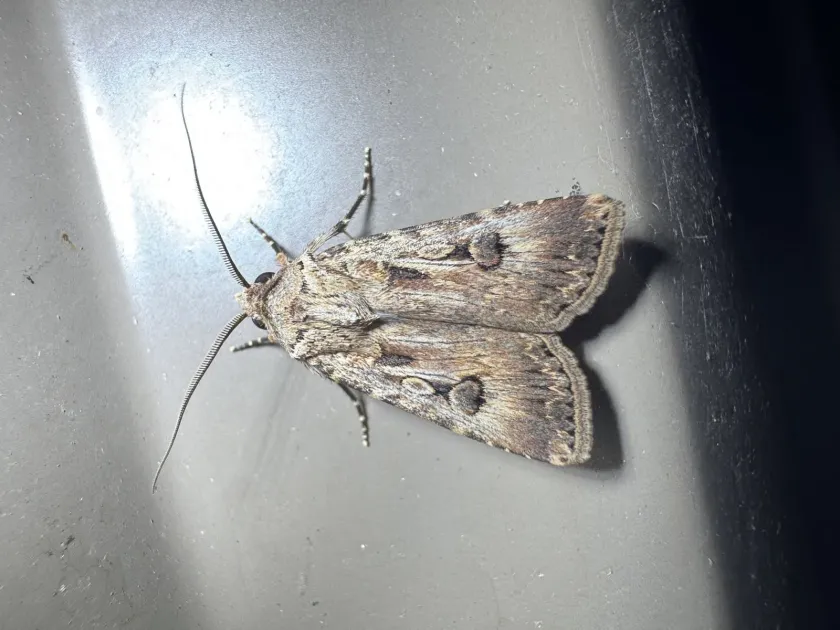
Cutworms are the larvae of various moth species belonging to the Noctuidae family. These insects are nocturnal, and adult moths often have dull, camouflaged wings that blend with their environment.
The larvae, known as cutworms, are typically hairless, fleshy, and cylindrical. They range in color from grey to brown or black, often with distinct spots or longitudinal lines along their bodies.
One of the most defining characteristics of these larvae is their habit of curling into a tight C-shape when disturbed or during daylight hours.
The life cycle encompasses four stages: egg, larva, pupa, and adult moth. Most species undergo one to three generations per year, depending on the geographical region and climate.
Overwintering usually occurs as partially grown larvae in the soil or under plant debris, allowing them to resume feeding immediately when temperatures rise in the spring.
What it damages
Cutworms are generalist feeders, meaning they attack a wide range of agricultural crops, including corn, wheat, sunflowers, sugar beets, and various vegetable species.
Young larvae initially feed on the foliage of young plants, causing small holes and window-pane effects, which is often mistaken for other leaf-chewing pests.
The most devastating damage is caused by mature larvae that feed at the soil surface, cutting off the stems of young seedlings near the base, which results in the death of the plant.
Severe infestations can lead to significant crop thinning and total loss of stands, often requiring farmers to replant affected fields at a high economic cost.
In dry conditions, the damage is exacerbated because the larvae consume more plant tissue to obtain the necessary moisture, leading to faster destruction of the crop.
When it appears
Adult moth activity typically begins in late spring as soil temperatures increase, signaling the start of the primary mating and egg-laying period.
Moths are active at night, feeding on nectar from blooming weeds or crops, which is essential for the female's ability to produce large numbers of eggs.
The first generation of larvae emerges in spring, coinciding perfectly with the germination and early growth phases of most major row crops.
A second generation, often more numerous than the first, develops during mid-to-late summer, targeting late-season crops and horticultural varieties.
As autumn approaches, larvae consume significant amounts of biomass in preparation for hibernation, leading to increased damage to late-harvest root crops.
Signs of infestation
The most obvious sign of an infestation is the appearance of wilting or toppled plants in the field that seem to have been cut cleanly at the base.
Careful excavation of the soil around the base of a damaged plant usually reveals the presence of one or more curled-up larvae hiding just below the surface.
Early-season scouting should involve checking for small, irregular holes in the leaves, which indicate the presence of younger, leaf-feeding stages of the pest.
Using pheromone-baited traps is a highly effective way to monitor adult moth populations and determine the timing of insecticide applications.
- Uniformly cut seedlings at the soil level across portions of the field.
- Wilting of plants despite adequate soil moisture levels.
- Presence of larvae in the soil within a 5-10 cm radius of the damaged plant.
Control measures
Cultural practices are the first line of defense; tilling the soil after harvest or before planting can expose larvae to natural predators and harsh environmental conditions.
Maintaining a clean field by eliminating weeds reduces the availability of egg-laying sites and food sources for the adult moths, effectively lowering local populations.
Chemical control options include seed treatments or the application of registered insecticides as a bait or spray if monitoring thresholds are exceeded.
Biological control agents, such as beneficial nematodes or Bacillus thuringiensis (Bt), can be applied to the soil to provide a more environmentally friendly suppression of larval populations.
Preserving natural enemies, such as ground beetles and parasitic wasps, plays a vital role in keeping cutworm numbers below economic injury thresholds in organic farming systems.
Content graph
Connections · Cutworms
Most often together:
Marketplace
Products · 44


Diagro Max, G, insecticide-fertilizer
Land Capital, LLC
Insecticides
0
0
·
56
2 offers
8.03 €per 1 l
Buy




Dragun
Nanjing No.1 Pesticide Factory of Red Sun Group Co., Ltd.
Insecticides
0
1
·
2.3K
No offers
—
Details


Tabu v.s.k., (Imidacloprid, 500 g/l)
ЗАТ Фірма Август, Росія.,селище Вурнари,
Insecticides
0
0
·
57
No offers
—
Details


Nuprid 600 TN
Нуфарм Австралія Лтд. , Австралія (місце виробництва: Чілі
Insecticides
0
0
·
52
No offers
—
Details

Dursaban 480
Доу АгроСайенсіс, Кінг’з-Лінн, Великобританія
Insecticides
0
0
·
51
No offers
—
Details


Biology
Taxonomy
- Latin name
- Noctuidae
- Order
- Lepidoptera (butterflies)
- Family
- Noctuidae
- EPPO code
- 1NOCTF
Community
Discussion
No discussions yet — be the first.