
Pest · Coleoptera (beetles) · affects Potato, Tomato, Wild cabbage
Especially harmful
Cockchafer
Melolontha melolontha
Description
How to identify
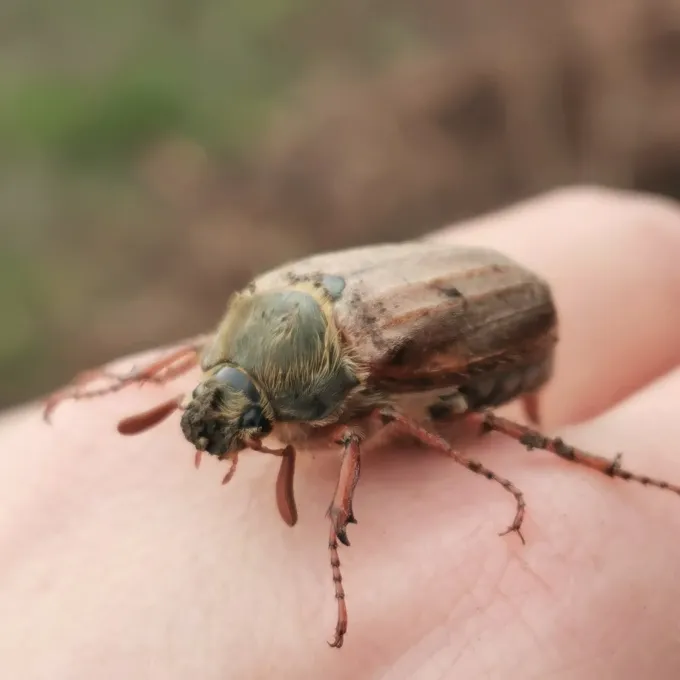
The cockchafer, scientifically known as Melolontha melolontha, belongs to the family Scarabaeidae. Adult beetles are large, hairy, and have distinctive fan-shaped antennae, growing up to 30 mm in length.
The primary agricultural threat is posed by its larvae, known as white grubs. These larvae are C-shaped, creamy white with a brownish head, and possess three pairs of sturdy legs designed for soil excavation.
The life cycle is long, typically lasting 3 to 4 years. Most of this time is spent in the larval stage underground, where they develop through several molts, increasing in size and appetite with each stage.
Adult beetles emerge in spring, coinciding with the budding of trees. They feed on foliage during the night and hide in the soil or under debris during the day, which can make early detection difficult.
Females lay their eggs in loose, moist soil. After hatching, the young larvae stay in the upper soil layers, feeding on roots and humus, gradually becoming significant pests for various garden plants.
What it damages
Cockchafer larvae are destructive to a wide range of crops. They feed aggressively on the root systems of cabbage, tomatoes, and potatoes, leading to stunted growth or total plant failure.
In potato cultivation, larvae tunnel deep into the tubers, creating large cavities. This damage not only ruins the vegetable but also creates entry points for fungal and bacterial infections during storage.
For young tomatoes and cabbage, the damage to the main root system is often fatal. The plants lose their ability to transport water and nutrients, resulting in rapid wilting and collapse during the hottest parts of the day.
Fruit tree saplings and strawberries are also frequent targets. The larvae are capable of girdling the roots of young trees, which often leads to the death of the plant within a single growing season if infestations are heavy.
The degree of damage is proportional to the age and size of the larvae. As they reach their third year of development, they can consume large quantities of plant matter daily, making them a critical threat to productivity.
When it appears
The emergence of adult cockchafers typically occurs in late spring, generally from April to May, depending on regional temperature patterns. This is the time for mating and egg-laying in the soil.
The larval stage is active throughout the entire growing season. In the summer months, they are located in the upper 10–20 cm of the soil, which corresponds with the depth of the root systems of most vegetable crops.
As autumn temperatures drop, larvae move deeper into the soil profile to hibernate, avoiding the freezing temperatures of the surface layer until the following spring brings them back to the active zone.
The most intensive feeding period for larvae in the garden occurs during the late spring and summer, matching the peak vegetation phase of crops like potatoes and various leafy vegetables.
Because of the long lifecycle, larvae of different ages can be found in the soil simultaneously, ensuring that there is a constant pressure of infestation throughout the multi-year cycle of the pest.
Signs of infestation
A classic sign of larval presence is the sudden and unexplained wilting of plants. When inspected, these plants often detach easily from the ground because their roots have been completely severed by the grubs.
Presence of C-shaped white larvae during soil tilling or cultivation is a definitive indicator of an infestation. Finding multiple grubs per square meter suggests a need for immediate intervention.
Harvesting potatoes that show large, round holes or tunnels is a clear sign that larvae were active in the root zone throughout the growth period, rendering the tubers unmarketable.
A general decline in the health of perennial crops, such as strawberries or small shrubs, often starts with yellowing leaves and slow growth, eventually leading to the death of the plant if larvae are not managed.
Observing adult beetles swarming around trees in the evening during spring serves as a warning that the site is a breeding ground and that larval management should be prioritized in the following seasons.
Control measures
Deep autumn plowing is a highly effective mechanical control method. It exposes larvae to surface temperatures, birds, and other predators, significantly reducing the pest population in the soil.
Biological control using entomopathogenic fungi or nematodes (such as Heterorhabditis bacteriophora) provides a sustainable way to suppress larvae populations without the use of harsh synthetic chemicals.
Applying soil insecticides at the time of planting is a standard chemical approach for protecting vegetable crops, although it should be used in compliance with local regulations and safety guidelines.
Encouraging natural predators, such as insectivorous birds, is a simple and effective strategy. Providing bird baths and nesting boxes can increase bird activity in the garden, helping to balance the ecosystem.
- Use trap crops like lupine to concentrate larvae for easier removal.
- Keep the soil free of thick weed cover that attracts egg-laying females.
- Manually collect and remove larvae when working the garden soil.
In brief
3
Damages crops
Content graph
Damages crops · 3
Content graph
Connections · Cockchafer
Most often together:
Marketplace
Products · 7
Biology
Taxonomy
- Latin name
- Melolontha melolontha
- Order
- Coleoptera (beetles)
- Family
- Scarabaeidae
- EPPO code
- MELOME
Community
Discussion
No discussions yet — be the first.