
Adoretus
Adoretus
Description
How to identify
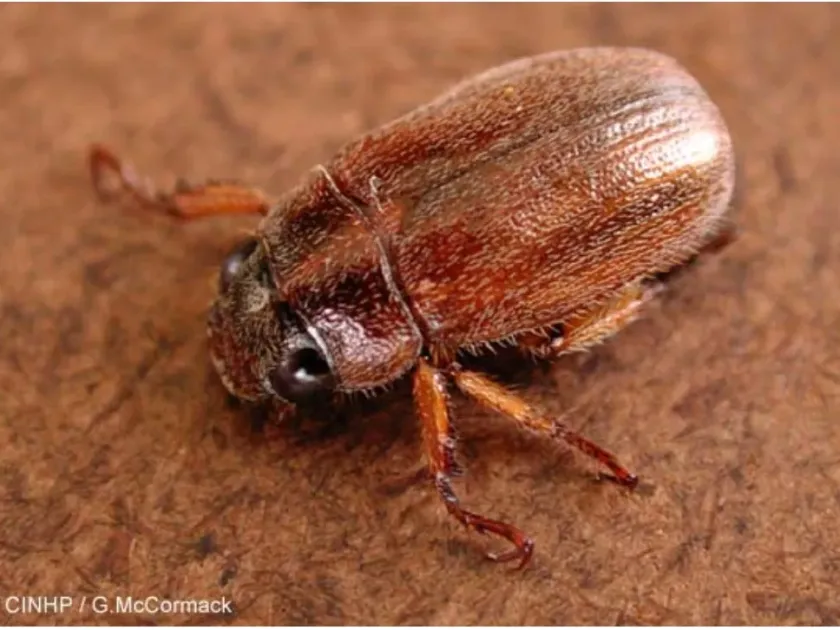
Adoretus is a genus of beetles belonging to the family Scarabaeidae (order Coleoptera). These are small beetles, typically measuring 10 to 15 mm in length, characterized by an oval body shape. Their coloration ranges from yellowish-tan to dark brown, often featuring a metallic sheen or fine dorsal pubescence.
The larvae, often referred to as white grubs, possess the typical scarab shape: a C-shaped, whitish body with a dark head and three pairs of well-developed thoracic legs. When disturbed in the soil, they habitually curl into a tight ball as a primary defense mechanism.
Adult beetles are predominantly nocturnal. During the daylight hours, they seek shelter in the soil or within dense foliage, emerging at dusk to feed. This behavior makes them highly mobile and capable of rapidly spreading across agricultural fields.
Adults possess robust mandibles designed for chewing, which enable them to effectively skeletonize plant leaves. A clear understanding of their morphology is essential for accurate diagnostics, as their nocturnal feeding habits often lead to delayed discovery of infestations.
The life cycle includes egg, three larval instars, pupa, and adult stages. The majority of the life cycle occurs underground, where larvae feed on organic matter and fine rootlets, rendering them inconspicuous until the adults emerge to the surface.
What it damages
Adoretus is a notorious polyphagous pest that causes significant damage to a wide array of agricultural crops. Fruit trees, including apple, pear, peach, and grapevines, are particularly susceptible; beetles consume leaf tissues, leaving only the primary veins intact.
In warmer climates, this pest poses a substantial threat to ornamental shrubs and rose bushes. Intensive feeding causes severe defoliation, which reduces the plant's photosynthetic capacity and leads to significant physiological stress and weakening.
Larvae living in the root zone can inflict damage upon the root systems of young seedlings and various vegetable crops. High populations of soil-dwelling larvae can lead to stunted growth, nutrient deficiencies, and the eventual mortality of young transplants.
Plants attacked by the adults lose their aesthetic value and marketability, which is especially detrimental for nurseries and berry producers. Massive infestations can result in the total defoliation of specific host plants within a short period.
Vineyards frequently suffer from beetle attacks, where foliage is consumed, sometimes extending to young buds and developing inflorescences, thereby jeopardizing future yields and the following season's fruit bud formation.
When it appears
Adult activity peaks during the summer months, typically ranging from late June to late August. The peak flight period is synchronized with consistently high nighttime temperatures, which stimulate beetle emergence and activity.
Larval development in the soil spans an extended period, often lasting one to two years depending on the regional climate. Larval activity in the upper soil layers is most pronounced during spring and autumn when soil moisture levels are optimal.
The emergence of adults from pupation sites occurs in waves, extending the damage window over several weeks. In exceptionally hot and dry seasons, mass emergence may be more intense due to the synchronization of adult activity.
Temperature is a critical environmental factor for flight initiation; if nighttime temperatures drop below specific thresholds, beetle activity declines sharply. This knowledge is vital for timing insecticide applications effectively.
At the end of summer, adults lay eggs in organic-rich soil, transitioning the life cycle into the next generation of larvae, which subsequently migrate into deeper soil strata to overwinter.
Signs of infestation
The primary diagnostic sign of an Adoretus infestation is the characteristic "lace-like" or skeletonized appearance of leaves. The beetles consume only the interveinal leaf tissue, leaving behind a fine, skeletal framework of veins.
The presence of C-shaped white larvae discovered during soil cultivation or tilling under trees or garden beds is a clear indicator of a potential root-feeding threat, necessitating immediate management action.
Audible buzzing of insects around tree canopies or shrubbery during summer evenings serves as a reliable indicator of active adult flight. At this time, beetles can often be observed visually using a flashlight.
Wilting or slowed development of young plants, despite adequate irrigation and no visible damage to the foliage, is a frequent sign of compromised root systems caused by soil-dwelling larvae.
The presence of beetle frass (excrement) on leaf surfaces beneath damaged areas confirms recent activity. Furthermore, damaged buds and tender new shoots complement the evidence of the insect's multifaceted impact on the host plant.
Control measures
For Adoretus management, the use of modern contact and systemic insecticides is effective. Applications should be performed in the evening hours when beetles are actively feeding on the foliage.
Mechanical control, involving the collection of beetles at night by shaking them onto tarps or sheets, can significantly reduce the local population on small-scale plots without the need for chemical intervention.
Agronomic practices, including regular cultivation and tilling of soil within the root zone, help disrupt the life cycle by exposing pupae and larvae to predators and environmental stress, while making the soil less hospitable for oviposition.
Light traps are an efficient tool for monitoring flight activity and capturing significant numbers of adults at night. This data is critical for determining the onset of peak infestations and timing control measures.
Biological control agents, such as entomopathogenic fungi or nematodes, can be introduced into the soil to target the larval stages. This represents an environmentally sound approach that, when applied consistently, reduces the overall population pressure on the site.
Taxonomy
- Latin name
- Adoretus
- Order
- Coleoptera (beetles)
- Family
- Scarabaeidae
- EPPO code
- ADORSP
Discussion
No discussions yet — be the first.