
Adoretus compressus
Adoretus compressus
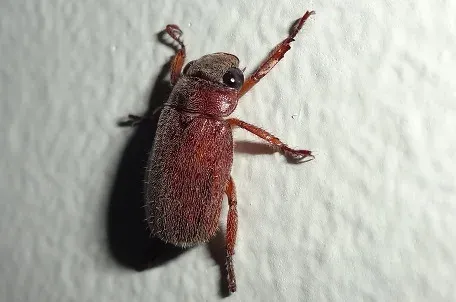
Description
How to identify
Adoretus compressus belongs to the Scarabaeidae family, within the order Coleoptera. Adult beetles are small, typically measuring between 10 and 12 millimeters in length.
The beetle exhibits a color range from yellowish-brown to dark brown, with the body covered in fine hairs that give it a matte appearance. The name reflects its slightly compressed wing covers (elytra), which is a key morphological feature.
The larvae are C-shaped, consistent with many other scarab beetles, and have a creamy-white body with a distinct dark head capsule. They primarily dwell in the soil, feeding on organic matter and plant roots.
Adult beetles are nocturnal, spending the daylight hours hidden in the soil or beneath leaf litter. This behavior makes them difficult to detect during the day without specific monitoring techniques.
The life cycle involves complete metamorphosis: egg, larva, pupa, and adult. Development from egg to adult generally spans approximately one year, significantly influenced by local environmental conditions and temperature.
What it damages
This species is a polyphagous pest, meaning it attacks a wide variety of host plants. It poses a significant threat to fruit trees, ornamental shrubs, and vineyard crops.
The primary damage is caused by adult beetles, which feed on leaves. During heavy infestations, they can skeletonize the foliage, leaving only the veins behind.
Such damage disrupts the plant's photosynthetic capacity, leading to weakened overall health, stunted growth, and reduced yield in fruit-bearing crops.
Larvae, when present in high numbers in the soil, feed on the root systems of young seedlings and vegetables. This can lead to yellowing, wilting, and even plant mortality in severe cases.
Nurseries are particularly vulnerable, as repeated defoliation by this beetle can ruin the aesthetic and commercial value of young saplings and ornamental plants.
Signs of infestation
The most prominent sign of infestation is the characteristic mesh-like appearance of leaves, where the soft tissue is removed, leaving behind a network of leaf veins.
Nighttime observation is the most effective way to identify the pest. Using a flashlight, one can easily spot the beetles actively feeding on the foliage of affected host plants.
Larval activity in the soil may be indicated by sudden wilting or yellowing of the plants, especially when no other visible pests are present on the stems or leaves.
The presence of frass (insect excrement) on the ground or on the lower leaves of the host plant often points to an established infestation of adult beetles.
Early leaf drop during mid-summer, despite adequate watering, is another frequent indicator that a plant is suffering from extensive feeding by Adoretus compressus.
Control measures
Mechanical control involves hand-picking beetles at night or shaking them off branches onto sheets early in the morning when the insects are less active.
Cultural practices include frequent soil cultivation in the root zones. This disturbs the soil-dwelling stages, exposing larvae and pupae to predators and environmental stress.
Light traps are highly effective for managing adult beetle populations. Since the insects are attracted to light, these traps can significantly reduce the number of egg-laying females.
Chemical control may be necessary during peak infestation periods. Foliar applications of insecticides should be timed for the evening to maximize contact with the nocturnal adults.
Biological control methods, such as the application of entomopathogenic nematodes or fungi to the soil, can target the larval stage, providing long-term management of the population.
Taxonomy
- Latin name
- Adoretus compressus
- Order
- Coleoptera (beetles)
- Family
- Scarabaeidae
- EPPO code
- ADORCO
Discussion
No discussions yet — be the first.