
Leptura emarginata
Leptura emarginata
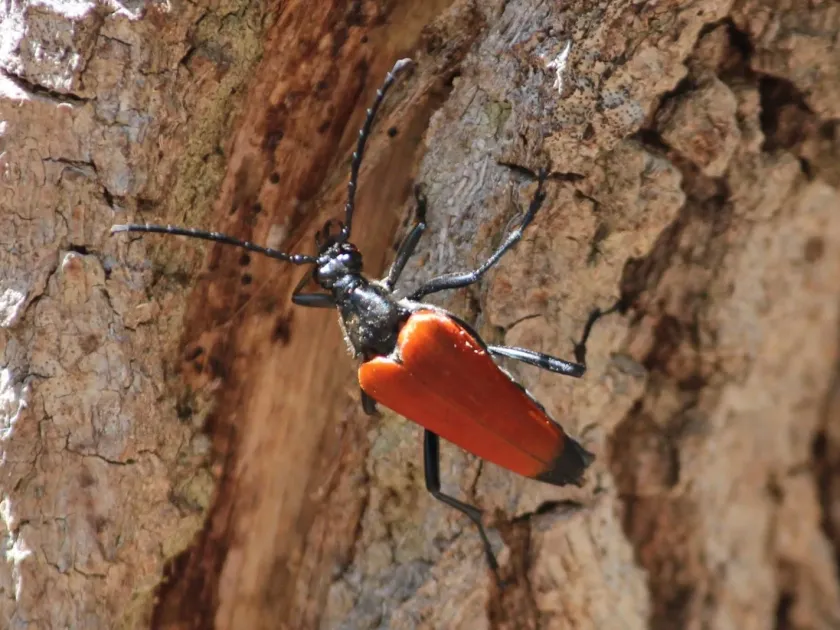
Description
How to identify
Leptura emarginata is a notable species within the Cerambycidae family, commonly known as longhorn beetles. These insects are distinguished by their robust body shape, characteristic antennae length, and specific color patterns on their elytra.
The morphology of the adult beetle varies slightly depending on the nutritional conditions the larvae experienced during development. Entomologists identify the species by examining the structure of the pronotum and specific features of the head and mandibles.
Larvae are typically wood-boring, possessing a cylindrical, legless body covered with microscopic hairs. Their mandibles are exceptionally strong, allowing them to effectively consume the cellulose and lignin found within woody plant tissues.
The life cycle of this beetle is complex and spans several years. It includes egg-laying in bark crevices, followed by a long larval phase inside the tree, and finally, the emergence of adults, which are active during warm summer months.
Adults are often found on the bark of host trees or visiting flowers to feed on pollen. They play a specific role in the ecosystem, but their presence in large numbers can indicate a significant threat to timber resources.
What it damages
This pest targets various hardwood species, including oaks and beeches. It often prefers trees that are already stressed by drought, poor soil conditions, or previous fungal attacks, making it a significant secondary pest in weakened forests.
Larval activity involves creating extensive galleries within the sapwood and heartwood. These tunnels interrupt the vascular system of the tree, which hinders the transport of water and nutrients, eventually leading to branch dieback or total tree mortality.
The tunnels created by the larvae provide entry points for pathogens, such as wood-decay fungi, which further degrade the structural integrity of the wood. This accelerates the process of decay and makes the tree vulnerable to physical damage.
In forestry and landscaping, the economic impact is substantial. Wood infested with Leptura emarginata loses its market value as lumber, and the loss of mature, aesthetic trees in parks and orchards can be difficult to replace.
The cumulative damage caused by multiple generations of this beetle can turn a productive woodlot into a site of declining and decaying vegetation, requiring extensive restoration and management efforts to recover.
Signs of infestation
The most prominent sign of an infestation is the presence of circular exit holes on the tree's surface. These holes are created by emerging adults and are often accompanied by piles of frass—a mixture of wood dust and larval excrement.
Closer examination of the bark may reveal small cracks or discolored patches where the wood underneath has begun to soften. These are indicators that larvae are actively feeding and destroying the tree's internal structures.
During the flight season, which usually peaks in the summer, adult beetles can be observed crawling along the trunks. They are often spotted near the exit holes they have created, engaging in mating behavior or selecting sites for egg deposition.
A decline in the foliage, such as yellowing or wilting leaves in specific parts of the canopy, often suggests that the vascular system at that level has been compromised by the beetle's tunneling activity.
The sounds of wood-boring can occasionally be heard in very quiet conditions, as larvae chew through the solid wood. This is a sign of an advanced infestation that requires immediate attention.
Control measures
The primary control strategy involves rigorous sanitation. Removing and destroying heavily infested trees prevents the next generation of beetles from emerging and spreading to healthy trees in the vicinity.
Maintaining tree vigor through proper irrigation, mulching, and balanced fertilization is crucial. A healthy, resilient tree can often withstand low levels of infestation by utilizing its natural defense mechanisms.
In high-value trees, direct injection of systemic insecticides into the larval tunnels can be effective. This targeted approach minimizes environmental impact while directly addressing the pest within its protected environment.
Monitoring using pheromone or light traps during the adult emergence phase helps in tracking population levels. This data is essential for timing the application of any necessary protective measures.
- Regular site inspections.
- Sanitation logging and removal of deadwood.
- Wound treatment after pruning.
- Quarantine measures for wood movement.
Taxonomy
- Latin name
- Leptura emarginata
- Order
- Coleoptera (beetles)
- Family
- Cerambycidae
- EPPO code
- STRLEM
Discussion
No discussions yet — be the first.