
Leptopharsa
Leptopharsa
Description
How to identify
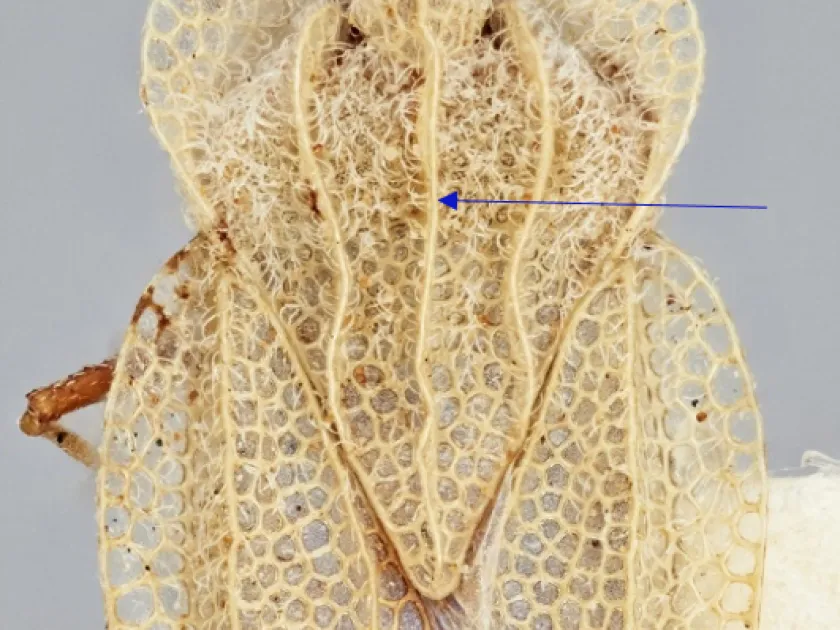
Leptopharsa is a genus of lace bugs belonging to the family Tingidae within the order Hemiptera. These tiny insects are named for the characteristic reticulated, net-like structure of their pronotum and hemelytra, which resembles fine lace.
Adult Leptopharsa specimens typically measure between 2 and 4 millimeters in length. Their bodies are distinctly flattened, and their coloration often ranges from light beige to dark brown, providing effective camouflage on the underside of leaves.
The nymphs of Leptopharsa undergo several developmental stages. Unlike adults, they lack fully developed wings and often possess numerous spines or tubercles on their bodies, which help them maintain a secure grip on the leaf surface.
A key morphological feature of this genus is the structure of the pronotum, which extends forward to partially cover the insect's head. The eggs are small, elongated, and typically deposited by females within plant tissues, making them difficult targets for contact insecticides.
The biology of these insects is closely tied to regional climate conditions. In favorable environments, multiple generations can occur within a single season, leading to rapid population growth if natural predators or chemical interventions are absent.
What it damages
The primary crops affected by Leptopharsa are members of the Lauraceae family, most notably avocados. The pest can also be found on various ornamental plants and certain wild species in tropical and subtropical regions.
Both adults and nymphs feed on plant sap by piercing the leaf epidermis. This feeding behavior causes extensive tissue destruction and disrupts the plant's normal photosynthetic processes, leading to significant weakening of the host.
The most severe damage occurs during periods of active crop growth. Heavy infestations can cause premature leaf drop, which substantially reduces fruit yield and quality in both the current and subsequent seasons.
Beyond direct physical damage, feeding sites serve as entry points for secondary infections, including fungal and bacterial diseases. This complicates the plant's recovery and overall vitality following colonization by the pest.
Economic losses from Leptopharsa can be substantial in commercial orchards. In cases of mass outbreaks, the loss of fruit marketability and the decline in tree vigor require immediate intervention from plant protection specialists.
Signs of infestation
The initial sign of a Leptopharsa infestation is the appearance of small light or yellowish stippling on the upper side of the leaves, which corresponds to feeding punctures on the underside.
As the infestation progresses, these stippled spots merge into larger discolored (chlorotic) patches. The leaf gradually takes on a mottled appearance, becoming pale before eventually turning brown and drying out at the edges.
On the underside of the leaves, one can observe the pests themselves—colonies of tiny insects—along with their excrement, which appears as small, sticky black dots. These secretions can promote the growth of sooty mold, coating the leaf surface in a black layer.
The molting process of the nymphs leaves behind empty exoskeletons (exuviae), which are also visible on the underside of the leaf blades. This is an important diagnostic sign confirming active population presence.
Trees with high levels of infestation appear stressed, and their canopy becomes noticeably thinner. In severe cases, extensive defoliation occurs, which significantly reduces the tree's overall productivity and resistance to environmental stress.
Control measures
Effective control of Leptopharsa relies on regular plantation monitoring. Inspecting the undersides of leaves allows for the detection of the pest in the early stages, before the colony reaches critical levels.
Systemic insecticides are generally considered the most effective control method because the pest inhabits difficult-to-reach areas and is often protected by the leaf texture. It is crucial to rotate chemical agents to prevent the development of resistance.
Cultural control measures include the timely pruning of infested branches and maintaining optimal tree hydration. A healthy, properly fertilized plant is much more capable of resisting pest attacks.
Biological control involves the use of natural enemies, such as predatory bugs, lacewings, and specialized parasitoids. Attracting beneficial insects to the orchard can help suppress Leptopharsa populations naturally.
Strict adherence to quarantine protocols during the transport of nursery stock is vital to prevent the spread of Leptopharsa to new regions. Thorough inspection of saplings helps avoid the introduction of the pest into clean areas.
Taxonomy
- Latin name
- Leptopharsa
- Order
- Hemiptera (bugs, aphids, leafhoppers)
- Family
- Tingidae
- EPPO code
- LPPHSP
Discussion
No discussions yet — be the first.