
Sugarcane lace bug
Leptodictya tabida
Description
How to identify
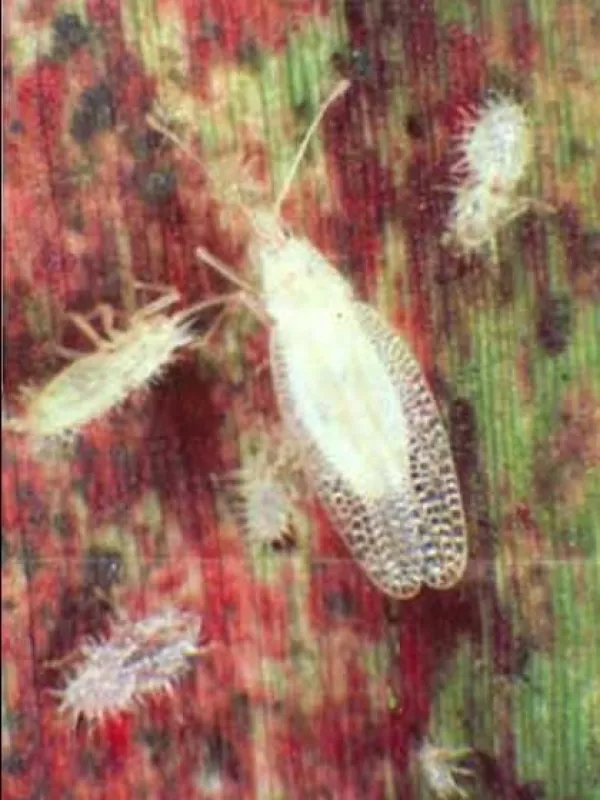
The sugarcane lace bug (Leptodictya tabida) belongs to the Tingidae family within the Hemiptera order. These insects are easily identified by the delicate, lace-like pattern on their wings, which is a hallmark of the family.
Adult bugs are small, measuring approximately 3-4 mm in length. Their coloration ranges from pale yellow to light brown, providing effective camouflage against the green leaves of their host plants.
Nymphs undergo several developmental stages (instars) before reaching maturity. They are wingless and smaller than adults, though they share similar feeding habits and habitat preferences.
The lifecycle is heavily influenced by ambient temperature and moisture levels. Females lay eggs directly into the leaf tissue, ensuring that larvae can feed immediately upon emergence.
Because of their cryptic nature and small size, identifying early infestations requires careful examination of the undersides of leaves, particularly along the midribs.
What it damages
The primary host for this pest is sugarcane, although it can occasionally be found on other Poaceae species. Both adults and nymphs contribute to the damage by feeding on plant sap.
By piercing the leaf tissue, they disrupt the plant's ability to perform photosynthesis effectively. This leads to reduced vigor and stunted growth of the affected sugarcane plants.
Heavy infestations result in significant yield losses, as the plant struggles to accumulate sugar in the stalks due to the loss of nutrients and water throughout the growing season.
The damage is particularly severe during dry, hot periods. When the plant is already under abiotic stress, the impact of the lace bug feeding is greatly magnified.
If left unmanaged, the pest can quickly spread throughout a field, causing entire sections to turn brown and dry out, leading to reduced sugar content at harvest time.
Signs of infestation
The first signs of infestation appear as chlorotic, white or yellow spots on the upper leaf surfaces, which indicate areas where the bugs have been feeding.
Black or dark brown spots, representing the excrement of the insects, are commonly found on the undersides of the leaves, serving as a clear indicator of a lace bug colony.
Leaves affected by high populations of the bug will begin to turn yellow and eventually brown. This tissue necrosis typically begins at the leaf tips and progresses downwards.
Plants may show symptoms of general wilting or chlorosis, which can be misidentified as nutrient deficiencies if the underside of the leaf is not checked for the pests.
Infestation patches often start along the field edges and then move inward, creating visible "islands" of damaged foliage within the healthy crop.
Control measures
Chemical control using systemic or contact insecticides is the most effective way to manage outbreaks of Leptodictya tabida in commercial sugarcane plantations.
Cultural practices, such as rigorous weed management, are essential because alternate hosts can support lace bug populations even when sugarcane is not present.
Biological control agents, including predatory bugs, spiders, and lacewings, play a natural role in keeping the lace bug population below economic threshold levels in integrated systems.
Regular field scouting is critical for early detection, allowing for targeted spot treatments rather than field-wide applications, which helps preserve beneficial insects.
Implementing a crop rotation strategy and selecting resistant or less susceptible cane varieties can significantly decrease the likelihood of severe pest pressure over time.
Taxonomy
- Latin name
- Leptodictya tabida
- Order
- Hemiptera (bugs, aphids, leafhoppers)
- Family
- Tingidae
- EPPO code
- LEPATA
Discussion
No discussions yet — be the first.