
Lace bug
Leptodictya
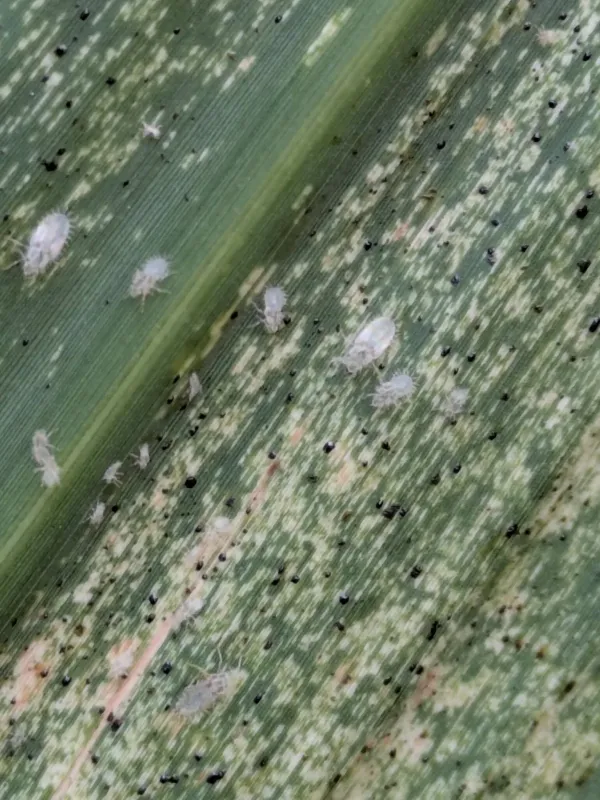
Description
How to identify
The cereal lace bug (genus Leptodictya) belongs to the order Hemiptera and the family Tingidae. These insects are named for their distinctive wing structure, which features a delicate, net-like pattern resembling lace.
Adult lace bugs typically have a flattened body shape and a reticulated pronotum. Their coloration often ranges from pale yellow to light brown, providing excellent camouflage against the leaves of host cereal plants.
Nymphs of the lace bug differ in appearance from the adults; they are usually smaller, more compact, and may possess small spines or outgrowths on their bodies, passing through several developmental stages.
These insects exhibit cryptic behavior, primarily residing on the underside of leaves, which makes them difficult to detect during standard agricultural field inspections.
Equipped with specialized sensory receptors on their antennae, lace bugs efficiently locate the most nutrient-rich sections of leaves while avoiding exposure to direct sunlight during peak temperature hours.
What it damages
Lace bugs primarily feed on wild and cultivated cereals. In agricultural settings, they cause significant damage to wheat, barley, oats, rye, and various forage grass species.
Both adults and nymphs cause damage by using their piercing-sucking mouthparts to extract sap from leaf parenchyma, leading to a rapid loss of turgor pressure in plant tissues.
Large-scale infestations result in a critical reduction of the leaf's photosynthetic surface, which directly impacts plant productivity and negatively affects grain filling in the ears.
Infested plants often show stunted growth, as the plant directs its energy toward repairing damaged tissues, making the crop more susceptible to secondary fungal and viral diseases.
In cases of high population density, yield losses can range from 10% to 25%, depending on the crop growth stage at the time of the most intense infestation.
When it appears
Adults overwinter in plant debris, near field borders, or within the upper soil layer, emerging from diapause in the spring when stable positive temperatures are established.
The first generation typically develops on wild grasses before migrating to agricultural cereal crops during their active growing season.
The peak of activity and damage occurs during the jointing and heading stages of cereals, when the insects feed intensely to prepare for reproduction and egg-laying on the foliage.
Multiple generations can occur within a single season, with hot and dry weather conditions significantly accelerating the development cycle of nymphs and contributing to rapid population surges.
As autumn approaches and temperatures decrease, the bugs gradually move toward overwintering sites, completing their active feeding cycle and preparing for dormancy.
Signs of infestation
The first sign of infestation is the appearance of small, light-colored spots on the leaves, which eventually merge into larger discolored patches, indicating intense feeding activity.
Upon careful inspection of the leaf undersides, one can observe both adults and various nymphal stages, alongside small black dots representing insect excrement.
Affected leaf areas dry out quickly and curl, giving the entire field a characteristic "grayish" or yellowish tint, which is especially noticeable in the early stages of vegetation.
The presence of shed exoskeletons on the leaf surface serves as an additional diagnostic indicator of an active and growing population within the crop.
Unlike some other sucking pests, damage caused by lace bugs often appears in clusters, creating localized patches of discoloration on individual plants throughout the field.
Control measures
Effective management begins with strict adherence to agronomic practices, such as thorough plowing of crop residues and the removal of weeds that serve as reservoirs for the pest.
Crop rotation is vital for success; maintaining proper spatial separation between new grain crops and previous year's infestation sites significantly reduces the risk of primary invasion.
Chemical control involves the use of systemic insecticides, which penetrate plant tissues and provide effective, long-lasting protection against both adults and nymphs.
Treatments should be timed to coincide with peak population density, guided by ongoing monitoring data and regional economic injury thresholds.
- Utilizing high-vigor seed varieties to ensure rapid crop establishment.
- Balanced fertilizer application to strengthen plant resistance to stress.
- Deploying yellow sticky traps to track population dynamics in real-time.
- Promoting habitats for natural beneficial predators on the farm.
Taxonomy
- Latin name
- Leptodictya
- Order
- Hemiptera (bugs, aphids, leafhoppers)
- Family
- Tingidae
- EPPO code
- LEPASP
Discussion
No discussions yet — be the first.