
Olive ridley sea turtle
Lepidochelys olivacea
Description
How to identify
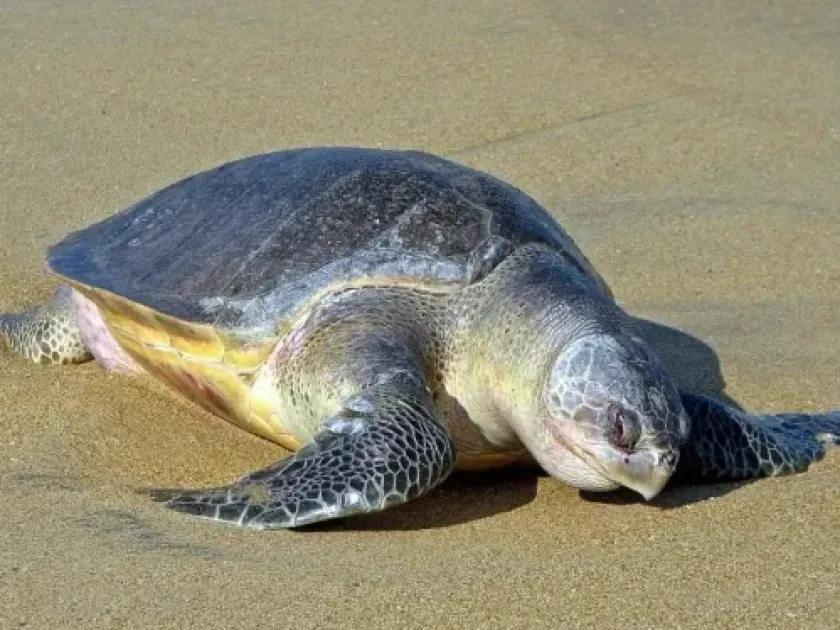
The olive ridley sea turtle (Lepidochelys olivacea) is a species of marine reptile belonging to the family Cheloniidae. These animals are strictly marine, spending almost their entire existence navigating the tropical and subtropical waters of the global ocean.
The species is identified by its olive-colored, heart-shaped carapace and relatively small size compared to other sea turtles. Adults typically measure around 60–70 centimeters in length and possess flippers adapted exclusively for swimming in marine environments.
It is crucial to understand that these turtles possess no biological adaptations for terrestrial life or feeding on land-based vegetation. Their anatomy, including their specialized jaw structure, is designed solely for foraging on oceanic prey.
The life cycle of the olive ridley turtle is anchored in the marine ecosystem. Females only approach shorelines to nest on sandy beaches, a behavior that does not involve interactions with agricultural crops or plantations.
Classifying Lepidochelys olivacea as a plant pest is a significant scientific error. This species has zero impact on agronomy and poses no threat to any cultivated plant species worldwide.
What it damages
The olive ridley sea turtle does not damage any agricultural, horticultural, or silvicultural crops. It is not a phytophagous species and lacks the digestive system required to process plant matter found in terrestrial farming systems.
As obligate carnivores or omnivores of marine prey, they do not compete with humans for crops. Their presence near coastal agricultural areas is purely coincidental during nesting seasons and causes no economic loss to farmers.
There is no evidence in scientific literature to suggest that this turtle species interacts with agricultural soil, irrigation systems, or harvests. Any claims suggesting otherwise are likely due to terminology confusion or misinformation.
The primary food sources for these turtles include crabs, shrimp, jellyfish, and various mollusks. This niche ensures they remain within the maritime domain, away from any form of agricultural land.
In conclusion, the olive ridley turtle bears no relevance to crop protection. It should never be treated as a pest, as it is biologically incapable of causing the types of damage associated with agricultural infestation.
Control measures
No control or mitigation measures are applicable to the olive ridley sea turtle in an agricultural context. Attempting to control this animal as a pest would be scientifically unfounded and ecologically irresponsible.
The species is listed under international conservation treaties due to its vulnerable status in many regions. Consequently, protected status mandates that these animals must not be harmed, harassed, or disturbed during their nesting activities.
Agro-economic practices near coastal zones should prioritize water management to prevent chemical runoff from fields into the ocean. This practice supports both the health of the coastal ecosystem and the safety of the turtles nesting nearby.
If encountered near coastal farmland, the animal should be left undisturbed. Farmers are encouraged to report sightings to local marine conservation authorities rather than intervening, as these turtles are protected by environmental law.
Therefore, there is no place for Lepidochelys olivacea in plant protection guides. It is a vital component of oceanic biodiversity, and its conservation should remain the only priority for those operating in coastal agricultural regions.
Taxonomy
- Latin name
- Lepidochelys olivacea
- Family
- Cheloniidae
- EPPO code
- LPOCOL
Discussion
No discussions yet — be the first.