
Loggerhead
Caretta caretta
Description
How to identify
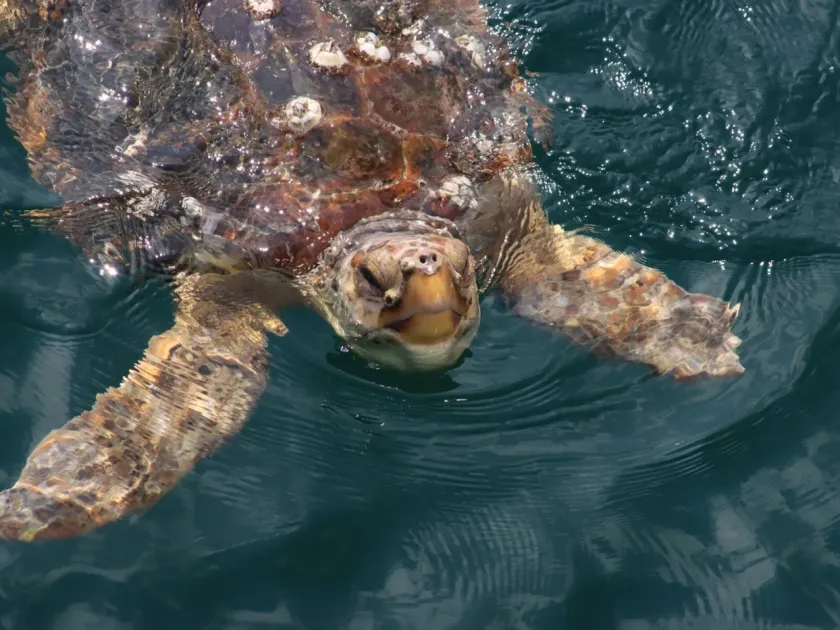
The Loggerhead, scientifically known as Caretta caretta, is a prominent member of the Cheloniidae family within the order Testudines. It is a large marine reptile known for its disproportionately large head.
These animals are characterized by their robust shells and powerful jaws, which are evolutionarily adapted to crush the hard shells of marine invertebrates in oceanic environments.
It is crucial to clarify that the Loggerhead is not a pest. It has no biological connection to plant production or agricultural infestation. Labeling it as a pest is a factual error.
The species lives exclusively in marine environments and is anatomically incapable of interacting with terrestrial plant life in any damaging manner.
As a protected species, the Loggerhead is subject to global conservation efforts aimed at preventing its extinction due to human activities in coastal and open sea regions.
What it damages
Loggerhead turtles do not damage crops, plantations, or any form of agricultural vegetation. They are carnivorous, preying primarily on organisms found on the sea floor.
Their diet includes crabs, mollusks, jellyfish, and smaller marine animals. They lack both the nutritional requirement and the physical tools to feed on land-based plants.
Agricultural operations, including coastal farming, remain entirely unaffected by the presence of these sea turtles in nearby waters.
There are no recorded instances of Caretta caretta causing economic loss or physical destruction to agricultural produce, as they never encounter cultivated fields.
The ecological role of the Loggerhead is significant within the marine food web, and it maintains a completely neutral relationship with the agricultural sector.
Control measures
Control measures are neither recommended nor applicable to the Loggerhead, as it is a protected marine animal and not a threat to agricultural productivity.
Agricultural management in proximity to coastal zones should focus on sustainable practices, such as preventing agricultural run-off, which ensures the safety of marine habitats.
No chemical or biological control agents should ever be used in relation to this species, as such actions would be environmentally harmful and illegal.
Farmers are encouraged to respect local wildlife regulations and protect biodiversity, as sea turtles contribute to the overall health of coastal environments.
In the unlikely event of encountering a turtle on shore, one should allow it safe passage back to the ocean without disturbance, maintaining a respectful distance.
Taxonomy
- Latin name
- Caretta caretta
- Family
- Cheloniidae
- EPPO code
- KARTCA
Discussion
No discussions yet — be the first.