
Kemp's ridley sea turtle
Lepidochelys kempii
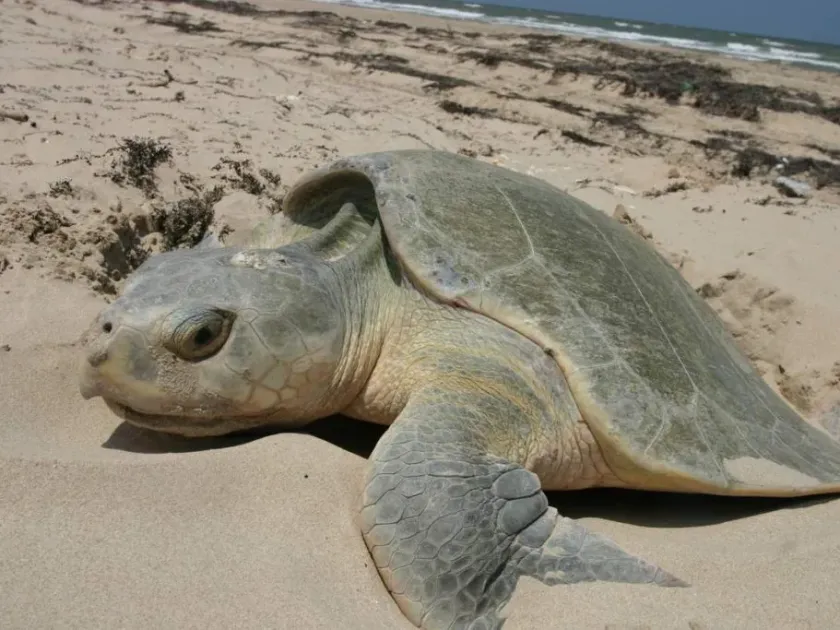
Description
How to identify
The Kemp's ridley sea turtle (Lepidochelys kempii) is a marine reptile and is absolutely not a pest of any agricultural, horticultural, or garden plant species.
Taxonomically, it belongs to the order Testudines and the family Cheloniidae. It is recognized as the smallest and most endangered species of all sea turtles in the world.
Its natural habitat consists strictly of marine environments, primarily the Gulf of Mexico and the Atlantic coastline, where it feeds on crustaceans, mollusks, and jellyfish.
As a marine species, it has no biological mechanisms to feed on land-based vegetation, making it impossible for this animal to be classified as a plant pest.
Any agricultural record suggesting that Lepidochelys kempii causes damage to crops is scientifically incorrect and stems from a misunderstanding of biological nomenclature.
Control measures
Since the Kemp's ridley is not a pest, there are no control measures, pesticides, or agricultural strategies recommended against it, nor should any be attempted.
This species is protected under international environmental laws, including the CITES agreement, which prohibits any form of disturbance or harm to these animals.
Agricultural operations near coastal areas should prioritize environmental stewardship and ensure that no chemical runoff affects the marine habitats where these turtles reside.
If you encounter a sea turtle near your land, it is considered a conservation event, and local wildlife protection authorities should be contacted immediately.
True pest management must focus on insects, fungal pathogens, and weeds that specifically threaten crops, rather than misidentifying protected marine life as threats.
Taxonomy
- Latin name
- Lepidochelys kempii
- Family
- Cheloniidae
- EPPO code
- LPOCKE
Discussion
No discussions yet — be the first.