
White planthopper (Lawana conspersa)
Lawana conspersa
Description
How to identify
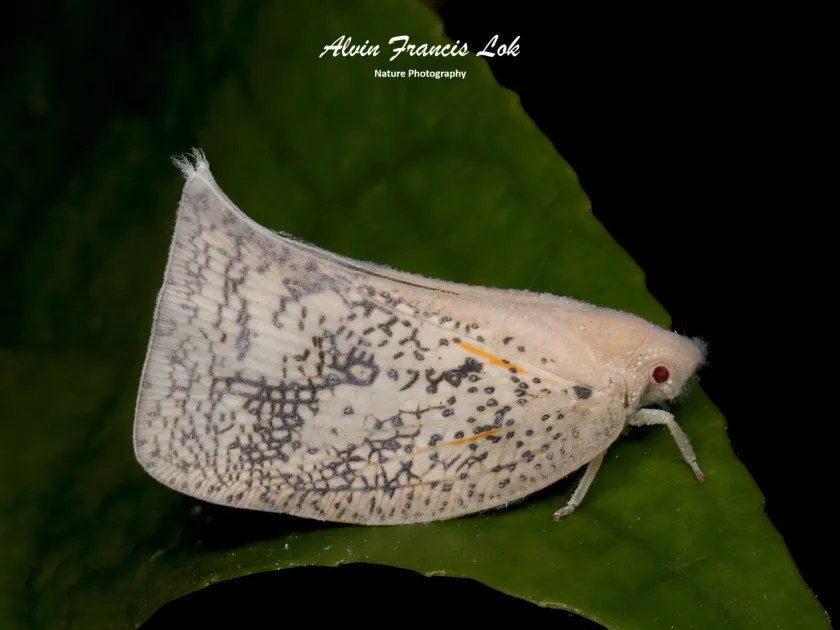
Lawana conspersa, commonly known as the white planthopper, belongs to the family Flatidae within the order Hemiptera. These insects are distinguished by their moth-like appearance and delicate, waxy wings.
Adults measure approximately 15–20 mm in wingspan. Their wings are predominantly white or pale cream with tiny, dark spots, usually held in a roof-like position over the body when the insect is at rest.
The nymphs are easily identified by the presence of long, white waxy filaments protruding from their bodies. These filaments give them a fluffy, cotton-like appearance, acting as a camouflage against predators.
They are highly agile creatures. Both nymphs and adults exhibit a rapid jumping behavior when disturbed, which makes physical monitoring and manual removal quite challenging for gardeners.
These planthoppers are typically active during the day, showing a preference for the sunny and warm parts of the host plant's canopy to maximize their feeding efficiency.
What it damages
Lawana conspersa is a significant polyphagous pest, meaning it attacks a wide variety of plants including citrus, coffee, tea, and various ornamental tree species.
The primary damage is caused by the sucking of plant sap from the phloem. By inserting their piercing-sucking mouthparts into leaves and tender shoots, they deplete the plant of essential nutrients.
Continuous feeding causes wilting, stunted growth, and leaf curling. In severe infestations, the plant’s overall vigor is compromised, leading to premature leaf drop and reduced harvest yields.
These insects excrete honeydew, a sticky substance rich in sugars. This honeydew accumulates on leaf surfaces and serves as a medium for the growth of sooty mold fungus.
The resulting sooty mold interferes with photosynthesis, further weakening the plant and causing aesthetic damage to foliage and fruits, which significantly reduces the market value of the produce.
When it appears
The lifecycle of Lawana conspersa is highly synchronized with the vegetation period of its host plants. In tropical and subtropical regions, they can produce multiple overlapping generations per year.
Egg-laying usually occurs in cracks of the bark or deep within the stem tissues, providing the offspring with protection against predators and extreme weather conditions during the dormant period.
The appearance of nymphs typically coincides with the spring flush of new growth. This is the period when the plant is most vulnerable to sap-sucking insects due to the abundance of tender tissue.
Activity levels peak during warm, dry weather conditions, which favor the rapid development of nymphs into adulthood and subsequent mating cycles.
As temperatures drop, the population gradually decreases, and the insects transition into an overwintering state, ensuring the species survives until the next favorable season.
Signs of infestation
The presence of white, fluffy-looking nymphs on the underside of leaves or along succulent stems is one of the most reliable indicators of an active Lawana conspersa infestation.
A sticky, shiny residue on foliage, followed by the appearance of a black sooty coating, indicates that the population has been present for a significant amount of time.
Visual confirmation of adults is easily achieved by gently shaking the branches of the host plant, which triggers the insects to fly away in a characteristic cloud-like dispersal.
Deformed or yellowing leaves, especially those that appear curled without clear signs of mechanical trauma, often suggest that localized sap depletion is occurring.
- Waxy white residue left on stems.
- Black sooty mold patches on leaves.
- Stunted growth of new terminal shoots.
Control measures
Effective management begins with regular monitoring. Early detection of nymphs allows for spot treatments before the population expands and spreads throughout the entire garden.
Cultural control practices include the removal and disposal of heavily infested plant parts. Maintaining plant health through proper fertilization and pruning reduces the plant's susceptibility.
Chemical control should be targeted at the nymphal stage. Systemic insecticides are generally effective as they protect the plant tissue from within against the planthopper's feeding.
Biological control involves conserving natural enemies, such as parasitic wasps and predatory beetles, which can help keep the population of planthoppers below the economic damage threshold.
Integrated Pest Management (IPM) strategies, including the rotation of insecticides with different modes of action, are essential to prevent the development of pesticide resistance in the pest population.
Taxonomy
- Latin name
- Lawana conspersa
- Order
- Hemiptera (bugs, aphids, leafhoppers)
- Family
- Flatidae
- EPPO code
- LAWACO
Discussion
No discussions yet — be the first.