
Flata
Flata
Description
How to identify
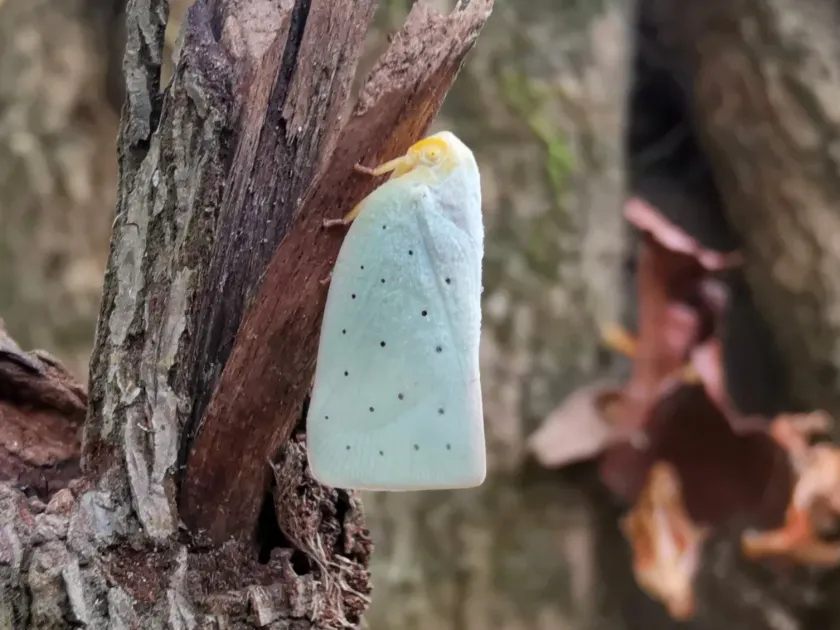
Flata (lat. Flata) belongs to the order Hemiptera, family Flatidae. These insects are typical representatives of planthoppers, possessing characteristic wings held vertically "tent-like" along the body.
Adult specimens have a wedge-like shape and reach 8 to 15 mm in length. Their coloration varies from pale, almost white or greenish tones to darker brown shades, allowing them to camouflage effectively against plant parts.
Nymphs are easily identified by the presence of dense, cotton-like wax filaments that cover their bodies. These secretions serve as a protective mechanism against predators and adverse environmental conditions.
A unique feature of adults is their ability to jump abruptly when threatened, which significantly complicates monitoring and manual collection of the pest in the field.
The Flatidae family includes numerous species, yet they all share a similar morphological type and biological traits, categorizing them as significant agricultural pests.
What it damages
Flata is a polyphagous insect, meaning it has a wide range of host plants. The list of damaged crops includes fruit trees, vineyards, citrus, ornamental shrubs, and many vegetable crops.
The pest poses a particular danger to grapevines, where it can reproduce rapidly and colonize young shoots, causing overall weakening of the vine.
Beyond woody and shrubby species, Flata is often found on weeds, which can serve as infection reservoirs and staging grounds for initial colonization of cultivated crops.
High adaptability allows this pest to successfully colonize both introduced and native plant species, adjusting to various regional climatic conditions.
In intensive horticulture, mass outbreaks of Flata lead to significant losses of marketable produce due to reduced fruit quality and general suppression of vegetative mass.
When it appears
The life cycle of Flata includes an egg stage, which usually serves as the overwintering phase. Eggs are laid by females into tree bark, wood crevices, or plant debris, making them highly resistant to winter frosts.
Nymphs emerge in spring during the active sap flow period. Over several weeks, they pass through several instars, feeding actively on young leaves and shoot tips.
Adults appear in early to mid-summer. This period marks the peak of their activity, characterized by mass migration and active dispersal to new areas.
Pupation and egg-laying for a second generation or preparation for overwintering depend on the temperature regime of the specific region; in warmer zones, several generations can develop within one season.
The population dynamics of Flata correlate closely with temperature indicators: hot and humid summers facilitate outbreaks, while prolonged rainy periods can restrict nymph density.
Signs of infestation
One of the most prominent signs of Flata presence is the occurrence of white, fluffy wax secretions on the undersides of leaves and in shoot axils, which are often mistaken for mold.
The second critical symptom is the excretion of honeydew, which settles on leaf surfaces, creating a favorable environment for the growth of sooty mold.
Plants infested by Flata show signs of chlorosis, leaves become deformed and curled, and the tips of young shoots may die prematurely due to sap depletion.
Visual monitoring also allows for the observation of the characteristic "fluttering" of adults when branches are touched, distinguishing them from sedentary pests like aphids or scale insects.
- Deformation and yellowing of the leaf blade.
- Presence of sticky honeydew on stems.
- Appearance of black sooty mold fungus.
- Reduced growth rates of young shoots.
Control measures
The primary control method involves the application of systemic insecticides that penetrate plant tissues and affect sap-feeding insects, including through the waxy layer of nymphs.
Agronomic measures include timely sanitary pruning of infested branches, removal of weed vegetation that serves as a refuge for the pest, and proper irrigation management.
Biological control implies the use of natural entomophages, such as parasitic wasps or predatory bugs, which are capable of effectively suppressing Flata population growth.
As a preventive measure, monitoring with yellow sticky traps is recommended, allowing for the timely detection of the first adults and the initiation of treatment.
For home gardens, the use of oil-based products or soap solutions is permissible, though their effectiveness against adults is significantly lower than when applied during the nymph stage.
Taxonomy
- Latin name
- Flata
- Order
- Hemiptera (bugs, aphids, leafhoppers)
- Family
- Flatidae
- EPPO code
- FLATSP
Discussion
No discussions yet — be the first.