
Colgaroides
Colgaroides
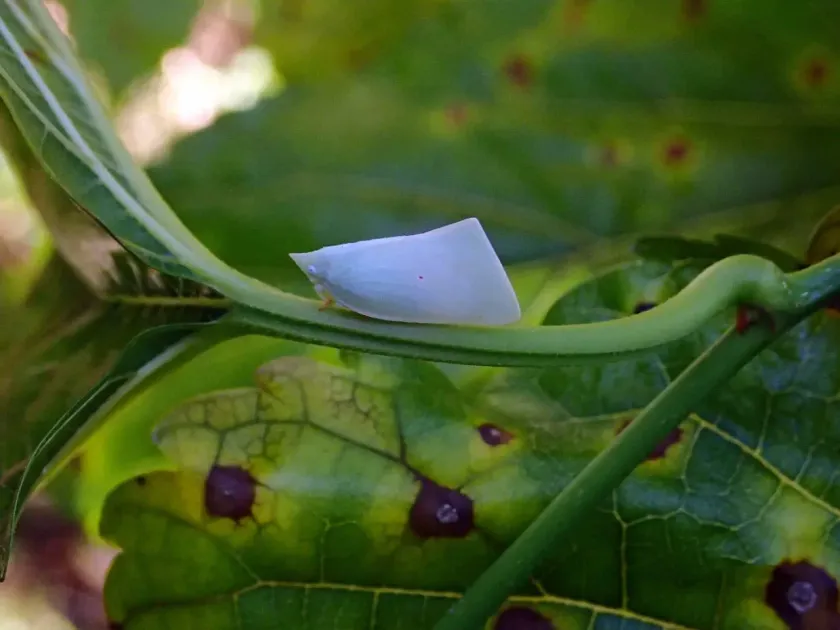
Description
How to identify
The genus Colgaroides belongs to the order Hemiptera and the family Flatidae. These insects are commonly known as flatid planthoppers and are characterized by their wedge-shaped appearance when at rest, with wings folded vertically against the body.
Adult Colgaroides exhibit cryptic coloration, which provides excellent camouflage against tree bark and foliage, making them difficult to spot during routine field surveys. Their body is flattened, and they possess a specialized piercing-sucking mouthpart.
Nymphal stages of this genus are notable for the presence of white, waxy filaments or coating on their posterior. This waxy secretion serves as a protective mechanism against predators and helps in moisture regulation.
The life cycle follows hemimetabolous development, progressing through egg, multiple nymphal instars, and the adult stage. Adults are strong jumpers and flyers, enabling them to migrate between host plants efficiently.
Accurate species-level identification often requires a detailed morphological examination of the male genitalia, as external body features alone may not be sufficient to distinguish between closely related species.
What it damages
This pest primarily infests a variety of tropical and woody ornamental plants. By feeding on the phloem sap of young shoots, leaves, and buds, it weakens the host plant significantly over time.
Mechanical damage caused by feeding leads to distorted, curled, and stunted foliage. In severe infestations, the continuous extraction of nutrients can cause premature flower drop and reduced fruit set in orchard crops.
A significant secondary problem is the production of honeydew, a sticky excretion that covers plant surfaces. This creates an ideal environment for the growth of sooty mold, which blocks sunlight and inhibits photosynthesis.
Beyond direct feeding damage, members of the Flatidae family are suspected or confirmed vectors for various phytoplasma and viral plant diseases, which can have devastating effects on crop health.
The cumulative impact of sap loss and fungal infection results in lower market value for produce and a general decline in the vitality of trees and shrubs within the affected area.
When it appears
The activity of Colgaroides is strongly influenced by temperature and humidity. Populations typically peak during warm, humid months, which coincide with the flush of new growth on host plants.
The overwintering stage usually consists of eggs, which are carefully deposited by females into crevices in the bark or beneath the outer skin of stems, providing protection against environmental extremes.
As spring approaches and temperatures rise, nymphs hatch and begin feeding immediately on succulent plant tissues. The transition through nymphal instars happens relatively quickly under favorable conditions.
Depending on the local climate, multiple generations can occur within a single year. In tropical environments, breeding activity can be continuous if the host plant provides sufficient nutrients.
Effective monitoring should begin during the early stages of vegetative growth. Scouting for the presence of waxy nymphs on the underside of leaves or on stems is the most reliable way to detect an outbreak.
Control measures
Cultural control methods are the first line of defense, including the pruning and removal of heavily infested plant parts. Keeping orchards and nurseries weed-free helps eliminate alternative hosts.
Biological control can be highly effective, utilizing natural predators such as lady beetles, lacewings, and various parasitic wasps that target eggs or nymphs to keep population numbers in check.
Chemical intervention should be considered only when scouting indicates that the pest population has exceeded the economic injury level. Systemic insecticides are generally the most effective choice.
It is recommended to rotate different classes of insecticides to prevent the development of resistance. Application should be timed to target early nymphal stages before they become highly mobile adults.
- Utilize yellow sticky traps to monitor adult population levels.
- Apply horticultural oils to smother eggs and young nymphs.
- Maintain plant vigor through proper fertilization and irrigation.
Taxonomy
- Latin name
- Colgaroides
- Order
- Hemiptera (bugs, aphids, leafhoppers)
- Family
- Flatidae
- EPPO code
- CLGRSP
Discussion
No discussions yet — be the first.