
Bulb and stem nematode
Dworena hyacintha
Description
How to identify
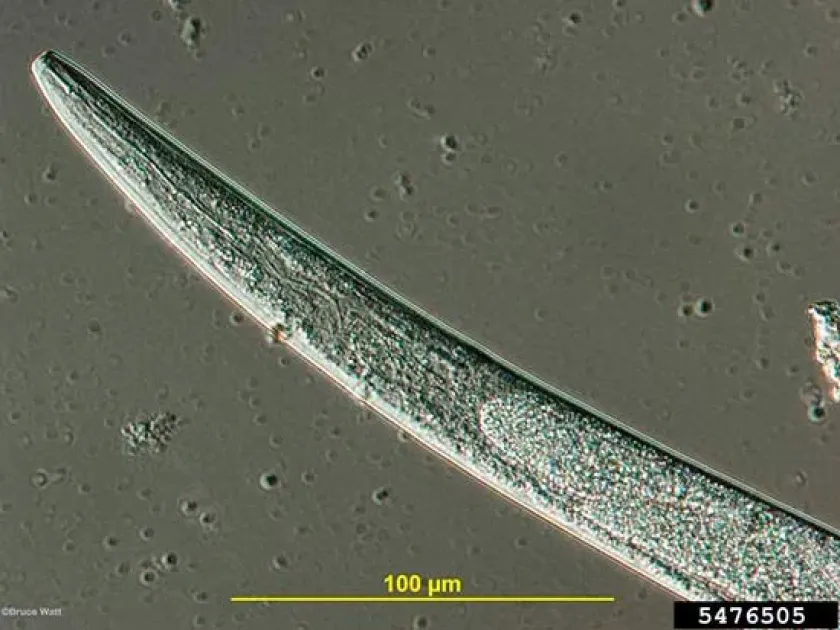
The bulb and stem nematode (scientifically known as Ditylenchus dipsaci) belongs to the order Tylenchida and the family Anguinidae.
This microscopic pest is a thread-like worm, typically measuring 1.0 to 1.5 mm, which makes it invisible to the naked eye during standard garden inspections.
It possesses a specialized feeding structure called a stylet, which is used to puncture plant cells and extract essential nutrients from the host.
The nematode relies on moisture films in the soil and on plant surfaces to move, reproduce, and seek out new host tissues to colonize.
In adverse environmental conditions, the nematode enters a state of dormancy, allowing it to survive for several years in soil or dry plant tissue.
What it damages
The pest primarily targets bulbous plants, including hyacinths, narcissi, tulips, and also affects agricultural crops like garlic and onions.
Feeding activities disrupt the normal physiological development of the plant, leading to severe stunting and potential failure of the floral display.
Significant damage occurs during the storage of bulbs, where the pest population can multiply rapidly, leading to the destruction of entire batches.
Beyond direct feeding, these nematodes facilitate the entry of secondary pathogens, including bacteria and fungi, that cause rot.
The economic impact is substantial, as infected bulbs often fail to germinate, resulting in complete crop loss in infected planting beds.
Signs of infestation
Early symptoms include pale or chlorotic streaks on the leaves, accompanied by twisting, curling, and abnormal thickening of the foliage.
Cross-sectioning an infected bulb reveals distinct brown, grey, or dark rings that indicate the internal colonization of the bulb scales.
The basal plate of the bulb often becomes spongy or soft, and in advanced stages, the tissues begin to decay, emitting a foul odor.
Infected plants frequently exhibit reduced height, deformed flower buds that may abort, or stems that collapse prematurely.
In the final stages, the basal plate disintegrates completely, causing the roots to detach and leading to the total collapse of the plant.
Control measures
Implementation of a strict crop rotation cycle is essential, with a minimum break of 4 to 5 years between planting susceptible bulbous crops.
Hot water treatment of bulbs at 43–45°C for 2–3 hours is a proven method for eliminating nematodes from infected planting stock.
Rigorous sanitation practices, including the removal and destruction of all symptomatic plant materials, are crucial for limiting the spread.
Only healthy, certified bulbs should be planted to ensure that the infestation is not introduced into clean soil through infected stock.
Improving soil drainage and managing weed hosts in the area can help disrupt the life cycle and reduce the local nematode population density.
Taxonomy
- Latin name
- Dworena hyacintha
- Order
- Hemiptera (bugs, aphids, leafhoppers)
- Family
- Flatidae
- EPPO code
- DWORHY
Discussion
No discussions yet — be the first.